
Tesla sues California DMV to reverse ruling that company engaged in false advertising on FSD
Tesla has initiated legal action against California's Department of Motor Vehicles (DMV) in an effort to overturn a recent ruling that accused the automaker of misleading advertising regarding its vehicles' self-driving capabilities. This lawsuit follows a decision made by the Office of Administrative Hearings, which determined that Tesla had engaged in false advertising and indicated that the DMV could impose a temporary suspension on Tesla's licenses to manufacture or sell cars in California. Instead of pursuing a license suspension, the DMV advised Tesla to revise its marketing language. By mid-February, the agency acknowledged that Tesla had appropriately addressed the concerns, thus avoiding any license penalties. However, Tesla, which is heavily investing in its future with the development of robotaxis, seeks a more favorable outcome from the DMV. In its complaint filed on February 13, Tesla's legal team argued that the DMV had unjustly branded the company as a "false advertiser" for its earlier usage of terms like Autopilot and Full Self-Driving. Currently, Tesla refers to its partially automated driver assistance system as "Full Self-Driving (Supervised)" and offers it exclusively on a subscription basis. Previously, Tesla bundled its semi-automated driving capabilities into various tiers, including standard Autopilot, Enhanced Autopilot, and Full Self-Driving, often offering early access to features that were still under development, all for a single upfront payment. Tesla has not yet received a response from the DMV regarding this new lawsuit, nor has it commented on the situation itself. CEO Elon Musk has consistently assured both investors and customers that Tesla's vehicles would receive enhancements through over-the-air software updates, eventually equipping them for fully autonomous operation. However, this vision has yet to materialize, and the company’s future success is closely tied to its ability to deliver safe, driverless technology. Currently, Tesla is conducting trials with a limited number of automated vehicles as part of its Robotaxi pilot program in Austin, Texas. Just last week, the company announced the commencement of production for its Cybercab, a unique two-seater vehicle designed without traditional driving controls like a steering wheel or pedals. For several years, Tesla has marketed its systems as being capable of operation without the need for an attentive driver. Notably, during a 2018 appearance on CBS's "60 Minutes," Musk showcased a Model 3 in Autopilot mode, demonstrating the vehicle's capabilities while downplaying the need for driver oversight. Despite this, Tesla's owner manuals explicitly state that users should maintain focus on the road when utilizing FSD (Supervised) features. In the DMV's filings, they argued that Tesla's promotions of "Autopilot" and "Full Self-Driving" misleadingly implied that the cars could function autonomously. Conversely, Tesla's attorneys contended that the DMV failed to demonstrate that consumers were genuinely confused about the vehicles' operational safety without human intervention. According to Tesla, it was impossible to purchase a vehicle equipped with either Autopilot or Full Self-Driving Capability without encountering clear disclosures indicating that these features do not render the vehicle fully autonomous. In a related legal matter, a class action lawsuit is progressing through California courts, where customers who anticipated that their FSD purchases would lead to upgrades for robotaxi readiness are now seeking refunds. Moreover, Tesla has been held partially responsible for a fatal accident involving Autopilot, resulting in a $243 million verdict awarded to the victims' family and an injured party, stemming from a case where the driver believed the system would automatically respond to obstacles while he was distracted.
Vision Breakthrough: US Startup Launches Groundbreaking Retina Chip in Europe
Science Corp is poised to introduce a revolutionary retina chip in Europe, designed to restore partial vision for indivi...
Business Today | Jul 25, 2026, 01:00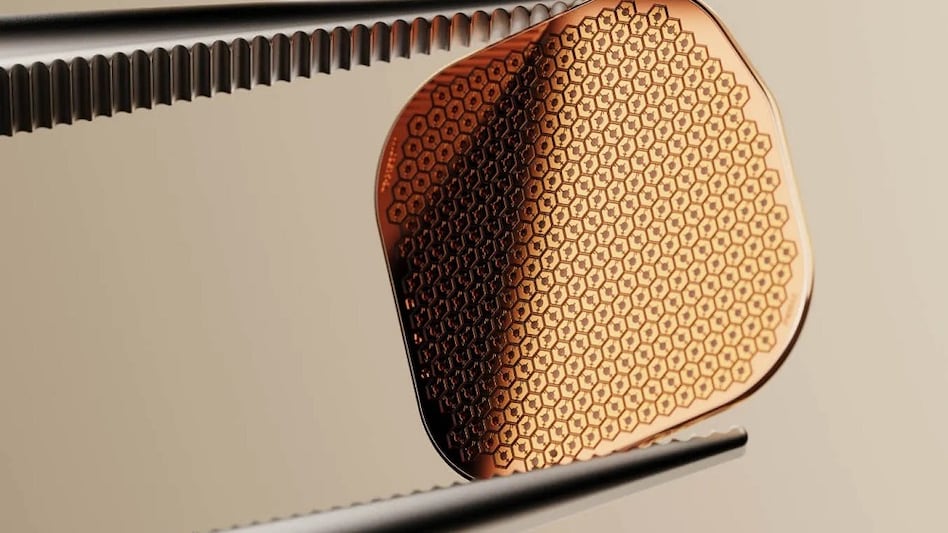
SpaceX Successfully Tests Starship Rocket, Launching New Era of Space Exploration
On Friday evening, SpaceX executed a significant milestone by launching its colossal Starship rocket from its facility i...
CNBC | Jul 25, 2026, 24:10
Volkswagen Engineers Indicted for Insider Trading Linked to Rivian Partnership
In a significant legal development, the U.S. Department of Justice has brought securities fraud charges against two engi...
TechCrunch | Jul 24, 2026, 20:30
The Rise of AI Distillation: A Controversial Technique Sparks Debate in Tech and Government
In recent discussions, a once-obscure topic in artificial intelligence has surged to the forefront of debates among tech...
CNBC | Jul 25, 2026, 12:15
The Shift in Human Cognition: Embracing AI as a Collaborative Tool
As technology continues to evolve, a notable shift is occurring in the relationship between humans and artificial intell...
Business Insider | Jul 25, 2026, 09:50