BT Explainer: Why Telegram, not WhatsApp, became NEET crackdown target
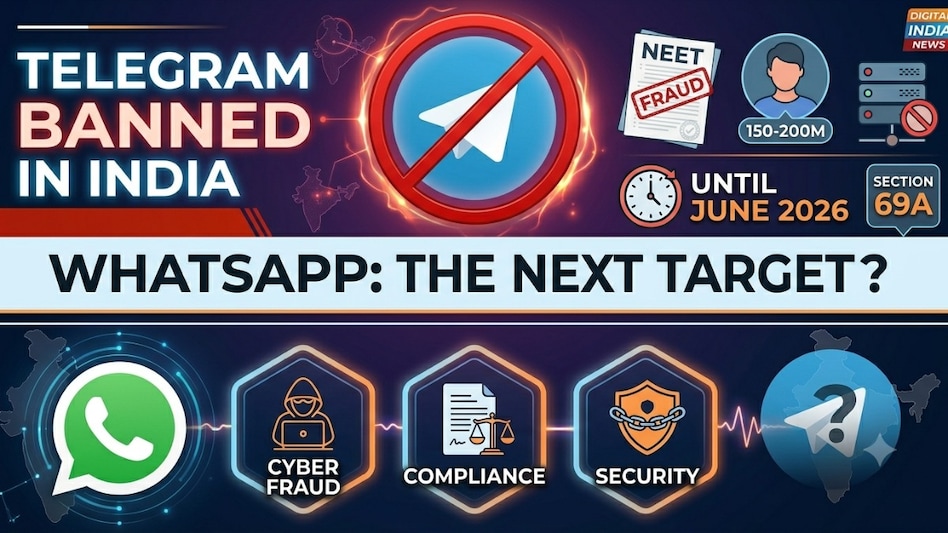
In a surprising move, the Indian government has imposed a temporary ban on Telegram as part of its efforts to curb cheating and misinformation surrounding the NEET-UG re-exam. This decision has ignited a broader discussion about the extent to which the authorities can limit access to encrypted messaging platforms, particularly when they are reportedly misused for fraudulent activities. The Ministry of Electronics and Information Technology (MeitY) issued the directive to restrict Telegram until June 22, just a day after the NEET-UG exam scheduled for June 21. This action was taken under Section 69A of the Information Technology Act, 2000, following recommendations from the National Testing Agency (NTA) and the Indian Cyber Crime Coordination Centre (I4C). Telegram, boasting a substantial user base of approximately 150-200 million in India, has contested this ban. CEO Pavel Durov publicly criticized the government's actions on social media, arguing that the restrictions unfairly impact millions of regular users rather than addressing the insider issues that led to the exam leaks. He noted, "The ban hasn't stopped anything. The leaks just moved to other apps." Authorities have indicated that Telegram was a significant platform for disseminating fake question papers and misleading information related to the NEET-UG exam. Investigations revealed that organized cheating groups were exploiting the platform, targeting students with false promises of access to leaked exam materials. The NTA highlighted names of groups such as “PAPER LEAKED NEET” and “Private Mafia,” which were allegedly soliciting large sums of money in exchange for supposed access to the exam content. The NTA has firmly stated that no NEET re-exam paper exists outside its secure channels, labeling these operations as fraudulent. The government's concerns extend beyond the content being shared on Telegram; they also focus on specific features of the app that fraud networks may be misusing. One major issue is the message-editing capability, which allows administrators of fraudulent groups to post benign messages before the exam and later edit them to include actual questions or answers. This feature, they argue, could create false evidence of a leak by retaining the original timestamps. Additionally, the sheer scale of Telegram channels complicates tracking efforts. Public channels can amass large audiences, making it challenging for investigators to identify the sources and spread of misinformation. The platform's emphasis on anonymity further complicates matters, as many channel operators use pseudonyms, hindering the identification of those orchestrating the cheating schemes. While the government has taken definitive action against Telegram, there are no current plans to impose similar restrictions on WhatsApp, despite its potential use for spreading misinformation. The differing operational structures of these platforms, particularly WhatsApp’s private communication model and user-linked accounts, may contribute to the government’s more focused scrutiny of Telegram. Ultimately, the legal authority invoked to restrict Telegram could theoretically apply to any online platform, including WhatsApp, should the government deem it necessary. However, a ban on WhatsApp would significantly disrupt daily communication across various sectors in India, making such a move much more complex and impactful.
Meta Explores AI Infrastructure Leasing Deal with Anthropic
Meta is currently in discussions with the AI startup Anthropic regarding the potential leasing of its extensive computin...
CNN | Jul 17, 2026, 21:15
New Era of AI Regulation: White House Gains Control Over Model Access
The current administration is taking significant measures to enhance its authority over the deployment of advanced artif...
CNBC | Jul 17, 2026, 22:15
Amazon Addresses AWS Billing Glitch Affecting Customers
On Friday, numerous users of Amazon's cloud services were taken aback by unexpected billing estimates indicating they ow...
TechCrunch | Jul 17, 2026, 15:50
Anthropic Explores Major Computing Partnership with Meta
Anthropic is reportedly in early discussions with Meta to secure a lease for computing power, as confirmed by a source f...
CNBC | Jul 17, 2026, 16:55
Anand Mahindra: AI Will Transform, Not Replace, India's IT Landscape
Anand Mahindra, Chairman of the Mahindra Group, has asserted that artificial intelligence (AI) will fundamentally transf...
Business Today | Jul 17, 2026, 16:20