
Technology is becoming as important as defence and finance: IBM's Arvind Krishna
In an insightful discussion at the World Governments Summit in Dubai, IBM's CEO Arvind Krishna highlighted the pivotal role technology plays in shaping national power, equating its significance to that of defense and finance. As countries navigate the complexities of geopolitics and digital reliance, Krishna emphasized that technology is emerging as a crucial 'force multiplier' for both economic growth and security. Krishna stated, "While defense is essential for safeguarding nations and their citizens, and finance is critical for infrastructure investment, technology enhances the effectiveness of both sectors and beyond." This recognition signals a shift in perspective, where technology may soon be regarded as equally, if not more, vital than finance for future development. He underscored that national sovereignty should not equate to severing global connections, but rather ensuring control over fundamental systems. "It’s not about exclusivity; it’s about maintaining control over systems that cannot be compromised or mismanaged," he explained. Echoing this sentiment, Börje Ekholm, President and CEO of Ericsson, cautioned against overly focusing on sovereignty in the technology debate. He emphasized the importance of trusted interdependence, noting that most nations rely on foreign technologies within their infrastructure. "The future prosperity of countries hinges on technology, and thus we must work with dependable partners to secure our digital frameworks," he urged. Looking forward, Ekholm predicted that next-generation networks will be inherently AI-driven and intent-based, facilitating tailored connectivity for various applications. He asserted that with the advent of 6G, a world where everything that can be connected will indeed be interconnected is on the horizon. Krishna also touched upon the approaching reality of quantum computing, stating that it is transitioning from theory to practical application. He anticipates that within the next few years, quantum systems will deliver substantial commercial benefits, particularly in fields such as materials science and finance. Regarding artificial intelligence, Krishna dismissed the notion of choosing between large and small models, suggesting both will play crucial roles. He envisions a future dominated by specialized AI systems that cater to specific industries, such as chemistry and manufacturing, enhancing operational efficiency and innovation.
JPMorgan's Dimon Warns Against Unrestricted Access to Powerful AI Models
At the Pennsylvania Defense and Innovation Summit, JPMorgan Chase CEO Jamie Dimon raised significant concerns regarding ...
Business Insider | Jul 16, 2026, 05:00AI's Role in the Workforce: Why Some Jobs Remain Safe from Automation
As artificial intelligence reshapes various industries, the replacement of many front-line workers by robots remains a c...
Business Today | Jul 16, 2026, 02:00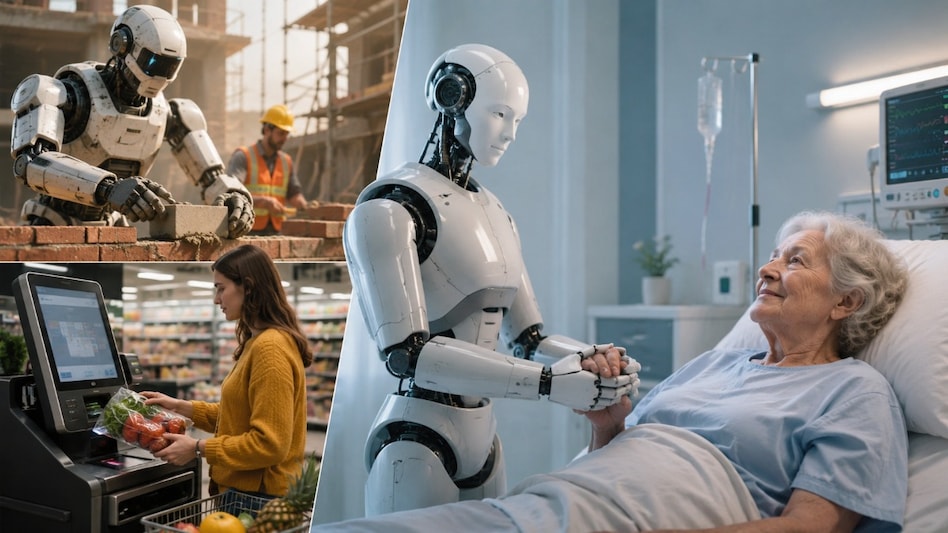
Lululemon Fuels Innovation with $30M Investment in Nylon Recycling Pioneer Syntetica
Lululemon, the well-known activewear brand, has made a significant investment in Syntetica, a French startup that has de...
TechCrunch | Jul 16, 2026, 04:30
Alibaba and Baidu Stocks Surge Following Apple AI Collaboration
Shares of Chinese tech leaders Alibaba and Baidu experienced significant gains on Thursday, buoyed by their recent partn...
CNBC | Jul 16, 2026, 03:25
TSMC Reports Record 23% Profit Surge Amid AI Chip Demand
Taiwan Semiconductor Manufacturing Company (TSMC) has announced a remarkable 23.4% increase in its second-quarter profit...
CNBC | Jul 16, 2026, 05:45