Tech CEOs can't stop talking about data centers in space
In a compelling discussion about the future of technology, prominent tech leaders have recently shifted their focus toward the concept of establishing data centers in outer space. Google CEO Sundar Pichai addressed this ambitious idea on the 'Google AI: Release Notes' podcast, describing it as a 'moonshot' initiative. He admitted that while the concept might sound 'crazy' at present, the increasing demand for computational power makes it a plausible vision for the future. Pichai highlighted Project Suncatcher, a long-term research initiative announced by Google last November, aimed at eventually scaling machine learning capabilities in space. He shared limited specifics about the project but expressed optimism about launching a Tensor Processing Unit (TPU) into space by 2027, humorously referencing Elon Musk's Tesla Roadster that was sent into orbit aboard a SpaceX rocket back in 2018. Elon Musk, known for his futuristic ambitions, noted in a recent post that the Starship could potentially deliver an astounding 300 to 500 gigawatts of solar-powered AI satellites to orbit each year. This figure underscores the unprecedented energy demands that AI data centers will require, especially as global electricity consumption is projected to double by 2050. Musk's remarks come amid growing concerns that the rising need for AI data centers is straining the United States' power grid, which has seen a significant increase in demand. Other tech leaders, including Jeff Bezos, have echoed the sentiment that space-based data centers could be a reality within the next two decades. OpenAI CEO Sam Altman speculated on the future of data centers in a July interview, suggesting that perhaps a large-scale solution like a Dyson sphere could be constructed to support these facilities in space, rather than on Earth. This innovative thinking reflects a broader trend in the tech industry, as leaders explore the benefits of space, such as unobstructed solar energy and elimination of cooling challenges. Salesforce CEO Marc Benioff also chimed in on the conversation, asserting that the most cost-effective location for data centers might very well be in space, emphasizing the potential advantages of continuous solar energy without the need for battery storage.
Meta's Smart Glasses Take Center Stage at Connect Event
At this year's Meta Connect, it was clear that the tech giant is fully committed to its expanding range of smart glasses...
TechCrunch | Sep 26, 2026, 01:40
Nokia Revives Classic Charm with the Return of the ₹4,299 3210 4G Phone
In a nostalgic move for tech enthusiasts, Nokia has announced the return of the iconic 3210, now equipped with 4G capabi...
Business Today | Sep 26, 2026, 01:25
The Crucial Role of Gold in the AI Revolution: Electronics and Beyond
Gold is not merely a symbol of wealth; it serves a pivotal function in the realm of modern electronics. As artificial in...
Business Today | Sep 26, 2026, 01:00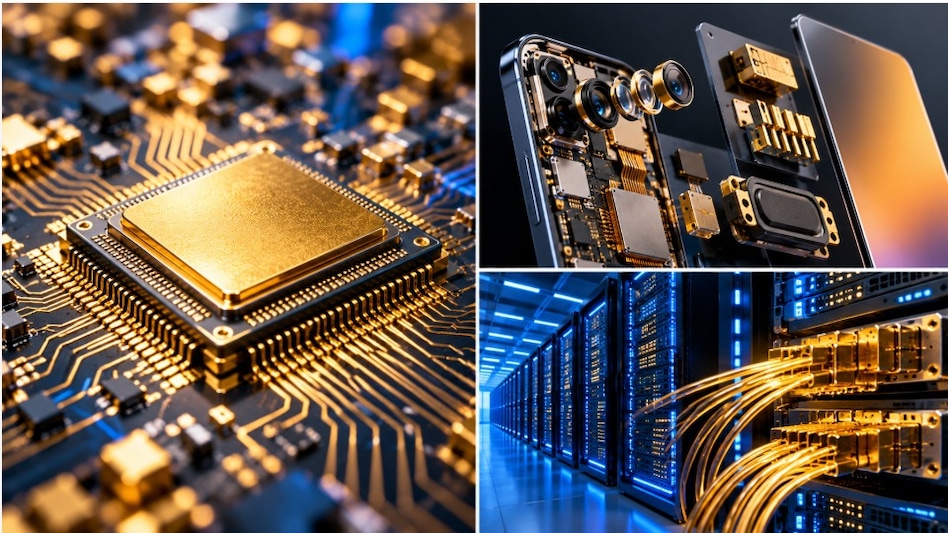
China's AI Models Gain Traction Globally, Sparking U.S. Concerns
The recent discussions between U.S. President Donald Trump and Chinese President Xi Jinping highlighted the escalating c...
CNBC | Sep 26, 2026, 05:15
AI Rivalry Heats Up: China and the US Face Off in a Global Tech Race
The swift progress in artificial intelligence by China over the past year has prompted concerns in Washington about the ...
CNN | Sep 26, 2026, 04:05