
The AI layoff wave is becoming a powder keg
A peculiar phenomenon is unfolding in the tech sector. Despite numerous companies reporting unprecedented profits and revenue, they are concurrently laying off tens of thousands of employees, often citing artificial intelligence (AI) as the primary reason. So far this year, approximately 363 layoffs across tech firms have impacted nearly 150,000 workers, averaging about 974 job losses per day—44% higher than the previous year—according to TrueUp, a well-known tech job board and layoff tracker. Last month marked a significant moment, as tech layoffs reached their highest level in two years with nearly 40,000 job cuts. For the third consecutive month, AI has been the most frequently referenced rationale for these layoffs across various industries, according to the outplacement firm Challenger, Grey & Christmas. However, skepticism is rising regarding whether AI is genuinely to blame, with many suggesting it serves more as a convenient narrative than a root cause. A striking example of this narrative clash occurred at Block earlier this year. Following substantial backlash for announcing layoffs that affected nearly half of its workforce, the company's co-founder Jack Dorsey insisted that these cuts were not indicative of trouble at the payments firm. He argued that AI tools are revolutionizing work processes, fundamentally altering how businesses operate. When confronted about the excessive hiring during the pandemic, Dorsey conceded that Block had indeed expanded its workforce too much. Venture capitalist Marc Andreessen has also weighed in on this issue, labeling AI as the “silver bullet excuse” for layoffs that are more accurately attributed to overstaffing from the pandemic. In a conversation with podcaster Harry Stebbings, he claimed that many large companies are overstaffed by as much as 50% or even 75%, thus using AI as a pretext for necessary restructuring. Uber's recent layoffs exemplify this ambiguity. The company cut about 23% of its people division—impacting less than 1% of its 34,000 employees—while emphasizing that AI was not a factor in these cuts. Yet, this announcement followed comments from Uber's CTO regarding the depletion of their AI coding budget in just four months, raising questions about the underlying motivations for the layoffs. Compounding the situation is the wealth being generated among a select group of AI insiders. For instance, AI chipmaker Cerebras Systems saw its stock surge 68% on its first day of trading on the Nasdaq, bringing its market cap to around $67 billion. Co-founders Andrew Feldman and Sean Lie became billionaires overnight, although shares have since dropped by 30%. Meanwhile, SpaceX announced its public offering, boasting a staggering market cap of $2.1 trillion, elevating Elon Musk's status to that of a trillionaire and creating thousands of new millionaires. Both Anthropic and OpenAI are on the brink of going public, each valued at approximately $1 trillion or more. In stark contrast to the growing fortunes in AI, ordinary Americans face escalating economic pressures. Employer-sponsored health insurance premiums are projected to rise by 6% to 7% this year, outpacing inflation. The cost of private health insurance has roughly doubled since 2008, and median home prices have surged by 28% since early 2020, with mortgage rates also climbing significantly. Surveys indicate that a majority of Americans feel a middle-class lifestyle is increasingly unattainable, and concerns over the cost of living have sharply risen. This situation paints a broader picture: as tech workers grapple with layoffs, a select few in the AI sector are amassing unprecedented wealth. The divide between these groups is reminiscent of past economic crises, where public outrage stemmed from stark inequalities. The dynamics of the current layoffs, marked by companies profiting while simultaneously cutting jobs, present a disturbing narrative. Unlike previous crises, there isn't a clear economic collapse to blame, raising critical questions about the ethics and implications of these decisions in the tech world.
Unlocking the Secrets of Quantum Gravity: Can AI Help Physics Make a Leap?
The realm of scientific research is undergoing a profound transformation, fueled by the rapid advancements in artificial...
Business Today | Jul 25, 2026, 24:30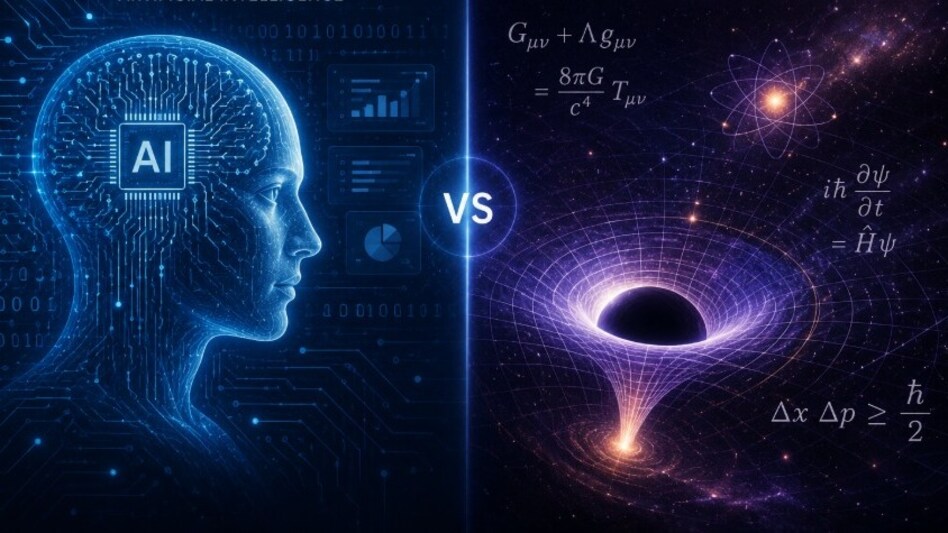
OpenAI's Micro Keypad: A Novelty for Coders or Just a Confounding Gadget?
Last week, OpenAI made its debut in the hardware landscape with the launch of Micro, a stylish keypad designed to integr...
TechCrunch | Jul 25, 2026, 24:40
The Shift in Human Cognition: Embracing AI as a Collaborative Tool
As technology continues to evolve, a notable shift is occurring in the relationship between humans and artificial intell...
Business Insider | Jul 25, 2026, 09:50The Elusive Phineas Fisher: The Hacktivist Who Took Down Spyware Giants
In the realm of cybersecurity, few figures are as intriguing as Phineas Fisher, a hacker who has evaded capture for near...
TechCrunch | Jul 25, 2026, 21:00
Shifting Focus: The Cost-Effectiveness of AI Models Takes Center Stage
In recent years, the AI sector has been intensely focused on identifying the most advanced models. While this pursuit re...
Business Insider | Jul 25, 2026, 13:10