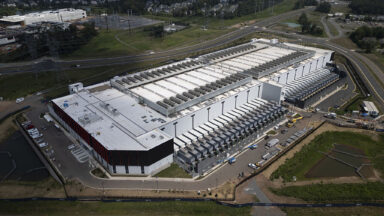
How some data center operators are tackling their water use problems
On Monday, SpaceX updated its initial public offering, highlighting concerns that water availability—affected by scarcity, regulatory frameworks, and drought—could hinder the growth of data centers. This concern extends beyond SpaceX, as numerous tech firms are evaluating how limited water resources might impact their operations. The issue of water usage is becoming increasingly contentious in the data center industry. A recent Gallup poll indicated that 70% of Americans oppose the expansion of data centers, with water scarcity identified as the primary concern. In response to heightened public scrutiny, several technology companies are striving to demonstrate their commitment to addressing this challenge. Data centers primarily require water to cool the extensive heat generated by server racks. One widely used method, known as evaporative cooling, involves utilizing fresh water to absorb heat before sending it to cooling towers, where it evaporates outdoors. While this method can lead to cost savings and lower emissions by minimizing the energy required for traditional cooling systems, it also results in a significant water footprint. For example, Google's data center in Council Bluffs, Iowa, consumed over 1 billion gallons of water in 2024 alone. According to a report from Lawrence Berkeley National Laboratory, if hyperscale data centers increasingly rely on evaporative cooling, their water consumption could soar to 33 billion gallons by 2030. While this figure is comparable to other water-intensive industries such as agriculture and oil and gas—where a single fracked well can consume between 1.5 to 16 million gallons of water—it raises concerns in areas where water resources are already under pressure. The situation is particularly critical during summer months when the need for cooling in data centers surges concurrently with rising municipal water demands. "Water is a highly local, highly regional issue," states Shaolei Ren, an engineering professor at UC Riverside. "It's a limited resource, and we must manage it with great care."
SpaceX's Latest Starlink Launch Marks Milestone Amid Booster Setbacks
On Friday, SpaceX marked a significant achievement by successfully launching its first batch of third-generation Starlin...
TechCrunch | Jul 24, 2026, 23:40
Finland Unveils World's Largest Sand Battery to Tackle Renewable Energy Challenges
In a groundbreaking move to address the critical issue of renewable energy intermittency, a small town in southern Finla...
CNBC | Jul 25, 2026, 05:35
Vietnam's Controversial Social Media Proposal: A New Approach for Youth Engagement
Vietnam is contemplating a distinctive approach to youth social media regulations, diverging from the more common outrig...
TechCrunch | Jul 24, 2026, 21:25
Waymo Considers Parting Ways with Uber Amid Rising Tensions
Waymo is reportedly exploring options to exit its partnership with Uber, which has allowed the Alphabet-owned firm to de...
TechCrunch | Jul 24, 2026, 21:00
Legal Battle Erupts Over 'Duress' Password in Groundbreaking Data Wiping Case
The U.S. Justice Department has initiated legal proceedings against a Georgia resident, Samuel Tunick, who is accused of...
TechCrunch | Jul 24, 2026, 18:25