Skyroot's Vikram-1 milestone: How TakeMe2Space's battery cleared space's toughest test
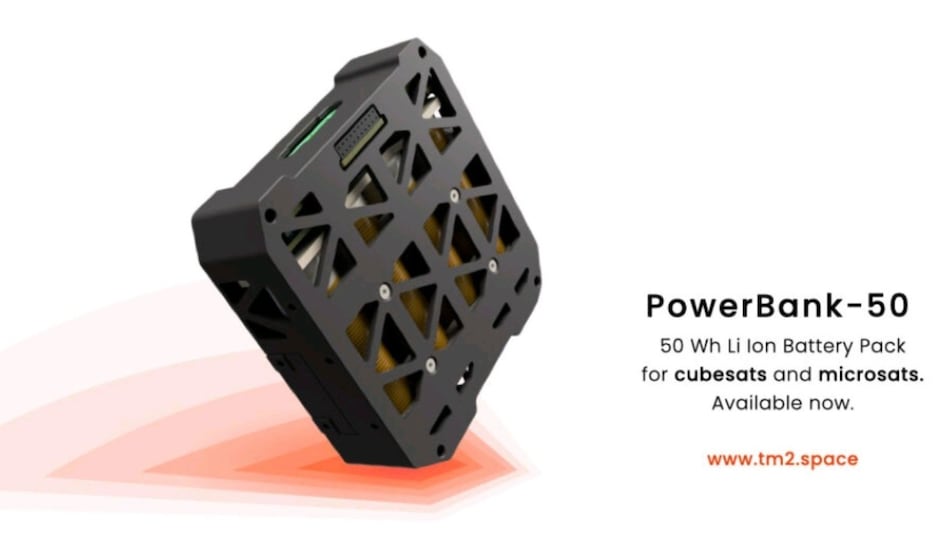
On July 18, the Vikram-1 rocket, developed by Skyroot Aerospace, made history as it launched from Sriharikota. This mission not only marked a significant milestone for India's private space sector but also showcased a groundbreaking innovation: a compact battery designed by the Hyderabad startup, TakeMe2Space. This battery, which had never been tested in space prior to this mission, successfully returned with a prestigious accolade known as 'flight heritage'. The PowerBank-50 has now earned its title as India's first domestically developed satellite battery to demonstrate its capabilities in orbit. This achievement is monumental as it could diminish the reliance on imported satellite power systems, empowering local space startups with access to essential technology developed within the country. In the satellite industry, laboratory testing is merely the first step. The true challenge lies in the harsh environment of space, where components must endure intense launch vibrations and function reliably in the vacuum of space, facing radiation and extreme temperature fluctuations. This is why the term 'flight heritage' holds such significance; satellite manufacturers and insurers prefer hardware that has successfully operated in space. Without this credential, even the most rigorously tested components often struggle to attract customers. The PowerBank-50 battery has successfully navigated this rigorous testing phase by powering an experimental payload for Cosmoserve Space aboard the Orbital Adjustment Module at an altitude of 450 kilometers. Ronak Kumar Samantray, Founder and CEO of TakeMe2Space, expressed gratitude for the opportunity, noting, "Every satellite mission's success hinges on its power system. We appreciate Cosmoserve's trust in PowerBank-50 for this crucial mission. Its flawless performance at 450 km is the highest validation a product can achieve." Batteries play a more critical role in satellite operations than many might assume. Satellites rely on sunlight for power; however, during each orbit, they pass through Earth's shadow, relying on their batteries to maintain all onboard systems. A single battery failure can jeopardize an entire mission. Until now, Indian satellite developers have primarily depended on imported battery packs, facing significant costs and lengthy procurement processes. A flight-validated battery manufactured in India could alleviate these challenges, particularly for startups, research institutions, and universities creating small satellites. With a weight of just 380 grams, the PowerBank-50 efficiently packs over 50 Wh of energy. It features high-energy-density lithium-ion cells, an advanced battery management system, onboard heating for extreme temperatures, and continuous health monitoring that keeps operators informed of the battery's condition. The battery is adaptable for both CubeSats and larger microsatellites, boasting an operational lifespan of up to five years in low-Earth orbit and is competitively priced at ₹1,04,900. This milestone arrives at a crucial time for India's burgeoning commercial space industry. Skyroot Aerospace's successful launch of Vikram-1 has solidified its position as the first private firm to send a rocket into orbit. Building on this achievement, TakeMe2Space has demonstrated that an Indian-designed satellite battery can withstand the rigors of launch, perform in orbit, and secure a vital industry credential. Union Finance Minister Nirmala Sitharaman praised this accomplishment, stating, "Fantastic! Until now, Indian satellite builders had to rely on costly and time-consuming imports for this essential component. TakeMe2Space's PowerBank-50 is now the first India-made satellite battery." For India's rapidly evolving space sector, this achievement signifies more than just a single mission's success. It indicates that another critical element of the satellite supply chain can now be conceived, manufactured, and validated domestically, paving the way for faster, more cost-effective future missions that are less dependent on foreign suppliers.
Emerging AI Chip Design Revolution: A Challenge to Nvidia's Reign
Nvidia, under the leadership of Jensen Huang, faces a significant challenge from the very AI technology it helped to pop...
Business Insider | Nov 24, 2026, 10:10Investing in the Future: Solar and Battery Solutions for AI Data Centers
The challenge of powering AI data centers has emerged as a pivotal issue in the current technological landscape. Over th...
TechCrunch | Nov 24, 2026, 16:25
Threads Expands to iPad with New Cashtag Feature to Rival X
Meta's Threads app has officially launched a dedicated version for iPad, marking a significant milestone in its developm...
TechCrunch | Nov 24, 2026, 18:00
Tidal Takes Bold Step Against AI Music Flood, Set to Remove Millions of Tracks
In a decisive move to combat the overwhelming influx of AI-generated music, Tidal announced on Tuesday its plans to ban ...
TechCrunch | Nov 24, 2026, 17:10
Staggering Recovery Rates Highlight Digital Payment Fraud Challenges
The battle against digital payment fraud continues to be an uphill struggle for consumers, with official data revealing ...
Business Today | Nov 24, 2026, 09:30