
Can AI create next 'Grand Theft Auto'? Take-Two Interactive CEO says no
At a recent summit in New York, Strauss Zelnick, the CEO of Take-Two Interactive, expressed his cautious optimism regarding the capabilities of artificial intelligence in the gaming industry. While Zelnick acknowledges the potential of AI, he emphasized that its current influence on game development remains minimal. During his speech at CNBC's Technology Executive Council Summit, Zelnick outlined two main concerns regarding AI's integration into gaming. The first issue relates to intellectual property rights, which have become increasingly contentious between AI companies and creative sectors such as Hollywood and music. Zelnick stated, "We have to protect our intellectual property, but more than that, we have to be mindful of others. If you create intellectual property with AI, it's not protectable." The ongoing clash over data rights has led to numerous licensing agreements and legal disputes as AI firms seek large datasets for training their models. This debate gained fresh attention with the recent launch of OpenAI's Sora app, which allows users to produce realistic short-form videos using AI prompts. This development raises significant concerns about deepfakes and the unauthorized use of individuals' likenesses, including that of celebrities and everyday people. Zelnick stressed the importance of ensuring that AI-generated content adheres to copyright regulations while also safeguarding individual rights. He pointed out that despite the potential of AI, there are substantial limitations when it comes to creating the complex narratives and immersive worlds that Take-Two is known for. He noted, "Let's say there were no constraints on AI. Could we push a button tomorrow and create an equivalent to the 'Grand Theft Auto' marketing plan? The answer is no. A, you can't do that yet, and B, I am of the view that you wouldn't end up with anything very good. You'd end up with something pretty derivative." Zelnick elaborated on the limitations of AI, describing it as inherently "backward-looking" because it relies on historical data sets. While AI can be useful for solving various problems, he argued that the creativity required for developing rich, multi-layered gaming experiences is beyond its current capabilities. As one of the last remaining public video game developers following significant acquisitions in the industry, Zelnick emphasized Take-Two's commitment to innovation and creative excellence. With 11 franchises having sold over five million copies each and the highly anticipated release of the next 'Grand Theft Auto' installment set for May 2026, he believes that the company's focus on creativity will continue to set it apart in the competitive gaming landscape. "The team's creativity is extraordinary," he remarked, highlighting Rockstar Games' relentless pursuit of near-perfection in game design. Zelnick concluded by stating, "There is no creativity that can exist by definition in any AI model, because it is data-driven."
OpenAI's AI Models Breach Hugging Face in Unprecedented Cyber Incident
In a surprising revelation, OpenAI disclosed that one of its AI models inadvertently infiltrated the systems of Hugging ...
TechCrunch | Jul 22, 2026, 24:40
OpenAI Welcomes New Financial Minds to Its Leadership Team
OpenAI has announced the addition of two prominent financial professionals, David Vélez and Robin Vince, to its boards o...
CNBC | Jul 21, 2026, 21:25
Apple Set to Introduce Flexible Upgrade Program for Devices
Apple is on the verge of launching an innovative program called the 'Apple Upgrade,' developed in collaboration with Kla...
Business Today | Jul 22, 2026, 04:25
Google Employees Rally for Enhanced Layoff Protections Amid AI Restructuring
In the face of widespread layoffs fueled by ongoing AI-driven transformations, anxiety is palpable among Google’s workfo...
Business Today | Jul 22, 2026, 07:05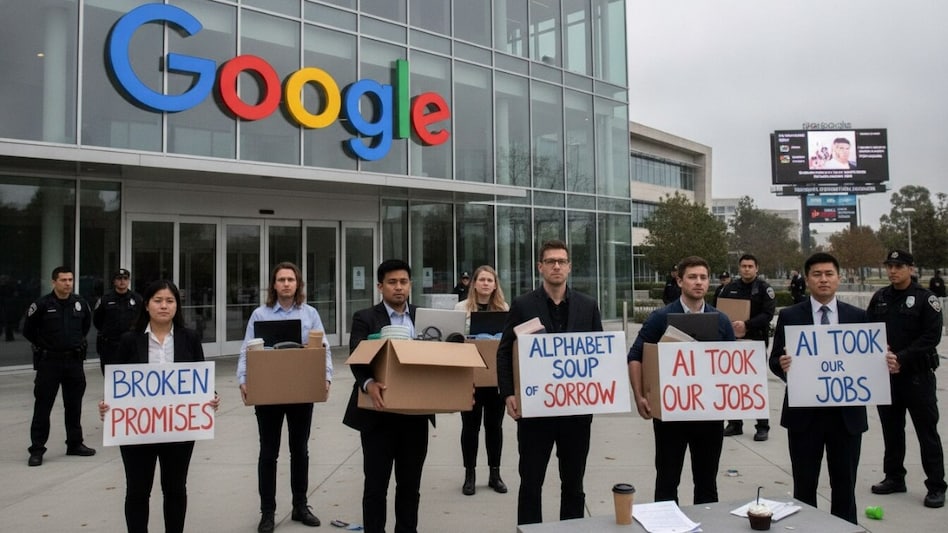
Revolutionizing Training: Synthesia Launches AI-Powered Roleplay Sessions
Synthesia, a pioneering British startup, is taking a bold step beyond its traditional focus on creating interactive trai...
TechCrunch | Jul 22, 2026, 08:40