
In major privacy win, Supreme Court rules geofence warrants are protected by privacy rights
In a significant ruling on Monday, the U.S. Supreme Court placed restrictions on the use of geofence search warrants by law enforcement, marking a pivotal moment for privacy rights across the nation. The court's decision, delivered in a 6-3 vote, affirmed that individuals possess a reasonable expectation of privacy concerning their cell phone location data. The ruling emphasizes that users retain privacy rights over the historical location information gathered by their phones and the applications they utilize. Consequently, law enforcement agencies must secure a search warrant before they can request location data from tech giants like Google, especially when it involves historical geofence data. The court asserted that individuals are not willingly sharing their location information with companies like Google simply by using their services. This distinction is crucial; it challenges the so-called 'third party doctrine,' which traditionally suggests that data shared with others is not protected by privacy rights. In contrast to typical scenarios where authorities can access data from telecom providers without a warrant, the Supreme Court ruled that geofence warrants necessitate warrants due to their broader implications. Geofence warrants enable law enforcement to compel tech companies to provide information about users' locations within a specified area at a given time. This process involves law enforcement outlining a geographic area on a map and requesting that judges allow them to demand user location data from companies like Google. Critics of these warrants argue that they are unconstitutional, as they often encompass data from innocent individuals. While the Supreme Court acknowledged these concerns, it did not outright ban geofence warrants. Instead, it indicated that law enforcement must refine their requests for data under a search warrant to comply with the Fourth Amendment, which guards against unreasonable searches and seizures. The ruling stems from the case of Okello Chatrie v. United States, where Chatrie contended that the government had utilized evidence obtained through an unconstitutional search warrant during his bank robbery trial. His legal team argued that geofence warrants allow investigations to proceed without initial suspicion, undermining established protocols for obtaining search warrants. As the court grapples with the implications of this ruling, it remains uncertain how it will affect ongoing legal cases. It’s noteworthy that the ruling is unlikely to alter Chatrie's sentence, as prior courts had determined the evidence collected was done so in good faith. Moreover, companies like Google have begun to adapt to these legal changes by storing users' location data on devices rather than on their servers, prompting authorities to seek data directly from users instead. Other firms such as Microsoft, Uber, and Yahoo also face regular requests for geofence warrants, highlighting the ongoing tension between privacy rights and law enforcement needs.
Market Turbulence: Four Key Factors Impacting Stocks This Week
This past week has been challenging for the stock market, driven by several significant forces that have created turbule...
CNBC | Jul 25, 2026, 20:05
Navigating the AI Landscape: Insights from a Former OpenAI Intern
As the demand for expertise in artificial intelligence surges, many are seeking ways to break into this dynamic field. H...
Business Insider | Jul 26, 2026, 10:10Warner Bros. Takes Legal Action Against Amazon Over Executive Poaching Allegations
Warner Bros. Discovery has initiated legal proceedings against Amazon, accusing the tech giant of unlawful interference ...
TechCrunch | Jul 25, 2026, 21:25
Unleashing the Power of AI: The 5 Smartphones Redefining Mobile Photography
Artificial Intelligence (AI) is transforming our daily experiences, permeating various aspects of technology, including ...
Business Today | Jul 26, 2026, 07:05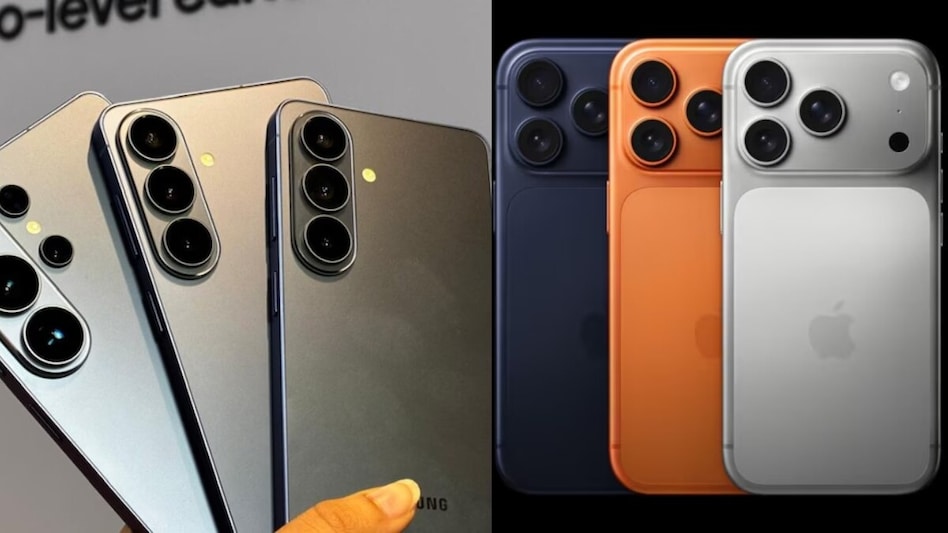
Shifting Focus: The Cost-Effectiveness of AI Models Takes Center Stage
In recent years, the AI sector has been intensely focused on identifying the most advanced models. While this pursuit re...
Business Insider | Jul 25, 2026, 13:10