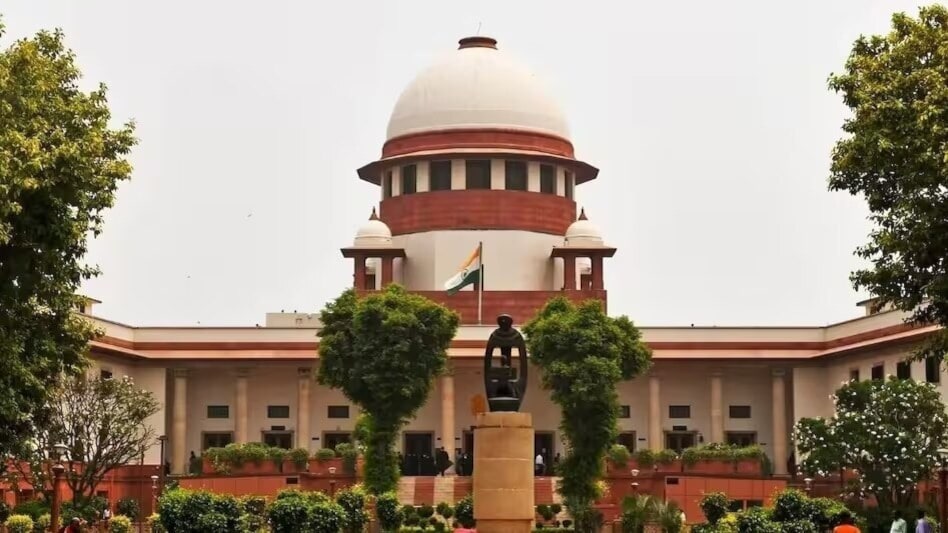
'Internet access a fundamental right': Supreme Court rejects age-based ban; issues directions to Centre, platforms
The Supreme Court has determined that children possess a fundamental right to access the internet, emphasizing that their safety should not infringe upon their freedom. In a notable ruling, the court dismissed broad age-based restrictions, advocating for enhanced protective measures against online sexual abuse while still permitting children to engage with the digital landscape. Justices JB Pardiwala and KV Chandran articulated this stance, stating, "The safety of our children and their freedom are not at odds with each other. Our children are entitled to both." The Supreme Court's decision came while reviewing reports on the paid promotion of harmful material related to child sexual exploitation and abuse on social media platforms. The court expressed that completely denying children access to the internet is unreasonable. It stressed that the protection from online dangers must coexist with the preservation of their fundamental rights. The Supreme Court also warned that implementing age-based bans could inadvertently drive children toward unregulated and potentially hazardous websites. Furthermore, the ruling noted that children might be deterred from reporting online threats or inappropriate encounters if they fear repercussions for breaking internet usage rules. To address these issues, the court outlined comprehensive directives for the Central government and social media platforms aimed at improving the detection and removal of explicit content. Among the directives was the establishment of national databases for perceptual hashes and URLs, designed to help platforms identify and manage harmful material across different services. However, the court emphasized that such systems must include protections against wrongful deletions, requiring multiple layers of verification prior to content removal or database addition following a single complaint. The Supreme Court also raised concerns about the ongoing distribution of child sexual abuse material online, criticizing regulatory bodies and social media companies for not taking sufficient action to protect victims. It pointed out that the current reporting and removal process heavily relies on individual complaints, which can lead to delays in action across platforms. In conclusion, the court urged for a more robust framework to combat online sexual abuse, calling for quicker detection and removal of harmful content. It asserted that the time for an effective response from authorities and digital platforms is now, stressing the urgency of safeguarding children in the digital age.
Electric Truck Innovator Harbinger Secures Major Funding from Erebor Bank
Harbinger, an emerging player in the electric truck industry, has secured a significant financial boost from Erebor Bank...
TechCrunch | Nov 24, 2026, 18:00
Tidal Takes Bold Step Against AI Music Flood, Set to Remove Millions of Tracks
In a decisive move to combat the overwhelming influx of AI-generated music, Tidal announced on Tuesday its plans to ban ...
TechCrunch | Nov 24, 2026, 17:10
Navigating the AI Landscape: Why CEOs Must Embrace Technology Literacy
In the rapidly evolving world of corporate India, companies are increasingly investing in artificial intelligence (AI), ...
Business Today | Nov 24, 2026, 07:35
Pinterest Empowers Parents with New Controls Over AI Content for Teens
This week, Pinterest unveiled an enhancement to its parental controls, introducing a feature that allows parents to regu...
TechCrunch | Nov 24, 2026, 16:25
Revolutionizing Cybersecurity: AI's Role in Modern Threat Detection and Defense
As businesses increasingly embrace digital transformation and artificial intelligence, the complexity of cybersecurity t...
Business Today | Nov 24, 2026, 08:30