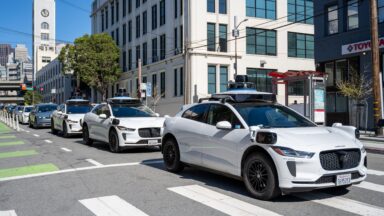
Robotaxis don’t cut traffic any more than ride-hailing, study finds
The futuristic concept of robotaxis is now a reality in select American cities, transitioning from the realm of science fiction to actual service. Over the past decade, advancements have led to the launch of Waymo's commercial services in California, which initially included a safety driver. Advocates for this technology, which has garnered over $100 billion in investments, argue that robotaxis are poised to be safer than traditional vehicles. Notably, Waymo reported last year that its vehicles were involved in significantly fewer accidents than human-operated cars, resulting in lower insurance claims. However, recent incidents, including complications with school buses and flooded streets, highlight that the technology is not without its flaws. While safety is a crucial aspect, many believe that autonomous vehicles could alleviate traffic congestion. Yet a new study from the MIT Transit Lab challenges this notion. It reveals that, at least in California, robotaxis do not significantly reduce traffic compared to popular ride-hailing platforms like Lyft and Uber. The research, led by Awad Abdelhalim, analyzed data spanning from August 2023 to December 2025, covering approximately 1,000 days. During this period, Waymo's robotaxis completed 13.8 million trips, transporting 19.3 million passengers across a distance of 86.3 million miles (138.8 million km), with a monthly growth rate of about 15 percent. Abdelhalim's investigation focused on the prevalence of 'deadheading'—the operation of empty robotaxis without passengers. Initially, only 36% of the miles driven by Waymo's vehicles included passengers. However, by the end of the study, this figure increased to around 56% before stabilizing. This indicates that approximately 44% of the miles covered by Waymo's fleet involved empty vehicles. Observations from recent visits to San Francisco corroborate these findings, with numerous Jaguar I-Paces roaming the streets, often devoid of riders. The research also identified two types of deadheading: vehicles waiting for assignments and those en route to pick up passengers. To address the issue, Waymo has been actively working to reduce the number of miles driven empty while expanding its fleet. Notably, the distance driven without passengers has been decreasing, partially attributed to the introduction of freeway services by the company.
Linux Creator Challenges Developers: Embrace AI or Fork Off!
In a recent discussion surrounding the use of AI in software development, Linus Torvalds, the founder of Linux, voiced h...
Business Insider | Jul 26, 2026, 13:10The Aluminum Foil Trend: A DIY Shield Against Wireless Identity Theft
Have you noticed an unusual trend where people are wrapping their wallets in aluminum foil? This peculiar practice has e...
Business Today | Jul 25, 2026, 02:45
The Elusive Phineas Fisher: The Hacktivist Who Took Down Spyware Giants
In the realm of cybersecurity, few figures are as intriguing as Phineas Fisher, a hacker who has evaded capture for near...
TechCrunch | Jul 25, 2026, 21:00
Nvidia Strikes Major Deal with SK Hynix to Secure AI Memory Supply
Nvidia has successfully forged a significant partnership with South Korea's SK Hynix to secure memory supplies essential...
CNBC | Jul 25, 2026, 05:15
Vision Breakthrough: US Startup Launches Groundbreaking Retina Chip in Europe
Science Corp is poised to introduce a revolutionary retina chip in Europe, designed to restore partial vision for indivi...
Business Today | Jul 25, 2026, 01:00