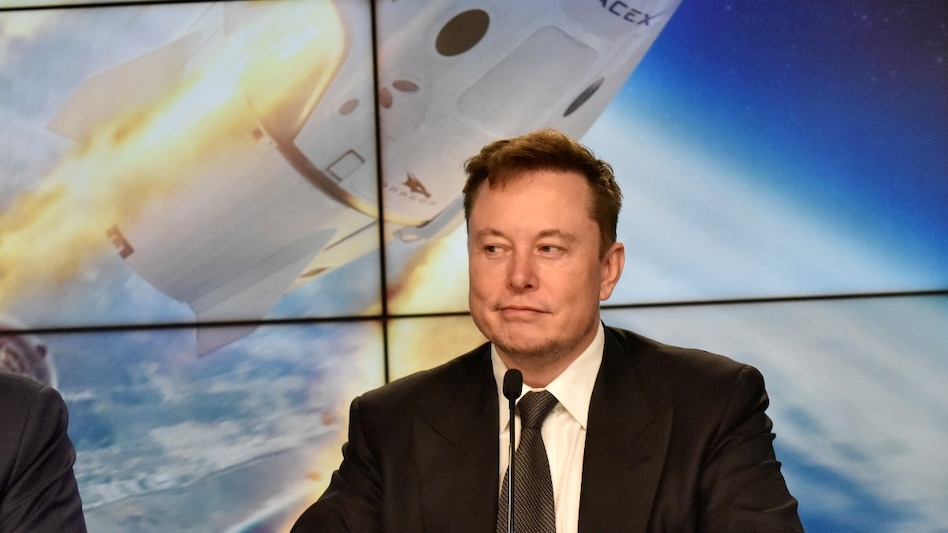
Elon Musk’s Starlink reapplies for govt approval for satellite network in India: Report
Starlink, the satellite communications company owned by Elon Musk, has taken a significant step by reapplying to India's space authority for permission to launch its latest generation of satellite services. This move is part of the company’s ongoing efforts to establish a foothold in India's rapidly growing satellite communication sector. According to a report from The Economic Times, Starlink has submitted a new application to the Indian National Space Promotion and Authorization Centre (IN-SPACe) to authorize its Gen 2 satellite constellation. This new system will function at altitudes between 340 and 615 kilometers in low Earth orbit (LEO). Previously, Starlink had sought approval for both Gen 1 and Gen 2 constellations, but its earlier request for the expansive Gen 2 network, which includes around 30,000 satellites, was denied due to non-compliance with certain regulatory specifications. In July 2025, IN-SPACe only greenlit the Gen 1 constellation, which consists of 4,408 satellites intended to provide conventional broadband services. The renewed application comes as India is contemplating expanding its satellite communication capabilities, which may include direct-to-device (D2D) connectivity. This advancement would allow satellites to connect directly with mobile devices, enhancing service accessibility across the country. Starlink aims to deploy approximately 42,000 satellites globally for its Gen 2 network and has specifically requested authorization for nearly 30,000 of these satellites in India. If approved, this constellation could potentially position Starlink ahead of competitors like Reliance Jio’s planned 1,600-satellite constellation, as well as Amazon’s Leo and Eutelsat OneWeb, in terms of coverage and service capacity. Currently, satellite operators, including Starlink and others, are awaiting necessary security clearances and spectrum allocation before commencing commercial operations in India. This regulatory environment has delayed the launch of services by all non-geostationary satellite operators in the country.
Mathematicians React to Controversial Joke Over Lengthy Proof of Riemann Hypothesis
Tensions are rising in the mathematical community following a controversial comment made by Levent Alpöge, a researcher ...
Business Insider | Nov 24, 2026, 17:30realme P4x 5G vs vivo Y31t 5G: Which Smartphone Offers the Best Bang for Your Buck?
When it comes to choosing between the realme P4x 5G and the vivo Y31t 5G, potential buyers are faced with distinct advan...
Business Today | Nov 24, 2026, 01:50
Emerging AI Chip Design Revolution: A Challenge to Nvidia's Reign
Nvidia, under the leadership of Jensen Huang, faces a significant challenge from the very AI technology it helped to pop...
Business Insider | Nov 24, 2026, 10:10Nvidia's CEO Jensen Huang Returns Amid Scandal and Government Intervention
In a surprising turn of events, Nvidia's board has reinstated Jensen Huang as CEO and president just two weeks after his...
TechCrunch | Nov 24, 2026, 13:45
Uber and Nuro Kick Off Driverless Trials for Lucid Robotaxis Ahead of 2027 Launch
Uber and Nuro have officially launched their driverless testing phase for the Lucid Gravity SUVs on the streets of the S...
TechCrunch | Nov 24, 2026, 17:15