
Starcloud raises $170 million Series Ato build data centers in space
Starcloud has successfully completed its Series A funding round, raising an impressive $170 million and achieving a valuation of $1.1 billion. This remarkable feat places the company among the fastest startups to attain unicorn status, particularly following its graduation from Y Combinator. The funding round, which concluded just 17 months after the company's demo day, was spearheaded by Benchmark and EQT Ventures. This investment reflects a growing interest in the concept of space-based data centers, especially as terrestrial development faces various resource and political challenges. However, the business model relies heavily on technology that remains unproven and demands substantial capital investment. To date, Starcloud has raised a total of $200 million and made strides in the industry, including the launch of its inaugural satellite equipped with an Nvidia H100 GPU in November 2025. Looking ahead, Starcloud plans to unveil a more advanced satellite, known as Starcloud 2, later this year. This new model will feature multiple GPUs, including the Nvidia Blackwell chip and an AWS server blade, along with a bitcoin mining computer. Additionally, the company is in the early stages of developing a spacecraft, dubbed Starcloud 3, intended to launch from SpaceX’s Starship—a reusable heavy-lift rocket being designed by Elon Musk's company. Starcloud 3 is projected to be a three-ton spacecraft with a power capacity of 200 kilowatts, designed to fit into the “pez dispenser” system that SpaceX developed for deploying its Starlink satellites. CEO and founder Philip Johnston has expressed optimism that Starcloud 3 could become the first orbital data center competitively priced against terrestrial facilities, estimating operational costs around $0.05 per kilowatt-hour, contingent upon commercial launch costs being approximately $500 per kilogram. However, challenges remain, as the Starship rocket has yet to commence flight operations. Johnston anticipates that commercial access may become available around 2028 to 2029. The space data center industry faces a reality where the costs associated with powerful space computers may remain prohibitive until a new generation of rockets can launch frequently, a situation that might not materialize until the 2030s. In light of potential delays, Johnston indicated that they would continue launching smaller versions on the Falcon 9 rocket. Starcloud's business approach features two primary models: one involves selling processing power to other spacecraft in orbit, as evidenced by their first satellite's collaboration with Capella Space for data analysis. The second model aims to create more robust distributed data centers that could eventually leverage tasks from their terrestrial counterparts as launch costs decrease. Industry developments indicate that the space computing sector is still in its infancy. For instance, during a recent GPU Technology Conference, Nvidia CEO Jensen Huang introduced the Vera Rubin Space-1 chip modules, yet none have been produced or distributed to development partners as of now. Currently, only a handful of advanced GPUs are deployed in space, contrasting with Nvidia's sales of nearly 4 million units to ground-based hyperscalers by 2025. Moreover, SpaceX's Starlink network, the largest satellite constellation in orbit, generates around 200 megawatts of power, while numerous data centers with a combined capacity of over 25 gigawatts are under construction across the U.S., according to Cushman and Wakefield. Johnston maintains that Starcloud is ahead in the race, having deployed the first terrestrial GPU in orbit, which successfully trained an AI model—a first for the industry. Despite the obstacles, Johnston emphasizes that the company has gained invaluable insights into operating high-performance chips in space. He acknowledged that while the H100 may not be the optimal choice for space operations, the endeavor aimed to demonstrate that state-of-the-art terrestrial chips could function in that environment. Starcloud-2 will boast the largest deployable radiator ever sent on a private satellite, with plans for additional versions to follow. Synchronization remains a significant challenge, especially for large data center workloads that require hundreds or thousands of GPUs to collaborate effectively. Achieving this in space may necessitate either exceptionally large spacecraft or reliable laser communication links between satellites in close formation. Most companies in the sector believe that complex tasks will emerge only after simpler inference activities are established in orbit. Besides Starcloud, other players such as Aetherflux, Google’s Project Suncatcher, and Aethero, which recently launched Nvidia’s first space-based Jetson GPU, are also exploring the space data center market. Competing with SpaceX, which has sought U.S. government approval to deploy a million satellites for distributed computing, presents a daunting challenge. Yet, Johnston believes there is potential for coexistence, as he notes that SpaceX primarily focuses on different use cases, mainly targeting Grok and Tesla workloads rather than the infrastructure model Starcloud is pursuing.
Unlocking the Secrets of Quantum Gravity: Can AI Help Physics Make a Leap?
The realm of scientific research is undergoing a profound transformation, fueled by the rapid advancements in artificial...
Business Today | Jul 25, 2026, 24:30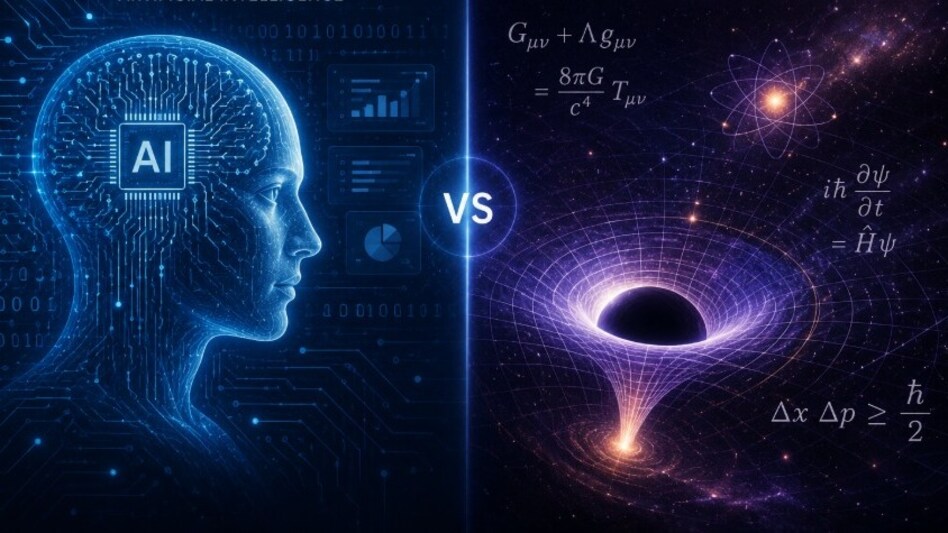
Finland Unveils World's Largest Sand Battery to Tackle Renewable Energy Challenges
In a groundbreaking move to address the critical issue of renewable energy intermittency, a small town in southern Finla...
CNBC | Jul 25, 2026, 05:35
Waymo to Launch Standalone App, Ending Exclusivity with Uber in Major Cities
For the past three years, Uber and Waymo, the autonomous vehicle division of Alphabet, have collaborated to provide driv...
CNBC | Jul 24, 2026, 21:55
Rising Concerns in Bond Market as AI Investments Surge
Investors are growing increasingly uneasy about the substantial capital required to realize the ambitions of artificial ...
CNBC | Jul 24, 2026, 20:15
OpenAI's Micro Keypad: A Novelty for Coders or Just a Confounding Gadget?
Last week, OpenAI made its debut in the hardware landscape with the launch of Micro, a stylish keypad designed to integr...
TechCrunch | Jul 25, 2026, 24:40