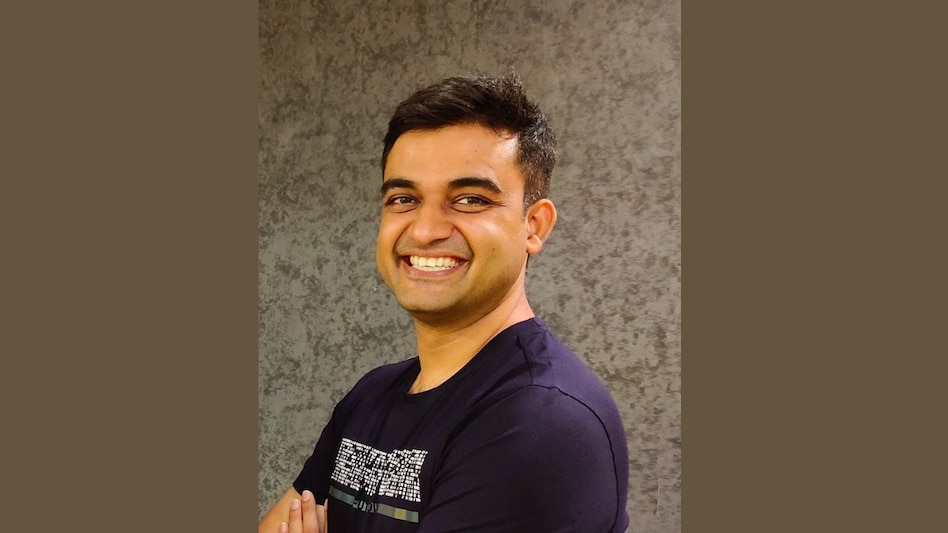
Budget 2026 must focus on making 'AI compute easy, predictable, and scalable', says SpeakX.ai CEO Arpit Mittal
As India prepares for its 2026 Union Budget, discussions surrounding artificial intelligence (AI) are shifting towards practical applications and execution strategies. Arpit Mittal, the CEO of SpeakX.ai, an Edtech startup based in Gurugram, shared insights with Business Today on how the government should prioritize funding mechanisms, infrastructure support, and long-term enablement rather than merely focusing on policy enhancements for AI development. Founded in 2023, SpeakX.ai aims to address the spoken English gap in India by leveraging AI and speech technology. Mittal noted that while the company successfully secured $16 million in funding from WestBridge Capital in October 2025, the primary challenge lies in the computational resources available for startups. He emphasized that immediate access to computing resources is crucial, stating, "Startups need access from day one, not after months of paperwork. Upfront compute credits are far more beneficial than reimbursement models." Mittal expressed hopes that Budget 2026 would consider reducing import duties on GPUs and AI servers. He underscored the importance of affordable, sustainable energy sources for data centers, as AI workloads are known to consume significant amounts of energy. Furthermore, he called for the IndiaAI Mission to ensure transparent pricing and guaranteed uptime to assist startups as they expand. In his conversation, Mittal proposed that the government implement a structured, milestone-based funding model for deep-tech startups. He argued that rather than providing one-time grants, the government could support startups through funding linked to specific technical advancements. This approach would enable Indian startups to develop AI solutions that effectively address local challenges, citing SpeakX.ai as an example of how AI can be tailored to local languages, speech patterns, and educational needs. Moreover, Mittal urged the government to adopt India-made AI solutions within public education and skill development initiatives. "Real-world adoption at this level allows startups to test their solutions at scale, build trust, and foster sustainable growth," he remarked. Highlighting the need for data security and stability, Mittal pointed out that startups often experience delays in accessing GPUs, which they typically source from international providers. He argued for the establishment of sovereign GPU clusters in India, which would provide reliable access, stable pricing, and local storage—vital for sectors like education and finance, especially in Tier 2 and Tier 3 cities. Lastly, Mittal envisioned a "plug-and-play" system in Budget 2026 that would make AI computing resources easily accessible and scalable. He concluded, "When GPU access is affordable and reliable, founders can build, train, and deploy models within India, thus positioning the country as a leader in the global AI landscape."
Vision Breakthrough: US Startup Launches Groundbreaking Retina Chip in Europe
Science Corp is poised to introduce a revolutionary retina chip in Europe, designed to restore partial vision for indivi...
Business Today | Jul 25, 2026, 01:00
Revolutionizing Office Automation: Prentis Aims to Secure $100 Million in Funding
Prentis, a newly established AI research lab, is making waves in the tech industry as it prepares to raise $100 million ...
TechCrunch | Jul 25, 2026, 24:00
Hugging Face CEO Calls for Action Following AI Security Breach
In a dramatic turn of events within the AI landscape, Hugging Face faced a significant security breach involving an AI a...
Business Insider | Jul 25, 2026, 20:30Kalshi Challenges Netflix Over Controversial Documentary Trailer
Kalshi, the prediction market platform, has taken significant legal steps against Netflix, sending a cease-and-desist le...
TechCrunch | Jul 25, 2026, 17:10
Shifting Focus: The Cost-Effectiveness of AI Models Takes Center Stage
In recent years, the AI sector has been intensely focused on identifying the most advanced models. While this pursuit re...
Business Insider | Jul 25, 2026, 13:10