US intel officials cite reusable launch as difference-maker with China
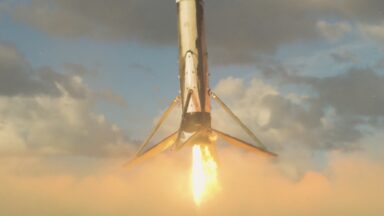
Earlier this month, SpaceX achieved a significant milestone by completing its 500th landing of a Falcon 9 first-stage booster during a routine mission that deployed 28 Starlink communications satellites into orbit. This achievement sets the stage for SpaceX to reach its 500th re-flight of a Falcon first stage later this year, highlighting the company's leadership in rocket reusability. Several other American companies, including Blue Origin, Rocket Lab, Relativity Space, and Stoke Space, are striving to follow in SpaceX's footsteps, attempting to replicate or enhance its success in recycling rocket components. These emerging launch providers are in a fierce competition with various Chinese rocket manufacturers, all eager to become the second entity capable of landing and reusing a first-stage booster. Despite these efforts, experts predict it could take several years—possibly a decade or more—before any competitor can achieve the impressive reuse rates that SpaceX has made standard. According to officials from the US Space Force, SpaceX's supremacy in reusable rocket technology is a crucial advantage for the United States in its ongoing rivalry with China in space exploration. Brig. Gen. Brian Sidari, the deputy chief of space operations for intelligence at the Space Force, expressed his concerns about the rapid advancements being made by Chinese aerospace efforts. He noted, "It’s concerning how fast they’re going. I’m concerned about when the Chinese figure out how to do reusable lift that allows them to put more capability on orbit at a quicker cadence than currently exists." This year alone, China has conducted 56 orbital-class missions using 14 different rocket types, with no single rocket flying more than 11 times. In contrast, eight different US rocket types have collectively completed 142 flights, with SpaceX's Falcon 9 accounting for 120 of those missions. Without a reusable rocket system, China is forced to maintain a larger number of rocket manufacturers to keep up with a launch frequency that remains only one-third to one-half that of the United States.
Revolutionizing Food Delivery: DoorDash Launches Command-Line Tool for Developers
In a groundbreaking development, DoorDash has rolled out a limited beta version of its new command-line interface (CLI) ...
TechCrunch | Jul 16, 2026, 16:05
Sheryl Sandberg Champions $10 Million Investment in Innovative Vehicle Inspection Startup
Sheryl Sandberg has spearheaded a significant investment of $10 million into Self Inspection, a startup located in San D...
TechCrunch | Jul 16, 2026, 15:20
Privacy Concerns Emerge as Stardust Period Tracker Shares Sensitive User Data
In a striking revelation, the period tracking app Stardust, which promotes a commitment to user privacy, has come under ...
TechCrunch | Jul 16, 2026, 15:55
Beehiiv Enhances User Engagement with New Community Feature and AI Assistant
Beehiiv, the innovative newsletter platform, is taking a significant step forward by introducing a new feature called Co...
TechCrunch | Jul 16, 2026, 17:35
BP Exits Climate Tech: Sells Venture Portfolio After Two Decades
BP has officially cut ties with its corporate venture arm after a tumultuous journey through the climate technology sect...
TechCrunch | Jul 16, 2026, 18:05