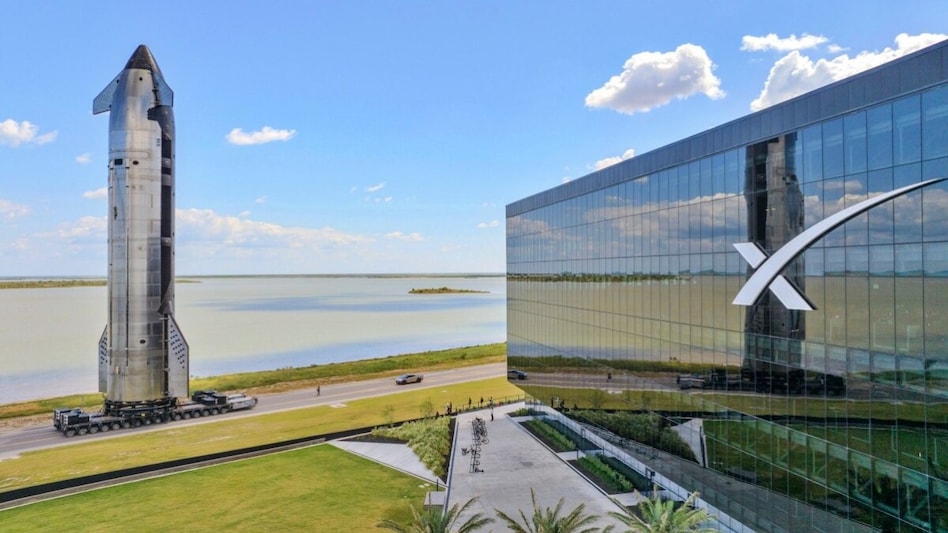
SpaceX’s $75 billion IPO plan: Why Elon Musk’s space company is heading to public markets now
SpaceX is gearing up for one of the most significant developments in its history, transitioning from rocket launches to a launch into the public markets. Reports indicate that the company, spearheaded by Elon Musk, could submit its initial public offering (IPO) application as soon as this week or next. Should this IPO materialize, SpaceX is poised to raise upwards of $75 billion, potentially making it the largest IPO on record, eclipsing the previous high set by Saudi Aramco’s $29.4 billion offering in 2019. The anticipated valuation for SpaceX is staggering, with estimates suggesting it could exceed $1.75 trillion, placing it among the world's most valuable companies. The significance of this IPO cannot be overstated. SpaceX has evolved far beyond its origins as a rocket manufacturer. Today, its launch operations are crucial to U.S. space missions and are supported by substantial government contracts. However, the company’s most lucrative venture is Starlink, its satellite internet service that generates billions in consistent revenue. Furthermore, SpaceX has ventured into the realm of artificial intelligence through its acquisition of xAI, Musk’s AI startup responsible for the Grok chatbot, effectively uniting rockets, satellites, and AI under one corporate umbrella. Despite its robust revenue streams, SpaceX requires significant capital to support its ambitious projects. The company is in the process of developing Starship, a next-generation rocket intended for lunar and Martian missions, which entails considerable expenses and years of development. Additionally, SpaceX’s aspirations to construct orbital infrastructure, such as data centers in space, have driven up costs. The integration of xAI has further escalated expenditures, with projections indicating that the AI division could incur nearly $1 billion monthly to train advanced models. By going public, SpaceX aims to tap into larger financial resources, enabling it to compete with AI competitors like OpenAI and Anthropic. Notably, both OpenAI and Anthropic are also rumored to be considering public offerings this year, with their private valuations already reaching hundreds of billions of dollars. Until now, SpaceX has relied on private funding from major investors. However, the scale of its current projects appears too ambitious for private financing alone. An IPO would not only provide fresh capital but also allow the issuance of publicly traded shares, which could be leveraged for strategic partnerships, acquisitions, and employee incentives. There are indications that SpaceX might adopt a dual-class share structure, which would ensure that insiders, including Musk, maintain significant control over the company post-IPO, a common practice among large tech firms. The timeline for the SpaceX IPO is expected to commence with a filing to U.S. regulators, followed by a review phase. The company will then publish its official documents and outline its plans to potential investors. If all proceeds as anticipated, SpaceX could enter the public market by June 2026.
Warner Bros. Takes Legal Action Against Amazon Over Executive Poaching Allegations
Warner Bros. Discovery has initiated legal proceedings against Amazon, accusing the tech giant of unlawful interference ...
TechCrunch | Jul 25, 2026, 21:25
Navigating the Future: Are Wearable AI Gadgets Ready to Transform Our Lives?
Imagine a typical workday where you and your colleagues sport discreet recorders on your clothing, while smart glasses s...
CNN | Jul 26, 2026, 16:10
Kalshi Challenges Netflix Over Controversial Documentary Trailer
Kalshi, the prediction market platform, has taken significant legal steps against Netflix, sending a cease-and-desist le...
TechCrunch | Jul 25, 2026, 17:10
The Boring Company Eyes $4 Billion Funding Boost Amid Expanding Tunnel Ventures
Elon Musk's tunneling enterprise, The Boring Company, is reportedly negotiating a substantial funding round of $4 billio...
TechCrunch | Jul 25, 2026, 19:50
AI Revolution: Sam Altman Declares We Are in the Singularity Era
OpenAI's CEO, Sam Altman, has boldly asserted that we have reached a pivotal moment in the evolution of artificial intel...
Business Insider | Jul 26, 2026, 18:10