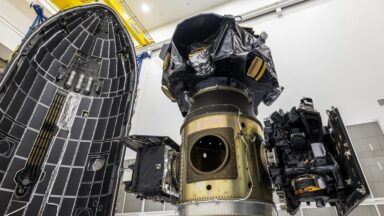
A “cosmic carpool” is traveling to a distant space weather observation post
On Wednesday, a SpaceX Falcon 9 rocket successfully lifted off with three significant missions, valued at nearly $1.6 billion, aimed at probing the solar winds and their effects on our planet. These missions are en route to an orbit nearly one million miles from Earth, where they will gather vital data about the supersonic stream of charged particles flowing from the Sun. One of the missions, conducted by the National Oceanic and Atmospheric Administration (NOAA), is particularly crucial as it will provide real-time observations of solar wind activity. This information is essential for predicting geomagnetic storms that could disrupt power grids, radio signals, GPS navigation, air travel, and satellite operations. The other two missions, spearheaded by NASA, focus on groundbreaking research. They aim to explore the boundary between our Solar System and interstellar space, alongside studying the seldom-visited outer layer of Earth's atmosphere. The Falcon 9 rocket launched at 7:30 AM EDT (11:30 UTC) from NASA's Kennedy Space Center in Florida, following a trajectory that took it eastward over the Space Coast. After successfully separating from its first stage booster, which landed offshore, the rocket's upper stage engine was fired twice to position the three missions into deep space. Shortly after launch, each spacecraft detached from the Falcon 9, embarking on a multi-month journey to their designated observation points. They will orbit around the L1 Lagrange point, situated approximately 900,000 miles (1.5 million kilometers) from Earth toward the Sun. This location, where the gravitational forces of the Earth and Sun create a stable environment, is ideal for satellite operations and solar science research. Among the trio of missions, the primary one is known as the Interstellar Mapping and Acceleration Probe (IMAP). This unique spacecraft, shaped like a donut and measuring about 8 feet (2.4 meters) in diameter, is equipped with ten scientific instruments aimed at examining both the solar wind and the edges of the heliosphere, which is the magnetic bubble created by the Sun's outflow.
From F1 to Factory Floors: Startup Microagi Raises $55 Million to Revolutionize Robotics
A former engineer from Red Bull Racing has transitioned from the high-speed world of Formula One to a groundbreaking ven...
Business Insider | Jul 16, 2026, 06:20OnePlus Faces Possible Exit from Indian Market by 2027 Amid Restructuring
The future of OnePlus in India hangs in the balance as the brand continues to scale back its operations. Recent reports ...
Business Today | Jul 16, 2026, 05:10
Menlo Ventures' Bold Bet on Anthropic: A Game-Changer in AI Investment
In an ambitious move that defied conventional wisdom, Menlo Ventures decided to invest in Anthropic, a company viewed as...
Business Insider | Jul 16, 2026, 09:05Skyroot Aerospace Gears Up for Historic Vikram-1 Rocket Launch
Skyroot Aerospace, an innovative Indian space startup, is set to launch its Vikram-1 rocket on July 18, marking a signif...
Business Today | Jul 16, 2026, 09:15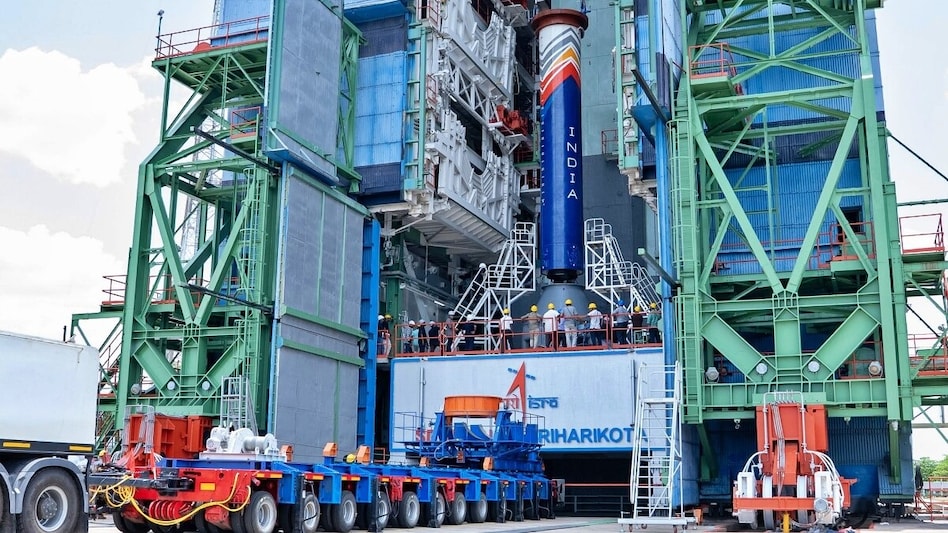
Caution Advised: Jamie Dimon Urges Businesses to Reassess AI Investments
In a recent appearance on CNBC, JPMorgan CEO Jamie Dimon highlighted the rising costs associated with artificial intelli...
Business Insider | Jul 16, 2026, 06:00