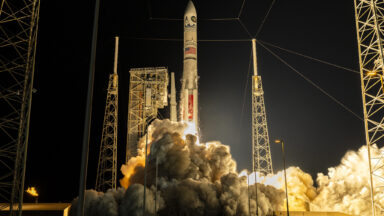
Pentagon contract figures show ULA’s Vulcan rocket is getting more expensive
Each year, the US Space Force holds a Mission Assignment Board to distribute contracts for launching crucial national security satellites. This year's announcements, made on Friday, saw SpaceX emerge as the leading contractor, securing five out of the seven available launch missions. Meanwhile, United Launch Alliance (ULA), a joint venture of Boeing and Lockheed Martin, was awarded contracts for the remaining two missions. These missions, designated for both the Space Force and the National Reconnaissance Office, are scheduled for launch in the coming years. As of now, SpaceX and ULA are the only firms with rockets certified by the Space Force to handle the Pentagon's high-stakes satellite launches. ULA's Vulcan rocket, which is set to succeed its Atlas V counterpart, made its debut nearly two years ago, achieving its first national security mission launch in August. In contrast, SpaceX's Falcon 9 and Falcon Heavy rockets boast extensive records of successful launches. Blue Origin’s New Glenn rocket, developed by Jeff Bezos, is also listed among the Space Force's approved rockets but is still pending military certification, requiring at least one more successful flight before it can participate in National Security Space Launch (NSSL) missions. Col. Eric Zarybnisky, the program executive officer for Assured Access to Space, emphasized the importance of space for national security, stating, "Space is the ultimate high ground, critical for our national security. With this year's NSSL Phase 3 Lane 2 mission assignments, we continue to assure access to that high ground." The selection of SpaceX for the majority of this year's missions was anticipated, following the Space Force's announcement in April that it would prioritize SpaceX for launch contracts over the next several years. ULA is slated to receive the second-highest number of contracts, while Blue Origin is positioned as a potential third provider. Space Force officials noted that they may redistribute missions among the three companies if one experiences operational challenges.
Vision Breakthrough: US Startup Launches Groundbreaking Retina Chip in Europe
Science Corp is poised to introduce a revolutionary retina chip in Europe, designed to restore partial vision for indivi...
Business Today | Jul 25, 2026, 01:00
Elon Musk Faces Major Setbacks as Tesla and SpaceX See Significant Stock Declines
It has been a challenging week for Elon Musk, as both Tesla and SpaceX experienced substantial stock declines. Tesla sha...
CNBC | Jul 24, 2026, 20:40
The Rise of AI Distillation: A Controversial Technique Sparks Debate in Tech and Government
In recent discussions, a once-obscure topic in artificial intelligence has surged to the forefront of debates among tech...
CNBC | Jul 25, 2026, 12:15
Prentis: Ambitious New AI Lab Eyes $100 Million Funding with Innovative Automation Goals
Prentis, a cutting-edge AI research laboratory co-founded by Ritankar Das, Reid Hoffman, and Marc Pincus, is currently i...
TechCrunch | Jul 24, 2026, 22:45
Vietnam's Controversial Social Media Proposal: A New Approach for Youth Engagement
Vietnam is contemplating a distinctive approach to youth social media regulations, diverging from the more common outrig...
TechCrunch | Jul 24, 2026, 21:25