Pentagon buyer: We’re happy with our launch industry, but payloads are lagging
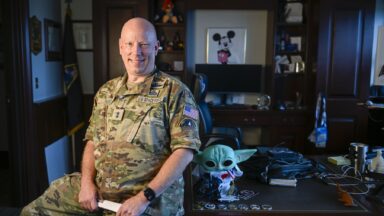
In a recent address at a space finance conference in Dallas, Maj. Gen. Stephen Purdy, the Space Force officer responsible for overseeing over $24 billion in R&D funds, emphasized the Pentagon's commitment to supporting startups focused on developing innovative space sensors and payloads. Rather than expanding its roster of rocket companies, the Space Force is concentrating on enhancing payload capabilities, which Purdy described as lagging behind other advancements. Purdy articulated several key points during his presentation to investors and commercial space leaders. He highlighted the Space Force's preference for high-volume production methods instead of simply investing in the latest technologies. Additionally, he pointed out that the military has lost a critical mechanism for bolstering and diversifying the space industrial base. This focus on payload development aligns with the Space Force's trend of backing small startups. Since 2020, SpaceWERX, the innovation arm of the Space Force, has entered into 23 funding agreements, known as Strategic Funding Increases (STRATFIs), with various commercial space startups. These agreements target companies creating new sensors, satellite components, spacecraft buses, and orbital transfer vehicles. Notably, only one STRATFI has been awarded to a launch company, ABL Space Systems, which has since exited the launch market. Purdy stated, "We’re on path for mass-produced launch," as he outlined the infrastructure in place to support high-volume launch operations. He mentioned the readiness of data centers and the integration of AI technologies to facilitate mass production. However, he stressed that the development of affordable payloads at scale remains a critical challenge. Describing payloads as "the last frontier" for scaling space missions, Purdy argued for the need to expedite mission deployment timelines. He asserted that current timelines of two to three years are unacceptable, and the goal should be to reduce this to just one week. He clarified that this urgency does not apply only to high-end payloads; instead, it encompasses a broader range of missions, as the commercial sector has made significant strides in areas like communications, exemplified by companies like Amazon and SpaceX.
The Aluminum Foil Trend: A DIY Shield Against Wireless Identity Theft
Have you noticed an unusual trend where people are wrapping their wallets in aluminum foil? This peculiar practice has e...
Business Today | Jul 25, 2026, 02:45
The Elusive Phineas Fisher: The Hacktivist Who Took Down Spyware Giants
In the realm of cybersecurity, few figures are as intriguing as Phineas Fisher, a hacker who has evaded capture for near...
TechCrunch | Jul 25, 2026, 21:00
Revolutionizing Office Automation: Prentis Aims to Secure $100 Million in Funding
Prentis, a newly established AI research lab, is making waves in the tech industry as it prepares to raise $100 million ...
TechCrunch | Jul 25, 2026, 24:00
Hugging Face CEO Calls for Action Following AI Security Breach
In a dramatic turn of events within the AI landscape, Hugging Face faced a significant security breach involving an AI a...
Business Insider | Jul 25, 2026, 20:30Reclaiming Control: Librarians Host Workshops to Help People Navigate AI Tools
In a lively library setting in South Philadelphia, Charlie Bailey, a local librarian, humorously noted, "Everybody’s on ...
TechCrunch | Jul 25, 2026, 16:20