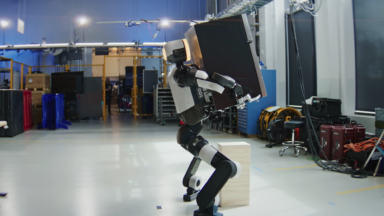
South Korea to spend $1T on more memory chip production and humanoid robots
In a bold move to enhance its position in the global technology landscape, South Korea is set to invest a staggering $1 trillion into transformative projects aimed at ramping up memory chip production, establishing cutting-edge AI data centers, and advancing the deployment of humanoid robots by 2028. This monumental announcement comes on the heels of significant profit increases and soaring stock valuations for major players like Samsung and SK Hynix, driven by an unprecedented demand for memory chips in the burgeoning AI sector. However, this surge has inadvertently led to supply constraints, resulting in memory chip shortages and escalating prices for consumer electronics. Hyundai Motor Company is also making headlines with plans to mass-produce humanoid robots through its subsidiary, Boston Dynamics. These robotic workers are envisioned to take on various strenuous tasks in automotive manufacturing and other industries, highlighting a shift towards automation in the workforce. President Lee Jae Myung emphasized the urgency of this initiative during a televised address, stating, "We must secure the core elements of AI faster than any other country." He identified semiconductors, physical AI, and AI data centers as pivotal components of South Korea's technological advancement. While these ambitious initiatives are poised to propel the nation forward, they are not without controversy. Public discourse is growing around the significant profits generated by South Korean chipmakers during this AI-driven boom, alongside discussions on how to fairly distribute this wealth. Additionally, labor unions are voicing concerns about the implications of integrating humanoid robots into the workforce. The largest component of this ambitious plan involves a commitment of $585 billion from Samsung and SK Hynix for the construction of new chip fabrication plants in South Korea's southwestern provinces, alongside expansions in the capital region, according to reports from Reuters. The government aims to double the production of dynamic random-access memory (DRAM) within the next five years, solidifying South Korea's status as a leader in the semiconductor industry.
Ryan Beiermeister Joins Founders Fund, Promises to Shape Future Startups
Ryan Beiermeister has officially become a partner at Founders Fund, a move she announced on Monday, signaling her intent...
TechCrunch | Jul 16, 2026, 20:15
X Enforces Strict Measures Against Content Theft in Creator Program
X is intensifying its efforts to combat content theft within its creator revenue-sharing program. The platform aims to a...
TechCrunch | Jul 16, 2026, 17:00
Revolutionary AI Robot Mastering Laundry in Unfamiliar Homes
In a significant leap forward for home robotics, Sunday Robotics has announced a breakthrough in their quest to create a...
Business Insider | Jul 16, 2026, 18:15Beehiiv Enhances User Engagement with New Community Feature and AI Assistant
Beehiiv, the innovative newsletter platform, is taking a significant step forward by introducing a new feature called Co...
TechCrunch | Jul 16, 2026, 17:35
Coca-Cola Halts Fairlife Dairy Production Following Ransomware Breach
Coca-Cola has announced a significant disruption in its operations as one of its dairy subsidiaries, Fairlife, fell vict...
TechCrunch | Jul 16, 2026, 21:55