Sophia Space raises $10M seed to demo novel space computers
In the race to deploy cutting-edge technology in outer space, the challenge of effectively cooling high-powered processors has emerged as a critical concern. Nvidia CEO Jensen Huang highlighted this issue in a recent earnings call, noting that while space is cold, the lack of airflow complicates heat dissipation, which primarily relies on conduction. Amidst this backdrop, Sophia Space has successfully raised $10 million in seed funding from notable investors, including Alpha Funds, KDDI Green Partners Fund, and Unlock Venture Partners. The company is set to demonstrate a groundbreaking approach to passive cooling for space computers on Earth before transitioning to orbit. By late 2027 or early 2028, they plan to utilize a satellite bus from Apex Space to validate their technology in the harsh environment of space. While industry giants like SpaceX and Google explore conventional satellite designs that utilize large radiators for thermal management, Sophia Space's founders — CTO Leon Alkalai, CEO Rob DeMillo, and chief growth officer Brian Monnin — are pursuing a unique solution. Their technology stems from a $100 million initiative at Caltech aimed at developing orbital solar plants capable of transmitting energy back to Earth. This led to the creation of a sail-like structure, which is both thin and flexible, in contrast to the more traditional boxy satellite designs. Despite the challenges associated with generating power in space, Alkalai, who is also a fellow at the Jet Propulsion Laboratory managed by Caltech, recognized the potential to adapt this design for space-based computing. Sophia's partnership with Nvidia has facilitated the development of modular server racks equipped with integrated solar panels, known as TILES. Each TILE measures one meter by one meter and is only a few centimeters thick, allowing processors to be placed against a passive heat spreader, thereby eliminating the need for active cooling. DeMillo anticipates that an impressive 92% of the generated power will be allocated to processing, marking a significant improvement over existing systems. However, this innovative design necessitates a sophisticated software management system to ensure efficient operation across multiple processors. Looking ahead to the 2030s, Sophia envisions constructing extensive space data centers composed of thousands of TILEs, aiming for a 50 x 50 meter facility that can deliver one megawatt of computing power. DeMillo asserts that relying on less efficient systems for space data centers will not be viable economically. He argues that a centralized structure would be more practical compared to a distributed network connected by lasers. Initially, Sophia plans to provide its TILEs to satellite operators that require on-orbit computing solutions. Potential collaborators include earth observation satellites that gather vast amounts of sensor data, missile tracking systems funded by the Pentagon, and increasingly complex communication networks. "The satellite industry has a hidden issue," Demillo stated. "We have incredible sensors generating terabytes, even petabytes, of data every few minutes, but most of it is discarded because there isn't enough onboard computing power or the latency for round-trip data transmission is too high."
Warner Bros. Takes Legal Action Against Amazon Over Executive Poaching Allegations
Warner Bros. Discovery has initiated legal proceedings against Amazon, accusing the tech giant of unlawful interference ...
TechCrunch | Jul 25, 2026, 21:25
The Shift in Human Cognition: Embracing AI as a Collaborative Tool
As technology continues to evolve, a notable shift is occurring in the relationship between humans and artificial intell...
Business Insider | Jul 25, 2026, 09:50Nvidia Strikes Major Deal with SK Hynix to Secure AI Memory Supply
Nvidia has successfully forged a significant partnership with South Korea's SK Hynix to secure memory supplies essential...
CNBC | Jul 25, 2026, 05:15
OpenAI's Micro Keypad: A Novelty for Coders or Just a Confounding Gadget?
Last week, OpenAI made its debut in the hardware landscape with the launch of Micro, a stylish keypad designed to integr...
TechCrunch | Jul 25, 2026, 24:40
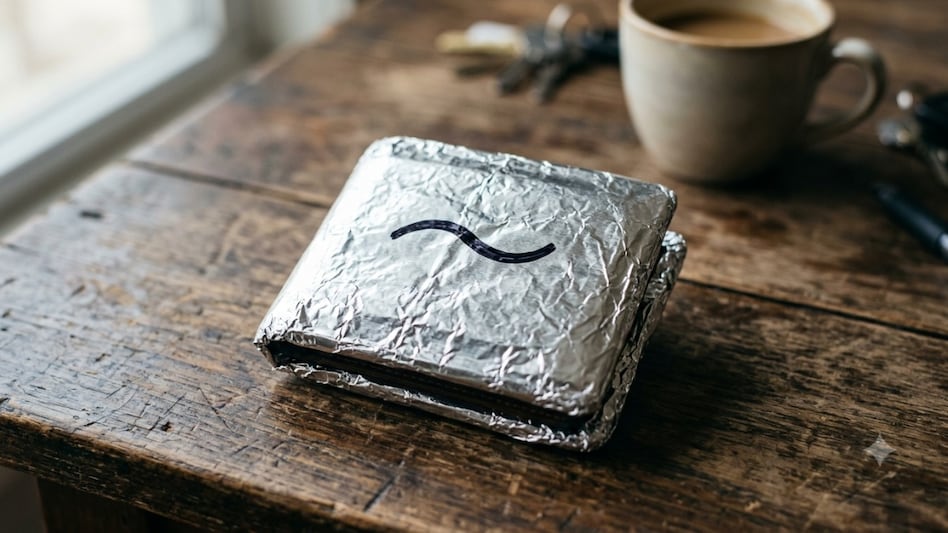
The Aluminum Foil Trend: A DIY Shield Against Wireless Identity Theft
Have you noticed an unusual trend where people are wrapping their wallets in aluminum foil? This peculiar practice has e...
Business Today | Jul 25, 2026, 02:45