SK Hynix is the latest chip giant to discover that a 557% profit boost isn't good enough
In a surprising turn of events, SK Hynix, a prominent player in the memory chip sector, saw its share price plummet by as much as 13% following the announcement of a staggering 557% increase in operating profit. The South Korean company's second-quarter earnings report revealed record-breaking figures, with revenue soaring to 79.3 trillion South Korean won (approximately $54.6 billion), marking a 257% rise from the previous year. Despite the impressive growth, the results fell short of analysts' expectations, particularly in terms of operating profit, which was anticipated to reach around 64 trillion won. As a result, investors reacted negatively, sending Nasdaq-listed SK Hynix's shares down 9% on Tuesday, although they saw a slight recovery of 2% in after-hours trading. The company benefited significantly from the surging demand and rising prices for high-bandwidth memory (HBM) and other chips designed for artificial intelligence servers. However, the failure to meet revenue and profit forecasts led to a broader sell-off in South Korea's stock market, with the KOSPI index dropping approximately 8%. This trend also impacted other chip manufacturers, including Samsung Electronics and Taiwan Semiconductor Manufacturing Co., which saw their shares decline as well. Market analysts have noted that the recent volatility in South Korean equities stems from a mix of high investor expectations and a correction following an AI-driven rally that saw the KOSPI index triple in value between the beginning of 2025 and its mid-June peak. Eurasia Group analysts commented that the significant market fluctuations appear disconnected from underlying financial fundamentals. As institutional and foreign investors have begun to take profits, retail investors are increasingly entering the market, contributing to the current instability. According to SK Kim, a senior analyst at Daiwa Capital Markets, the earnings miss was largely expected and attributed to the product mix rather than a decline in demand. He emphasized that there has been no fundamental change in the ongoing AI-driven supercycle, suggesting that investors are now looking for more shareholder returns, such as buybacks, to justify the recent price corrections.
Political Backlash Follows Jensen Huang's Surprising Return to Nvidia
Jensen Huang, the CEO and co-founder of Nvidia, has made a startling comeback after being ousted just over a week ago du...
TechCrunch | Nov 23, 2026, 19:40
Nvidia's CEO Return Reshapes AI Landscape, Puts Anthropic on Edge
The return of Jensen Huang as CEO of Nvidia has sent ripples through the AI market, causing most AI stocks to rally, yet...
Business Insider | Nov 23, 2026, 18:25Nvidia's Jensen Huang Set to Face Senate Committee Amid Controversy
Jensen Huang, the CEO of Nvidia, is slated to appear before the Senate Banking Committee on December 3. This announcemen...
TechCrunch | Nov 23, 2026, 18:35
Trump Claims Role in Jensen Huang's Return as Nvidia CEO Amid Security Concerns
On Monday, former President Donald Trump asserted that he played a pivotal role in convincing Nvidia's board to reinstat...
Business Today | Nov 23, 2026, 17:05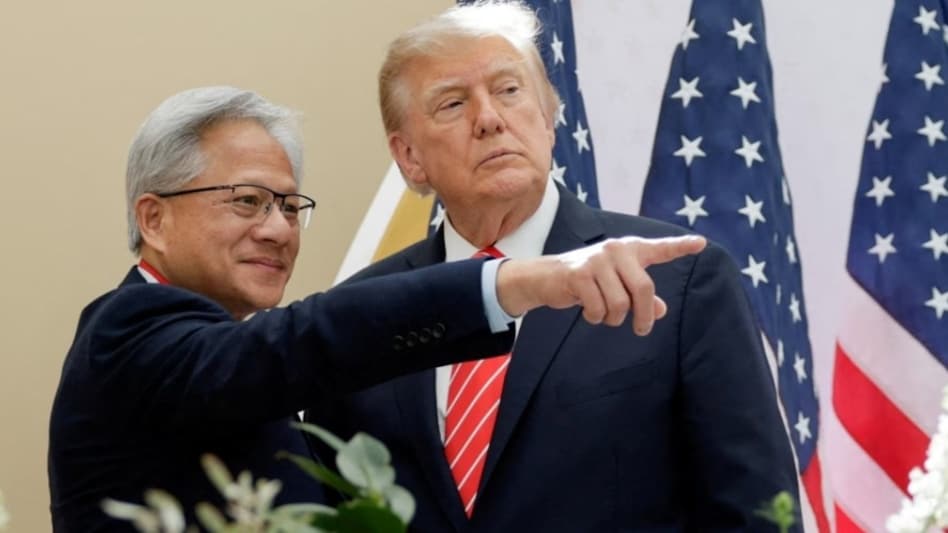
Amazon Acquires Decart for $7.5 Billion to Boost AI Capabilities
In a significant move to enhance its artificial intelligence capabilities, Amazon has announced its acquisition of the I...
TechCrunch | Nov 23, 2026, 17:30