How one country is engineering its way out of a construction cost crisis
In the wake of the pandemic, Singapore’s construction sector has seen a remarkable surge, with numerous mega projects like the $8 billion Las Vegas Sands development and a new terminal at Changi Airport slated to commence in 2025. Another significant project, the Tengah General & Community Hospital, aims to enhance healthcare capacity by adding 4,000 patient beds by 2030. The Building and Construction Authority (BCA) of Singapore has projected that construction demand could hit an impressive 53 billion Singapore dollars (approximately $42 billion) this year, marking a 15% increase from previous estimates. "The construction industry has rebounded strongly post-COVID, and we are experiencing an unprecedented boom," stated Alex Saez, managing director of APAC at engineering consultancy Cundall, in an interview. While such growth is beneficial for the economy, it also poses significant challenges, particularly with construction costs consistently ranking among the highest globally. According to construction consultant Turner & Townsend, costs are anticipated to rise by as much as 5% this year due to supply chain disruptions affecting essential materials like cement and ready-mixed concrete, alongside prolonged lead times for plumbing and electrical systems exacerbated by escalating semiconductor prices. The shortage of skilled labor further complicates matters. Khoo Sze Boon, managing director for Singapore at Turner & Townsend, highlighted the tight market for PMET roles—professionals, managers, executives, and technicians. "Capability gaps are impacting project timelines and quality, especially among specialist subcontractors," Khoo remarked. In response to these challenges, the BCA plans to introduce a training program for project managers later this year, aiming to bridge these skill gaps. Analysts from CGS International Securities Singapore noted a growing trend of 'double hatting,' where workers are trained for multiple roles to mitigate labor shortages. This allows companies to adapt by cross-training personnel, enabling them to perform various functions efficiently. Contractors like Soilbuild are pivoting towards high-value, high-specification industrial buildings, as noted by CEO Han Ren Lim. The firm is enhancing operational efficiency through prefabrication and advanced technologies such as enterprise risk management systems. Technological integration is key, with companies like ISOTeam employing drones and AI for building inspections and developing drones capable of performing maintenance tasks, minimizing the need for scaffolding. Although investments in such technologies require upfront costs, analysts believe they will lead to improved earnings in the long run. Starting in April, the BCA will offer new grants to small firms to invest in automation and robotics, which could lead to substantial manpower savings. Additionally, firms are increasingly leveraging digital tools for project management, with companies like OpenSpace and PlanRadar seeing growth in demand from Singapore. Khoo from Turner & Townsend emphasized that merely adopting new technologies is insufficient; companies must align these tools with their commercial objectives to truly benefit. Innovations such as those from Legend Robot, which manufactures machinery capable of significantly outperforming human workers in tasks like painting, are indicative of a shift toward automation. Despite the influx of investment into construction projects, analysts from CGS International have revised their forecasts upward, predicting continued growth in contractor earnings through the 2028-29 financial year. Singapore's long-term development plans include new parks, residential areas, and subway lines, though land scarcity complicates decision-making on urban development. Higher construction costs are also contributing to an increased cost of living, making private housing in Singapore exceedingly expensive. Nevertheless, real estate consultancy Cistri’s Jonathan Denis-Jacob noted that infrastructure projects in Singapore are typically completed on time and within budget, largely due to the government's focus on long-term needs rather than political considerations. Architects and urban planners like Wynn Cam and Charu Kokate commend Singapore's approach, highlighting a commitment to not just building but also sculpting and greening urban spaces. This holistic approach aims to enhance the livability and comfort of the city, setting a benchmark that is rare on a global scale.
Valar Atomics Eyes $6 Billion Valuation with New Funding Talks for Modular Nuclear Reactors
Valar Atomics, an innovative startup focused on developing small modular nuclear reactors (SMRs), is currently negotiati...
TechCrunch | Jul 17, 2026, 19:45
Kid-Safe Phone Innovations: A New Wave of Parental Control
With rising concerns among parents regarding unrestricted smartphone access for children, numerous companies are steppin...
TechCrunch | Jul 17, 2026, 16:25
San Francisco Demands Apple and Google Eliminate Controversial 'Nudify' Apps from Their Platforms
San Francisco officials have taken a strong stance against the proliferation of 'nudify' apps, which are designed to dig...
TechCrunch | Jul 17, 2026, 20:05
Xi Jinping Advocates for Open-Source AI Collaboration at Global Conference
At the World Artificial Intelligence Conference held in Shanghai, Chinese President Xi Jinping emphasized the necessity ...
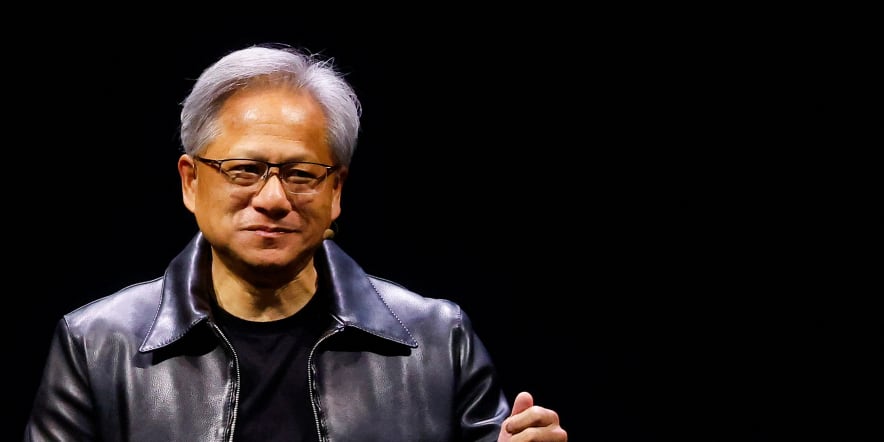
Business Insider | Jul 17, 2026, 17:10Nvidia CEO's Iconic Leather Jacket Fetches Nearly $1 Million at Auction
Jensen Huang, the CEO of Nvidia, is known for his distinctive style, often sporting a leather jacket that has become his...
CNBC | Jul 17, 2026, 23:25