
Serval raises $47 million to bring AI agents to IT service management
In a significant move for the enterprise AI sector, Serval has successfully raised $47 million in a Series A funding round aimed at transforming IT service management through advanced AI agents. This funding round, led by Redpoint Ventures, included contributions from notable venture firms such as First Round, General Catalyst, and Box Group. What truly sets Serval apart is not just its impressive financial backing, but also its roster of high-profile clients, featuring major players in the AI landscape like Perplexity, Mercor, and Together AI. At its core, Serval is leveraging agentic AI models to automate various aspects of IT service management, implementing a distinctive methodology that harnesses the strengths of AI while mitigating potential risks. The company utilizes a dual-agent system, where one agent is responsible for developing internal automations for routine tasks such as software authorization and device provisioning. This approach, likened by the founders to a 'vibe-coding tool,' allows IT managers to oversee the automation process while the AI efficiently handles the workload. Serval's CEO, Jake Stauch, emphasized the importance of simplifying the automation building process. He stated, "We don’t want them to feel the marginal cost of building these automations. We want to make it easier to automate something forever than do it manually once." The division of tasks between two agents—one for creating tools and another for executing them—also provides a framework for managers to monitor permissions. When a new automation is established, managers can set specific rules for its usage, ensuring an extra layer of protection against potential misuse by AI agents. Recognizing the concerns around rogue AI systems, Serval strategically avoided deploying a single, all-encompassing Help Desk Agent. Stauch illustrated the potential pitfalls, saying, "You don’t want someone to go into Slack and say, hey, I want to delete all the data at the company, and the very helpful AI agent responds, ‘Great, I’ll delete all the data.’" Instead, the AI is programmed to respond within its permissions, guiding users toward legitimate options such as password resets rather than executing destructive commands. The deterministic nature of these tools allows for intricate permission configurations, which can include requirements like multi-factor authentication or time-sensitive actions. Whenever modifications to these rules are necessary, an AI agent stands ready to adjust the codebase accordingly. Stauch concluded by emphasizing the need for transparency and oversight in AI operations, stating, "You want to have full visibility and control into what that AI agent is doing. And you do that by using Serval to build those tools and customize the permissions and approvals behind them."
Anand Mahindra: AI Will Transform, Not Replace, India's IT Landscape
Anand Mahindra, Chairman of the Mahindra Group, has asserted that artificial intelligence (AI) will fundamentally transf...
Business Today | Jul 17, 2026, 16:20
Top 5 Tech Subscriptions to Slash Your Digital Expenses in 2026
As the costs of smartphones, streaming services, and cloud storage rise, many users are feeling the pinch of technology ...
Business Today | Jul 18, 2026, 05:10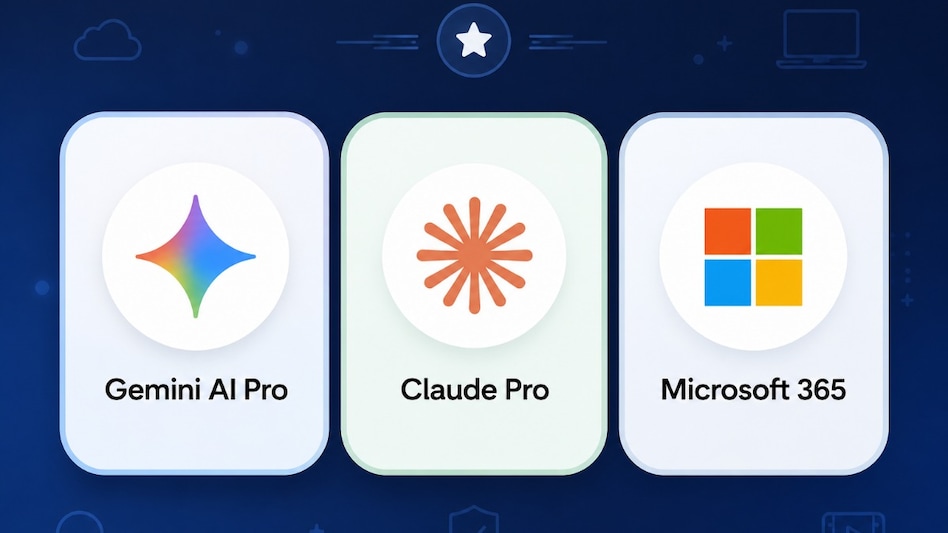
Valar Atomics Eyes $6 Billion Valuation with New Funding Talks for Modular Nuclear Reactors
Valar Atomics, an innovative startup focused on developing small modular nuclear reactors (SMRs), is currently negotiati...
TechCrunch | Jul 17, 2026, 19:45
San Francisco Demands Apple and Google Eliminate Controversial 'Nudify' Apps from Their Platforms
San Francisco officials have taken a strong stance against the proliferation of 'nudify' apps, which are designed to dig...
TechCrunch | Jul 17, 2026, 20:05
Xi Jinping Advocates for Open-Source AI Collaboration at Global Conference
At the World Artificial Intelligence Conference held in Shanghai, Chinese President Xi Jinping emphasized the necessity ...
Business Insider | Jul 17, 2026, 17:10