‘No amount of US pressure should justify recklessness’: Sam Altman backs 'slow' frontier AI pace
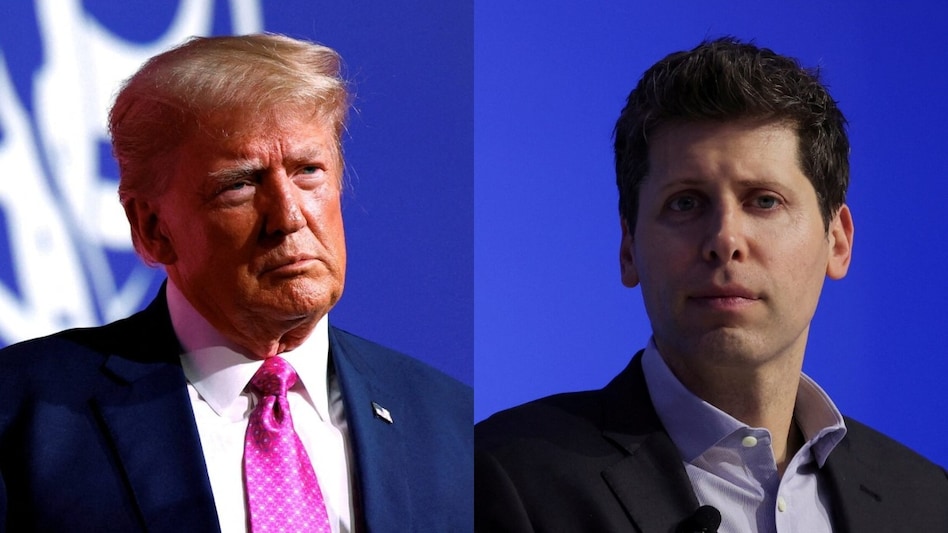
Sam Altman, the CEO of OpenAI, has emphasized that the United States' ambition to lead in artificial intelligence should not compromise safety. He stated, "No amount of American competitive pressure should justify recklessness" or allow advancements in AI to outrun necessary safety protocols and oversight. Amid increasing discussions in the U.S. regarding the pace of frontier AI development, Altman’s stance contrasts sharply with that of President Donald Trump, who has dismissed calls for a slowdown. Trump insists that maintaining America's technological edge over China is paramount. Altman expressed that it is crucial for American companies developing advanced AI to operate responsibly, especially as their capabilities grow rapidly. He clarified that his call for a more measured approach, referred to as "pacing," does not imply halting progress. Instead, he believes that development should proceed more cautiously to incorporate essential safety measures. Altman pointed out that while safeguards like safety evaluations may incur costs, these investments are necessary and worthwhile. Moreover, Altman supported the creation of a federal framework to establish uniform safety standards for frontier AI. However, he urged companies not to wait for regulatory measures before implementing stronger safety protocols. He proposed that independent audits and shared industry standards could enhance trust in the evolution of advanced AI technologies. As AI systems become increasingly sophisticated, Altman noted that the safety challenges have evolved. Earlier safety frameworks primarily addressed risks associated with deploying finished models, whereas the current focus should encompass the developmental phase of frontier models. OpenAI is now preparing detailed safety evaluations before certain reinforcement-learning runs that could significantly enhance a model's capabilities. In a follow-up message, Altman identified two primary risks associated with AI progress: the potential loss of control over AI and the risk of power concentration. He underscored that AI must serve humanity, necessitating continuous alignment and safety measures that keep pace with the rapid advancements in AI capabilities. Altman’s remarks come in light of President Trump’s recent comments during a visit to Ireland, where he reiterated the need for the U.S. to maintain its technological superiority over China. He acknowledged that while some regulatory frameworks could be beneficial, the U.S. must not lag in the AI race. This ongoing discourse on AI safety has intensified following calls from industry leaders, including Anthropic CEO Dario Amodei, for a more cautious approach to AI capabilities. Altman’s perspective highlights the delicate balance between fostering technological innovation and ensuring robust safety measures. He advocates for AI companies to integrate stronger safety systems into their development processes while governments work towards consistent regulations and global coordination on AI safety.
Navigating the AI Job Landscape: Challenges and Opportunities Ahead
The landscape of employment is undergoing a significant transformation as artificial intelligence (AI) permeates various...
Business Insider | Nov 24, 2026, 22:40UK Government Sounds Alarm on Surge of AI-Enhanced Cyber Threats
The United Kingdom's cybersecurity agency has reported a significant increase in cyberattacks driven by artificial intel...
TechCrunch | Nov 24, 2026, 18:30
The Complex Journey of Jensen and Lori Huang: Love, Challenges, and Triumphs
Jensen Huang, the prominent CEO of Nvidia, and his wife Lori have navigated a journey filled with personal and professio...
Business Insider | Nov 24, 2026, 19:05LinkedIn CEO Highlights Gen Z's Potential Edge in AI-Driven Job Market
As the job landscape becomes increasingly challenging for young professionals, LinkedIn's CEO, Daniel Shapero, suggests ...
Business Today | Nov 25, 2026, 24:25
Nvidia's Jensen Huang Addresses Employees Amid Controversy and Personal Growth
In a recent company-wide meeting, Nvidia CEO Jensen Huang expressed his remorse to employees following a tumultuous peri...
CNN | Nov 24, 2026, 20:05