Rocket Report: Rocket Lab reports Neutron setback; Australia backs launch startup
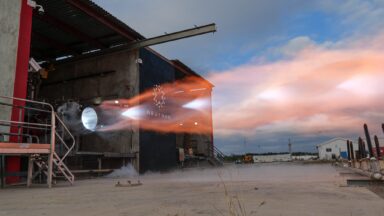
Welcome to the latest edition of the Rocket Report, where we delve into the recent developments in the rocket industry. This week has brought a mix of progress and challenges. NASA has successfully transported its massive rocket for the Artemis II mission to the launch pad in Florida. However, Chinese launch systems faced significant setbacks, experiencing two failures within just 12 hours. Rocket Lab's ambitions for its new Neutron launch vehicle have hit a bump in the road following a failure during a critical qualification test. This incident raises questions about the timeline for its anticipated debut in the coming months. In a significant development for Australia’s space ambitions, Gilmour Space Technologies has secured 217 million Australian dollars (approximately $148 million) in funding. This investment, led by the federal government's National Reconstruction Fund Corporation and superannuation firm Hostplus, positions Gilmour as Australia’s latest unicorn—a start-up valued over $1 billion. CEO Adam Gilmour emphasized the importance of this funding in providing Australia with a competitive edge in the global space race. Gilmour remarked, "We’re a rocket company that has never had access to the capital that our American competitors have. This is the first time I’ve secured a substantial amount of funding comparable to what others have globally." This investment is driven by increasing concerns regarding Australia’s dependence on foreign launch services, particularly from companies like SpaceX, for launching government, defense, and commercial satellites into orbit. As U.S. launch schedules extend beyond two years and with geopolitical factors influencing access to space, Australia is prioritizing the establishment of its own launch capabilities. Gilmour's initial Eris rocket successfully launched from the Bowen Orbital Spaceport in North Queensland last July, achieving 14 seconds of flight before crashing—a result the company considers a partial success in an industry where first attempts often fail.
Navigating the AI Landscape: Why CEOs Must Embrace Technology Literacy
In the rapidly evolving world of corporate India, companies are increasingly investing in artificial intelligence (AI), ...
Business Today | Nov 24, 2026, 07:35
Meta's Net-Zero Pledge in Jeopardy: A Shift in Sustainability Strategy Raises Eyebrows
Meta's latest sustainability report casts doubt on its ambitious goal of achieving net-zero emissions by 2030. The compa...
TechCrunch | Nov 23, 2026, 17:30
Political Backlash Follows Jensen Huang's Surprising Return to Nvidia
Jensen Huang, the CEO and co-founder of Nvidia, has made a startling comeback after being ousted just over a week ago du...
TechCrunch | Nov 23, 2026, 19:40
Supertake Secures $20 Million to Revolutionize AI-Driven Investment Portfolios
Supertake, an innovative AI investing startup, is on a mission to transform how individuals engage with the stock market...
TechCrunch | Nov 23, 2026, 22:10
Amazon Acquires Decart for $7.5 Billion to Boost AI Capabilities
In a significant move to enhance its artificial intelligence capabilities, Amazon has announced its acquisition of the I...
TechCrunch | Nov 23, 2026, 17:30