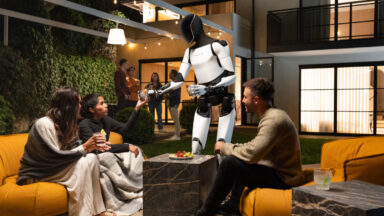
Why iRobot’s founder won’t go within 10 feet of today’s walking robots
When a renowned robotics expert advises maintaining a distance of at least nine feet from full-sized walking robots, it's wise to heed the warning. Rodney Brooks, a key figure in humanoid robotics and co-founder of iRobot, recently expressed his concerns in a technical essay titled "Why Today’s Humanoids Won’t Learn Dexterity," shared on his blog last week. Brooks, a professor emeritus at MIT, cautions that until a safer two-legged walking robot is developed, humanoid robots will not receive certification for use in environments populated by people. He emphasizes that the current generation of bipedal robots poses significant risks due to the immense kinetic energy they produce while trying to maintain balance. This stored energy can lead to serious injuries if the robot were to fall or if its limbs were to contact a person. In addition to the physical dangers, Brooks challenges the popular notion that humanoid robots will soon replace human jobs by simply learning dexterity from observing humans. This AI training method, widely discussed in tech circles, may not be as effective as believed. Despite the burgeoning excitement around advancements in AI, he believes that the reality of developing safe, functional humanoids is further away than many anticipate. The hype surrounding robotics has surged, particularly with claims from tech leaders like Elon Musk, who predicts that Tesla's Optimus robots could yield staggering revenues. Similarly, Brett Adcock, CEO of Figure, envisions humanoids tackling countless tasks across various industries. However, Brooks argues that hardware development is far more complex than software creation. The immutable laws of physics present significant challenges, making it essential for robots to possess a sophisticated sense of touch for safe interactions with the physical world. With decades of experience in robotic manipulation, Brooks insists that companies are overlooking this crucial aspect in their pursuit of advanced humanoid technologies.
Christopher Nolan Warns: AI Might Be a Modern Trojan Horse
Renowned filmmaker Christopher Nolan, known for his latest adaptation of "The Odyssey," has expressed a cautious view to...
TechCrunch | Jul 19, 2026, 15:15
Nationwide Protests Erupt Against AI Data Centers as Communities Demand a Voice
A wave of grassroots activism swept across the United States on Saturday, as citizens rallied against the expansion of A...
Business Insider | Jul 18, 2026, 20:45EU Pushes for Fair Play in AI Assistants, Sparking Tensions with Google and Apple
In a bold move, the European Commission is challenging tech giants Google and Apple over their dominance in the AI assis...
CNN | Jul 19, 2026, 10:40
Nvidia's Jensen Huang Champions Japan's AI Future During Tokyo Summit
Jensen Huang, the CEO of Nvidia, recently concluded a two-day visit to Tokyo, engaging with Japan's leading industrial a...
TechCrunch | Jul 19, 2026, 21:35
Experts Warn of Cyber Threats from Over-the-Air Updates in Vehicles
The rising adoption of over-the-air (OTA) technology in the automotive industry is raising alarms about potential cyber ...
CNBC | Jul 18, 2026, 23:15