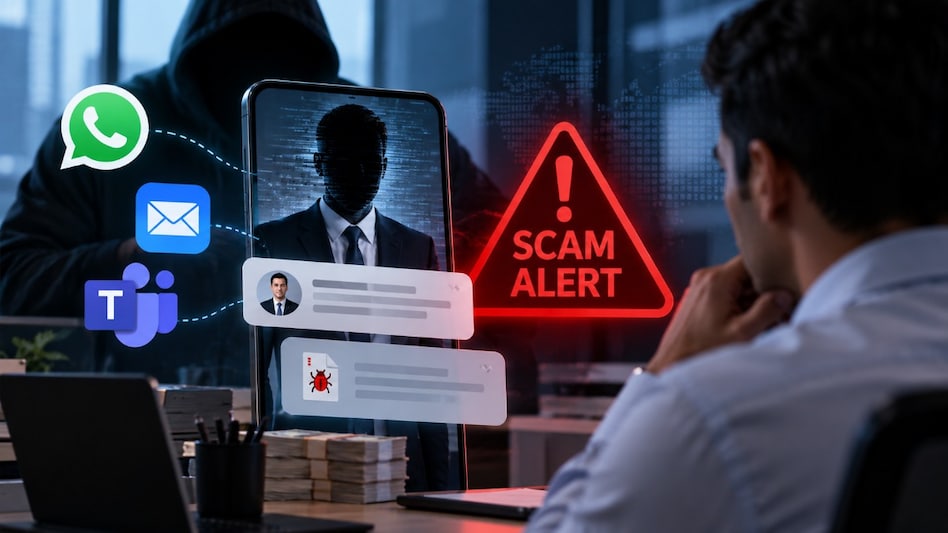
Scammers posing as CEOs on the rise: How fraudsters' WhatsApp, email and Teams messages can steal money
A growing cybercrime strategy, known as the "Boss Scam," is increasingly deceiving finance personnel by impersonating CEOs and managing directors to facilitate fraudulent fund transfers. This scheme can initiate through various platforms including emails, WhatsApp, Microsoft Teams, and social media, with criminals often utilizing AI-powered deepfakes, voice cloning, or harmful files to lend authenticity to their requests. These scams underscore the vulnerability of employees who may act impulsively without verifying such requests, particularly when they appear to come from trusted senior executives. In this tactic, fraudsters masquerade as high-ranking officials, reaching out to their subordinates or business counterparts through digital communications. The messages often contain urgent instructions that, if followed, can lead to significant financial losses as funds are redirected to accounts controlled by the scammers. One alarming method employed is the use of deepfake technology, which includes realistic voice replication and AI-generated video calls that imitate the appearance of genuine CEOs or managing directors. Additionally, criminals may set up fake social media groups that feature impersonated executives, instructing finance teams to transfer money to designated mule accounts while often insisting on confidentiality under the guise of sensitive information. Another tactic involves the distribution of malicious ZIP files, which contain executable and dynamic link library files. When these files are opened on a Windows machine, they can deploy a Trojan dropper, compromising the system and hijacking active WhatsApp Web session tokens. This enables attackers to access the finance officer's WhatsApp account and solicit immediate payments to their accounts. If the device is thoroughly compromised, the scammer can even modify the contact list to impersonate the CEO or managing director. To guard against these threats, companies are advised to implement several protective measures. These include independently verifying digital requests through direct phone calls, refraining from making fund transfers based solely on social media communications, and exercising caution before opening executable files. Additionally, businesses should ensure they log out of any unused WhatsApp Web sessions. Reports of scam incidents can be filed with local authorities or cybercrime reporting websites.
Revolutionizing Cybersecurity: AI's Role in Modern Threat Detection and Defense
As businesses increasingly embrace digital transformation and artificial intelligence, the complexity of cybersecurity t...
Business Today | Nov 24, 2026, 08:30
UK Government Sounds Alarm on Surge of AI-Enhanced Cyber Threats
The United Kingdom's cybersecurity agency has reported a significant increase in cyberattacks driven by artificial intel...
TechCrunch | Nov 24, 2026, 18:30
realme P4x 5G vs vivo Y31t 5G: Which Smartphone Offers the Best Bang for Your Buck?
When it comes to choosing between the realme P4x 5G and the vivo Y31t 5G, potential buyers are faced with distinct advan...
Business Today | Nov 24, 2026, 01:50
Instagram Integrates AI Assistant Muse for Enhanced User Experience
In a significant move, Meta has announced the integration of its AI assistant, Muse, directly into Instagram's direct me...
TechCrunch | Nov 24, 2026, 17:25
Jio Unveils Exciting New Plans with Unlimited 5G Data for the New Year
Reliance Jio has rolled out its latest prepaid recharge offerings, dubbed 'Happy New Year 2.0', featuring unlimited 4G a...
Business Today | Nov 24, 2026, 10:20