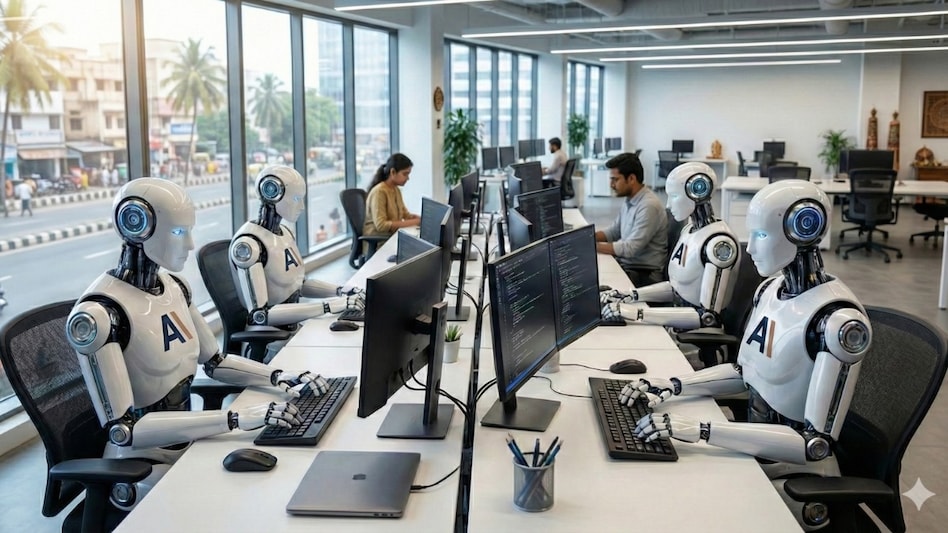
Anthropic and OpenAI push ‘Agentic’ AI into the workplace, forcing enterprises to rethink how work gets done
Anthropic and OpenAI are spearheading a significant transformation in the realm of artificial intelligence (AI), aiming to shift corporate reliance from traditional chatbots to sophisticated AI "agents" that can autonomously plan, execute, and oversee tasks with minimal human intervention. This evolution coincides with a global reassessment of software development and workplace functions, as developers increasingly find themselves in supervisory roles over multiple AI agents instead of meticulously coding every line. On January 5, Anthropic introduced Claude Opus 4.6, which features "agent teams" within its Claude Code framework, enabling developers to deploy several AI agents simultaneously on various aspects of a project. Following suit, OpenAI unveiled Frontier, an enterprise platform that provides each agent with distinct identities, permissions, and memory, seamlessly integrating with corporate infrastructures such as customer relationship management tools and data repositories. Barret Zoph, OpenAI’s general manager for business-to-business solutions, emphasized that the goal is to evolve AI agents into genuine co-workers. This shift marks a pivotal industry transition from viewing AI as mere conversational assistants to recognizing them as an essential component of a delegated workforce. Consequently, knowledge workers are increasingly adopting roles akin to middle managers overseeing digital labor. Market reactions have been tumultuous, with investors expressing concerns over AI companies potentially consolidating entire workflows—including coding, research, compliance, and customer service—into their proprietary platforms, thereby posing a threat to traditional software services. This apprehension significantly contributed to a sharp decline in global software stock prices earlier this week. Despite market jitters, AI adoption within enterprises is advancing rapidly. A survey conducted by EY and the Confederation of Indian Industry, involving over 200 companies in India, revealed that 47% have implemented multiple generative AI applications in production, with an additional 10% expanding their AI deployments. Furthermore, 76% of executives indicated that generative AI would profoundly influence their businesses, while 91% identified the speed of deployment as the paramount factor in their purchasing decisions. Notably, the study highlighted that 24% of organizations are already utilizing agentic AI, indicating a transition towards more autonomous digital employees. The report stated, "AI agents represent the most radical promise of this era: a workforce without limits, always available, always learning, and infinitely scalable," though it cautioned that challenges such as hallucinations, cascading errors, and governance gaps necessitate robust human oversight. Scott White, head of enterprise product at Anthropic, articulated the cultural implications of this shift, noting the rapid transformation witnessed in software engineering over the past 18 months. OpenAI is also betting on this trend, having released GPT-5.3-Codex alongside Frontier. This new model powers its Codex desktop app, which serves as a "command centre for agents," and has already demonstrated its capabilities in assisting OpenAI engineers with debugging and deployment management. Both OpenAI and Anthropic are just beginning their foray into the enterprise sector. The rapid evolution of AI agents indicates a significant change in the role of human workers; as these agents take on more operational responsibilities, individuals are increasingly tasked with setting objectives, evaluating outputs, and making critical decisions.
The AI Arms Race: U.S. Concerns Ignite Over Chinese Innovations
The recent unveiling of Kimi, an AI model from the Chinese company Moonshot AI, has sparked renewed discussions about Am...
TechCrunch | Jul 26, 2026, 20:05
AI Transformations Lead to Major Job Cuts at Tech Giants
Monday.com, the innovative work management platform based in Tel Aviv, has recently announced significant layoffs, attri...
TechCrunch | Jul 26, 2026, 01:45
Uber's Former CEO Makes Waves with New Ventures Amidst Tesla's Earnings Update
In the ever-evolving landscape of transportation, recent developments have come to the forefront, particularly surroundi...
TechCrunch | Jul 26, 2026, 16:25
Crisis Averted: Power Line Failure Highlights Urgent Need for Data Center Resilience
A power line failure near Washington, DC, recently showcased a significant challenge faced by the electrical grid due to...
TechCrunch | Jul 25, 2026, 13:50
Market Turbulence: Four Key Factors Impacting Stocks This Week
This past week has been challenging for the stock market, driven by several significant forces that have created turbule...
CNBC | Jul 25, 2026, 20:05