
This AI weather startup is out-forecasting government agencies
WindBorne Systems, a startup founded by Stanford alumni in 2019, has unveiled an advanced AI weather forecasting tool that outperforms traditional models used by government agencies. The latest version, WeatherMesh 6, boasts increased frequency and accuracy in predictions compared to leading systems such as those from the European Centre for Medium-Range Weather Forecasting (ECMWF). The company, which began with the goal of creating improved weather balloons for data collection, shifted its focus to developing its own forecasting model following the emergence of deep learning in weather predictions. According to Kai Marshland, WindBorne’s chief product officer, WeatherMesh 6 achieves a level of accuracy five days out that traditional forecasts typically reach only one day in advance, particularly excelling in surface temperature forecasts. WeatherMesh 6 generates updates every hour, a significant improvement over the six-hour intervals of conventional models. Its enhanced resolution of 3 km in regions like Europe and the continental US is a result of superior data quality. Traditional forecasting relies on complex physics models that require expensive supercomputers, whereas AI models, while faster, often lack the same resolution and predictive power over extended periods. Despite rapid advancements in AI weather forecasting, WindBorne’s edge lies in its unique integration of model-building and data collection. The company operates approximately 400 balloons worldwide that continuously gather sensor data, allowing for more precise modeling. CEO John Dean emphasized the importance of having a data set advantage in the AI weather sector, highlighting that the ECMWF is recognized for its expertise in data assimilation, which converts varied sensor readings into a coherent, machine-readable format. Currently, AI weather models depend on data from established sources like ECMWF and the US National Oceanic and Atmospheric Administration. However, WindBorne aims to enhance its model by directly integrating data from its balloons, a change that has significantly boosted the performance of WeatherMesh. After facing a minor setback when one of its balloons collided with a United Airlines jet, WindBorne has implemented safety measures, including transponders on its balloons that communicate their locations through global aviation systems to prevent future incidents. With $25 million in venture capital and a valuation of $85 million, WindBorne not only sells its balloon data to NOAA for American weather forecasting but also provides forecasts to investors and commodity traders. Dean notes that the company is prioritizing the development of its model and data systems over immediate commercial ventures, reflecting a commitment to adapt to the evolving landscape of consumer information needs.
Warner Bros. Takes Legal Action Against Amazon Over Executive Poaching Allegations
Warner Bros. Discovery has initiated legal proceedings against Amazon, accusing the tech giant of unlawful interference ...
TechCrunch | Jul 25, 2026, 21:25
Revolutionizing Office Automation: Prentis Aims to Secure $100 Million in Funding
Prentis, a newly established AI research lab, is making waves in the tech industry as it prepares to raise $100 million ...
TechCrunch | Jul 25, 2026, 24:00
The Aluminum Foil Trend: A DIY Shield Against Wireless Identity Theft
Have you noticed an unusual trend where people are wrapping their wallets in aluminum foil? This peculiar practice has e...
Business Today | Jul 25, 2026, 02:45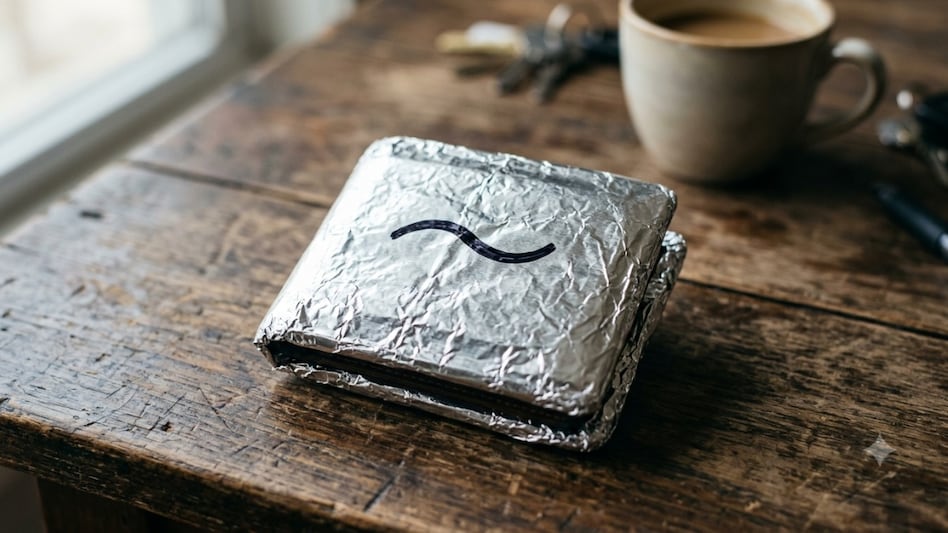
AI Transformations Lead to Major Job Cuts at Tech Giants
Monday.com, the innovative work management platform based in Tel Aviv, has recently announced significant layoffs, attri...
TechCrunch | Jul 26, 2026, 01:45
Nvidia Strikes Major Deal with SK Hynix to Secure AI Memory Supply
Nvidia has successfully forged a significant partnership with South Korea's SK Hynix to secure memory supplies essential...
CNBC | Jul 25, 2026, 05:15