
Peripheral Labs taps into self-driving car sensors to bring sports fans right into the game
Recent studies indicate a notable decline in live sports viewership, particularly among younger audiences like Gen Z. In response, sports leagues and broadcasters are exploring innovative ways to enhance fan engagement through unique viewing experiences that include advanced statistics and in-depth analysis. One promising solution is volumetric video technology, which allows fans to experience the action from multiple angles, reminiscent of a video game perspective. The Canadian startup Peripheral Labs is on a mission to make this cutting-edge technology accessible to sports leagues and teams, thereby expanding its reach to broadcasters and fans alike. Founded in 2024 by Kelvin Cui and Mustafa Khan, both of whom have extensive backgrounds in autonomous vehicle technology through their work at the University of Toronto, Peripheral Labs aims to leverage their expertise in robotics and computer vision. Cui, who has previously contributed to chassis systems as a software engineer at Tesla, and Khan, a former researcher at Huawei, are both passionate sports fans—Khan being a devoted Arsenal supporter and Cui a lifelong Vancouver Canucks enthusiast. "When Mustafa presented his research on 3D reconstruction, I immediately envisioned how incredible it would be to watch hockey in such an immersive, multi-angle format," Cui shared in an interview with TechCrunch. While volumetric video is not a novel concept, advances in artificial intelligence and computer vision have positioned Peripheral Labs to bring this technology to a broader audience. The startup's innovative approach reduces the number of required cameras from over 100 to as few as 32, significantly lowering costs and operational complexities. Peripheral Labs plans to keep hardware expenses minimal for teams and broadcasters, offering multi-year contracts for their platform. Their software will integrate biomechanical data and player statistics collected through a custom sensor array, akin to the technology used in self-driving cars, which captures scenes in 3D. This platform will allow broadcasters and fans to customize their viewing experience, such as tracking specific players or freezing moments in the game to analyze critical plays from various perspectives. "Our integration of off-the-shelf cameras with our robotics and machine learning expertise sets us apart in scaling from small practice facilities to large stadiums," Cui explained. The software will even track player movements at a granular level, such as measuring the flexion of joints, providing coaches with valuable insights into player positioning and flexibility. Recently, Peripheral Labs secured a $3.6 million seed funding round led by Khosla Ventures, with contributions from Daybreak Capital, Entrepreneurs First, and Transpose Platform. Joe Ros, a partner at Entrepreneur First, noted the strong reputation of the founders and their team, emphasizing that while investors are often cautious with sports-related startups, Peripheral Labs offers a unique entertainment angle. "Their primary audience is consumers, whose appetite for sports content remains constant. Peripheral Labs is poised to set a new benchmark in immersive, volumetric video, creating a competitive edge in the market," he stated in an email to TechCrunch. The startup is carefully selecting venture capital partners who can provide guidance in product development and market strategy. With a current team of 10 engineers, Peripheral Labs aims to expand its workforce to enhance platform and hardware development, reduce latency, and improve the resolution of their 3D reconstructions. Although the company has not publicly disclosed its partnerships, it is actively engaging with various teams and leagues across North America. Peripheral Labs faces competition from other companies like Arcturus Studios in the realm of volumetric sports capture, but its unique approach positions it as a game-changer in the industry.
Unveiling the Future of Finance: TechCrunch Disrupt 2026's Smart Money Stage
The landscape of money is transforming beyond just cash or bank balances, and TechCrunch Disrupt 2026 is set to spotligh...
TechCrunch | Jul 24, 2026, 22:40
Vision Breakthrough: US Startup Launches Groundbreaking Retina Chip in Europe
Science Corp is poised to introduce a revolutionary retina chip in Europe, designed to restore partial vision for indivi...
Business Today | Jul 25, 2026, 01:00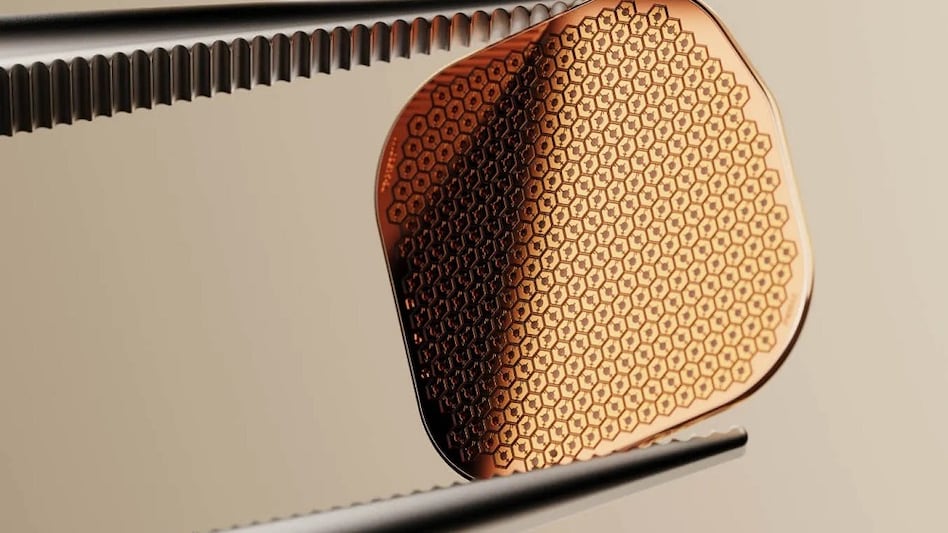
Alphabet Takes the Lead in AI Investment Amid Industry Competition
In a bold move that underscores its commitment to artificial intelligence, Alphabet has significantly ramped up its spen...
CNBC | Jul 24, 2026, 19:45
Waymo to Launch Standalone App, Ending Exclusivity with Uber in Major Cities
For the past three years, Uber and Waymo, the autonomous vehicle division of Alphabet, have collaborated to provide driv...
CNBC | Jul 24, 2026, 21:55
Nvidia Strikes Major Deal with SK Hynix to Secure AI Memory Supply
Nvidia has successfully forged a significant partnership with South Korea's SK Hynix to secure memory supplies essential...
CNBC | Jul 25, 2026, 05:15