Why a researcher is building robots that look and act like bats
In scenarios where search and rescue missions are conducted in challenging environments, human navigators face significant risks due to adverse weather, rough terrain, and hazardous conditions like smoke or dust. A researcher from Worcester Polytechnic Institute (WPI) is now pioneering the development of robotic systems inspired by bats to assist in these critical missions. Professor Nitin J. Sanket and his team have designed compact flying robots, each fitting comfortably in the palm of a hand, that utilize ultrasound technology akin to that of bats. These innovative robots are equipped with AI-driven software capable of filtering background noise from ultrasound signals, enabling them to detect obstacles up to two meters away. Sanket explained to TechCrunch, "Search and rescue is typically conducted on foot, placing many individuals in perilous situations. We believe drones could be the solution, as they can traverse vast areas rapidly and with agility." Sanket's fascination with aerial robotics dates back to his PhD program, where he received a challenge from his advisor to create the smallest possible robot. This task inspired his research into biomimicry, focusing on how biological entities achieve efficiency in size and functionality. He noted, "We had to rethink the concept of a drone, turning to biology for inspiration, as nature has perfected these systems far beyond our current technology. How do smaller creatures like insects and birds manage such extraordinary feats of flight despite their limited sensory capabilities?" Initially, Sanket developed a prototype for a robotic beehive featuring small drones intended for pollination. However, recognizing the ambitious nature of this application, he shifted his focus to more immediate challenges. His current project centers on search and rescue robots, where the primary hurdle has been integrating necessary sensors and flight technology without inflating size, cost, or energy consumption. To address these issues, Sanket's team adopted ultrasound sensors commonly used in automatic faucets, which are energy-efficient. However, they encountered a new challenge when the propellers produced excessive noise, hindering the sensors' obstacle detection capability. Looking to bats for inspiration, they discovered that these creatures possess specialized tissues in their noses, ears, and mouths that dynamically adjust to optimize sound reception. Inspired by this biological mechanism, the team engineered a 3D-printed structure to modify the robot's sound profile, mimicking the adaptability of bats. With the robots now operational, the team is focused on enhancing their speed. Sanket emphasized the importance of learning from nature, stating, "As humans, we often try to replicate the capabilities of our brains without recognizing the remarkable abilities of smaller animals like insects and birds. These creatures excel in navigation and performance in ways we often overlook. We should adopt a more scientific perspective rather than strictly an engineering one."
Allegations Surface: Moonshot AI's Controversial Access to Nvidia Chips Amid Export Controls
A high-ranking official from the White House has raised serious concerns regarding the Chinese AI firm Moonshot's potent...
CNBC | Jul 23, 2026, 11:25
IMF Sounds Alarm on AI Risks in Finance, Urges Enhanced Oversight
The International Monetary Fund (IMF) has raised significant concerns regarding the impact of artificial intelligence on...
Business Today | Jul 23, 2026, 12:40
Moonshot AI's Visionary Founder: The Traits Behind His Meteoric Rise
Yang Zhilin, the 34-year-old cofounder of Moonshot AI, has recently captured the attention of the tech world with the la...
Business Insider | Jul 23, 2026, 12:30Samsung's New Foldables Hit the Market with Significant Price Increases
Samsung has unveiled its latest generation of foldable smartphones, introducing two book-style models and a clamshell de...
Business Today | Jul 23, 2026, 07:10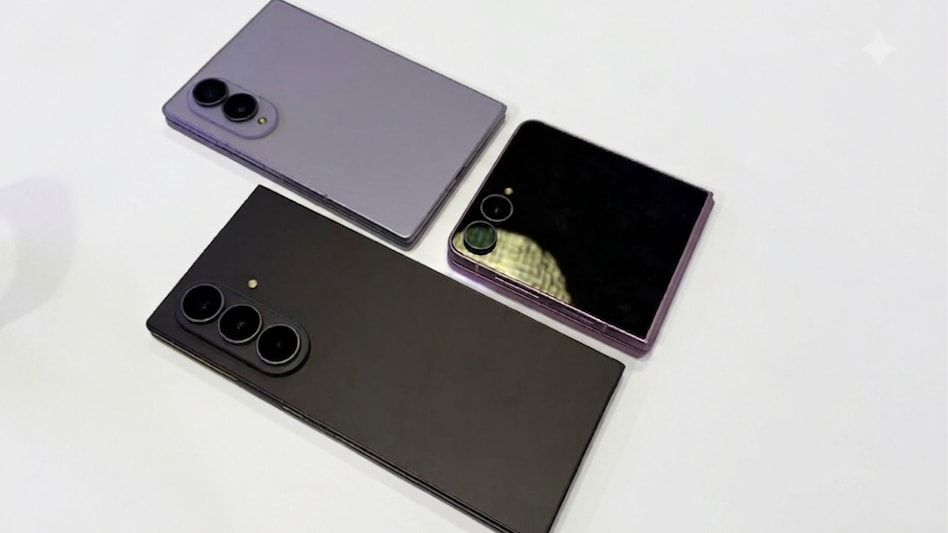
Allegations Fly as US Claims Chinese AI Model Breached Intellectual Property
In a bold accusation, Michael Kratsios, science and technology adviser to President Donald Trump, has charged that the C...
Business Today | Jul 23, 2026, 05:20