
This startup thinks robotics is about to have its ChatGPT moment
In a landscape transformed by the introduction of models like OpenAI's GPT-3, the robotics sector is poised for its own significant evolution, according to Pim de Witte, the CEO of General Intuition. He likens this potential shift to the way natural language processing has advanced, moving from task-specific models to more generalized foundation models that can be fine-tuned for various applications. De Witte believes that rather than amassing vast datasets tailored to individual robots and environments, the industry should prioritize the development of high-quality datasets. This approach could pave the way for foundation models that facilitate intuitive movement and interaction across diverse settings. "Many companies are currently entrenched in specialized work focusing on unique embodiments and environments," he explained during a recent interview with TechCrunch. As General Intuition continues to innovate, de Witte asserts that the rise of general models will render much of this specialized work obsolete. He emphasizes that the key to their model's success lies in its foundational understanding of space and time, which could significantly reduce the need for extensive real-world data collection. "You only need a few minutes of quality data," he stated. The startup has developed its foundation model by training on millions of hours of video game footage, analyzing the timing of button presses and other gameplay actions. Both de Witte and lead investor Vinod Khosla recognize that this action-based data is crucial for instilling a human-like sense of spatial-temporal reasoning in robots. Recently, General Intuition secured $320 million in funding, achieving a valuation of $2.3 billion based on this innovative premise. Their current model has already shown impressive capabilities, successfully navigating a video game for extended periods and even controlling a quadrupedal robot with minimal real-world data fine-tuning. De Witte expressed surprise at the robot's performance, particularly its ability to operate effectively in a dynamic office environment using just a front camera. He believes this is indicative of the future potential for robotics. Rather than becoming a robotics manufacturer itself, General Intuition aims to be the foundational model for physical AI, enabling other companies to leverage their technology for building advanced robotic systems. As de Witte succinctly put it, "We’re not going to create a self-driving car company; we’re here to simplify the process for others who want to do so."
Market Turbulence: Four Key Factors Impacting Stocks This Week
This past week has been challenging for the stock market, driven by several significant forces that have created turbule...
CNBC | Jul 25, 2026, 20:05
Warner Bros. Takes Legal Action Against Amazon Over Executive Poaching Allegations
Warner Bros. Discovery has initiated legal proceedings against Amazon, accusing the tech giant of unlawful interference ...
TechCrunch | Jul 25, 2026, 21:25
Vision Breakthrough: US Startup Launches Groundbreaking Retina Chip in Europe
Science Corp is poised to introduce a revolutionary retina chip in Europe, designed to restore partial vision for indivi...
Business Today | Jul 25, 2026, 01:00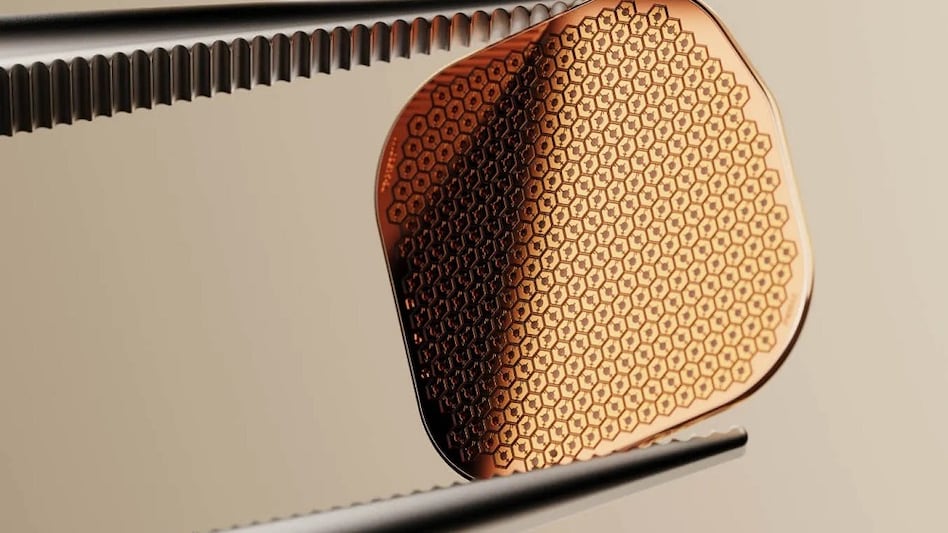
Crisis Averted: Power Line Failure Highlights Urgent Need for Data Center Resilience
A power line failure near Washington, DC, recently showcased a significant challenge faced by the electrical grid due to...
TechCrunch | Jul 25, 2026, 13:50
Reclaiming Control: Librarians Host Workshops to Help People Navigate AI Tools
In a lively library setting in South Philadelphia, Charlie Bailey, a local librarian, humorously noted, "Everybody’s on ...
TechCrunch | Jul 25, 2026, 16:20