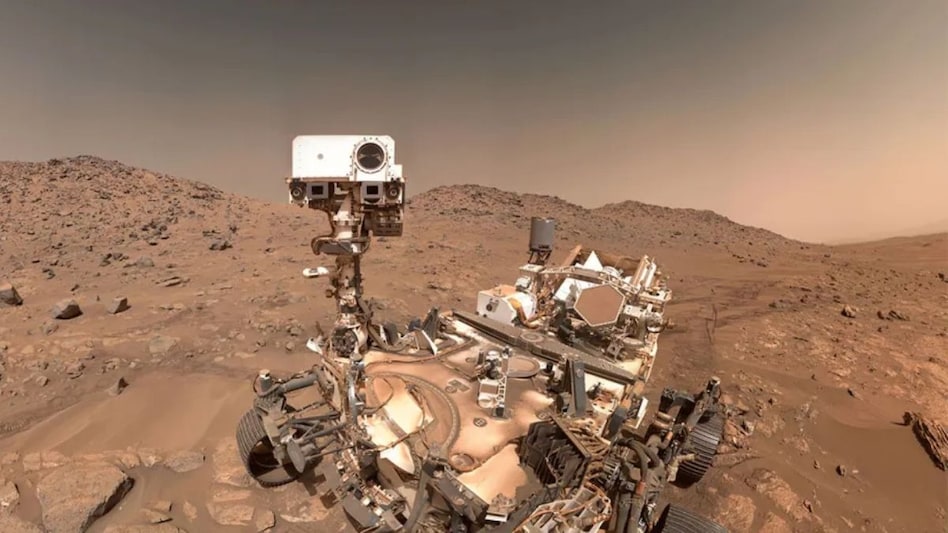
No humans, no joysticks: How AI just planned Perseverance’s Mars journey
NASA's Perseverance rover has reached a groundbreaking milestone in the realm of space exploration. For the first time, the rover executed its drives on Mars with routes entirely determined by artificial intelligence, eliminating the need for human intervention in planning every journey. This achievement signifies a substantial advancement in autonomous navigation on other planets, showcasing AI's capability to make intricate decisions in environments far from Earth. Traditionally, navigating a rover on the Martian landscape has been a meticulous and gradual process. Given that Mars is approximately 140 million miles (225 million kilometers) from Earth, real-time commands cannot be issued. Engineers are required to devise each route beforehand, dividing it into short waypoints—typically no more than 330 feet (100 meters) apart—to steer clear of potential dangers like sharp rocks and uneven terrain. This extensive planning not only consumes considerable time but also restricts the distance a rover can cover in a single Martian day. To break through these limitations, NASA's Jet Propulsion Laboratory (JPL) experimented with a generative AI system for route planning. This innovative AI analyzed various data points and created a continuous path along with a comprehensive set of waypoints for the Perseverance rover, effectively substituting the traditional manual planning methods. The AI utilized advanced vision-language models to recognize and assess critical terrain features, such as boulder fields, exposed bedrock, and sand ripples. With this information, it identified safe and efficient pathways for the rover to navigate. Before transmitting commands to Mars, NASA engineers validated the AI's plans using a digital twin—a virtual model of the Perseverance rover. This simulation rigorously tested more than 500,000 telemetry variables to ensure the AI's strategy would work harmoniously with the rover's operational software. During its demonstration, Perseverance successfully executed two drives planned by AI. Throughout these maneuvers, the AI handled essential navigation tasks, including perception, localization, and path planning. Roboticist Vandi Verma from JPL highlighted that this technology could pave the way for longer drives while simultaneously identifying scientifically significant features from the vast array of images captured by the rover. Matt Wallace, manager of JPL’s Exploration Systems Office, emphasized that this demonstration illustrates the potential for intelligent systems to function across various planetary platforms, ranging from rovers and helicopters to drones and other surface vehicles.
Patreon Cuts Workforce by 20% Amid Market Adjustments
In a significant shift, Patreon has announced a reduction of its workforce by 20%, amounting to 93 employees, as reveale...
TechCrunch | Jul 23, 2026, 20:40
Congress Moves to Establish AI Shutdown Protocol Following OpenAI Incident
In a significant legislative response to recent AI vulnerabilities, Representatives Ted Lieu (D-Calif.) and Nathaniel Mo...
CNBC | Jul 23, 2026, 20:05
Global Leaders Unite to Promote Secure Open-Source AI at APEC Summit
In a significant development at the recent APEC summit in Chengdu, China, member nations, including the United States, e...
CNBC | Jul 24, 2026, 02:45
China's Memory Chip Giant CXMT Set to Challenge Market Dynamics with Major IPO
ChangXin Memory Technologies (CXMT), China's leading memory chip manufacturer, is preparing for a significant public lis...
CNBC | Jul 24, 2026, 02:15
Amazon Implements New Labeling Requirement for AI-Generated Images Following New York Legislation
In response to a recent New York law aimed at enhancing transparency in advertising, Amazon has announced a new policy r...
CNBC | Jul 24, 2026, 24:45