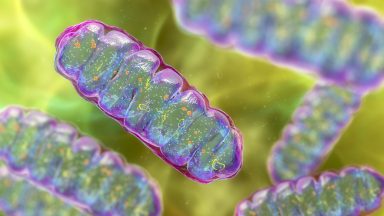
Mighty mitochondria: Cell powerhouses harnessed for healing
In a groundbreaking moment nearly two decades ago, James McCully, a researcher at Boston Children’s Hospital and Harvard Medical School, found himself in a critical situation involving a pig heart that had failed to regain its normal rhythm. As his team struggled to restore the heart's function, McCully, who specializes in preventing heart damage, had a bold idea: what if he could inject healthy mitochondria into the failing heart? Mitochondria, the powerhouses of the cell, are essential for high-energy organs like the heart. Recognizing their potential, McCully swiftly prepared a syringe filled with extracted mitochondria and administered the injection directly into the heart. Miraculously, the heart began to beat normally again, rejuvenated and returning to its vibrant color. Since that pivotal experiment, McCully and fellow researchers have successfully replicated this mitochondrial transplantation technique across various animal models. This innovative approach eventually extended to human patients, particularly infants facing complications from heart surgeries, marking the dawn of a new research domain focused on using mitochondrial transplants to repair damaged organs. In recent years, an increasing number of scientists have begun to explore the potential of mitochondrial transplantation as a treatment for various conditions, including heart damage from cardiac arrest, brain injuries from strokes, and injuries in organs awaiting transplantation. Mitochondria are primarily recognized for their role in energy production, but they also play a crucial role in regulating cellular signals that maintain bodily balance and orchestrate responses to stress and immune challenges. Interestingly, some cells within the body can naturally transfer healthy mitochondria to neighboring cells in distress, such as brain cells following a stroke, a process known as mitochondrial transfer. This understanding has led some researchers to believe that enhancing this natural process through mitochondrial transplantation could be a key strategy for revitalizing injured tissues.
OpenAI's API Revenue Surges Beyond $1 Billion, Shifting Focus Beyond ChatGPT
OpenAI has achieved a remarkable milestone, generating over a billion dollars in revenue in just one month, primarily th...
Business Insider | Jan 23, 2026, 05:05Tesla Ventures into Unsupervised Robotaxi Operations in Austin
Elon Musk, the CEO of Tesla, announced on Thursday that the company has begun operating a limited number of its Robotaxi...
CNBC | Jan 22, 2026, 23:30
Capital One Acquires Brex: A Strategic Move Amidst Unicorn Turmoil
Silicon Valley is witnessing a mix of emotions following the announcement that Capital One is set to acquire Brex for $5...
TechCrunch | Jan 23, 2026, 24:15
TikTok Establishes U.S. Joint Venture with New Leadership Amid Security Concerns
In a significant move to secure its operations in the United States, TikTok announced on Thursday the formation of a joi...
CNBC | Jan 23, 2026, 01:05
cURL Halts Bug Bounty Program Amid Flood of Low-Quality AI Submissions
The lead developer of cURL, a widely utilized networking tool, has announced the discontinuation of its bug bounty progr...
Ars Technica | Jan 22, 2026, 22:50