Could AI nursing robots help health care staffing shortages?
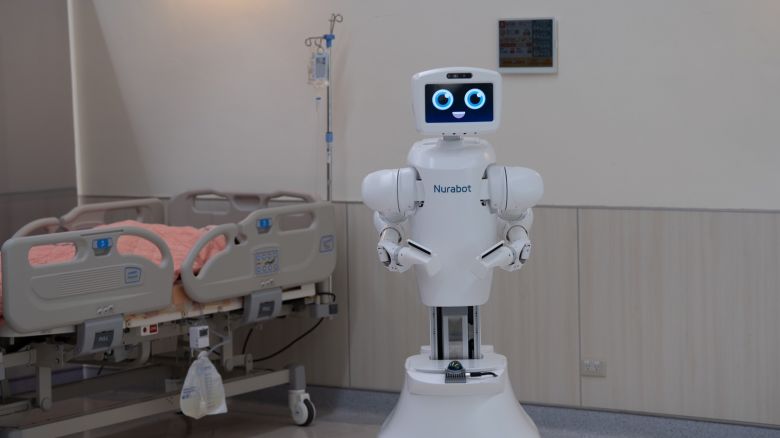
The global healthcare sector is grappling with a severe shortage of workers, projected to reach a deficit of 4.5 million nurses by 2030, as reported by the World Health Organization (WHO). This crisis has prompted many nurses to experience significant stress, with approximately one-third reporting symptoms of burnout, alongside a high turnover rate in the profession. In response to these challenges, Nurabot emerges as a potential solution. This autonomous, AI-driven nursing robot is engineered to assist healthcare professionals with routine and physically demanding tasks, such as medication delivery and patient navigation. According to Foxconn, the Taiwanese company behind Nurabot, the innovative robot could reduce nurses’ workloads by as much as 30%. Alice Lin, the director of user design at Foxconn, emphasizes that Nurabot is not meant to replace nurses but to collaborate with them. "This is more like accomplishing a mission together," she stated. By handling repetitive duties, Nurabot allows nurses to focus on more critical aspects of patient care, utilizing their professional skills for decision-making and patient interaction. Developed in just ten months, Nurabot has been undergoing trials at a Taiwanese hospital since April 2025, with plans for a commercial launch set for early next year. Although the retail price remains undisclosed, the collaboration with Japanese robotics firm Kawasaki Heavy Industries has led to an advanced design featuring autonomous movement and sophisticated sensory capabilities. The robot is equipped with Foxconn’s large language model for communication and leverages NVIDIA’s AI and robotics infrastructure, which enables it to navigate hospital environments independently, manage tasks, and respond to both verbal and physical cues. David Niewolny from NVIDIA noted that Nurabot's programming allows it to behave more like a human, adapting to various patient needs and contexts. As the global population ages, with a predicted 40% increase in individuals aged 60 and older by 2030, the demand for healthcare services is expected to escalate. Despite a gradual increase in healthcare workers over the past decade, it has not kept pace with the rapidly growing elderly population. Southeast Asia, in particular, is projected to face significant workforce shortages. Experts like Rick Kwan, a nursing and public health professor, assert that AI-enhanced solutions could yield substantial time and cost efficiencies. However, he warns of challenges such as patient preferences for human interaction and the necessity for healthcare infrastructure to adapt to robotic assistance. Kwan highlights that existing hospital designs, often cramped and congested, may not accommodate the movement of robots effectively. While robots have been part of surgical procedures for years, their integration into everyday hospital tasks is on the rise. For instance, Singapore's Changi General Hospital employs over 80 robots for various functions, while nearly 100 autonomous bots named "Moxi" operate in U.S. hospitals, delivering supplies and medications. Despite the potential benefits, the effectiveness of nursing robots remains under scrutiny, with recent reviews indicating mixed perceptions among nurses regarding their efficiency. Technical issues, communication barriers, and the need for ongoing training present ongoing challenges. As tech giants like NVIDIA, Amazon, and Google invest in the promising $9.8 trillion healthcare market, the smart hospital sector is rapidly expanding. Currently valued at $72.24 billion, it is expected to see significant growth, particularly in the Asia-Pacific region. In Taiwan, Nurabot is currently being tested at Taichung Veterans General Hospital, focusing on respiratory-related conditions. During this phase, its functionality is being evaluated, including its impact on nursing workload and task accuracy. Preliminary data suggests a reduction in daily nursing burdens by about 20-30%. Lin anticipates that Nurabot will fully integrate into hospital operations later this year, enhancing efficiency ahead of its official launch in early 2026. While Nurabot may not eliminate nursing shortages, it is poised to play a vital role in addressing the challenges posed by an aging population and workforce attrition.
China's Memory Chip Giant CXMT Set to Challenge Market Dynamics with Major IPO
ChangXin Memory Technologies (CXMT), China's leading memory chip manufacturer, is preparing for a significant public lis...
CNBC | Jul 24, 2026, 02:15
Elon Musk Reflects on the Unexpected Acceleration of AI Development
Elon Musk has expressed that his initial efforts to curb the concentration of artificial intelligence power may have ina...
Business Insider | Jul 24, 2026, 04:15Mobileye's Visionary Leader Transitions as Company Shifts Focus to Robotics and Robotaxis
Amnon Shashua, the founder and CEO of Mobileye, has announced his intention to step down from his leadership role after ...
TechCrunch | Jul 23, 2026, 23:15
China's Kimi K3: A New Contender in the Global AI Race Sparks US Concerns
The tech world is buzzing once again as a new Chinese AI model, Kimi K3, developed by the startup Moonshot AI, challenge...
CNN | Jul 24, 2026, 02:05
AI Guardrails: A Double-Edged Sword for Cybersecurity Researchers
In recent months, leading AI companies have implemented stringent regulations and vetted programs to curb potential misu...
TechCrunch | Jul 24, 2026, 01:15