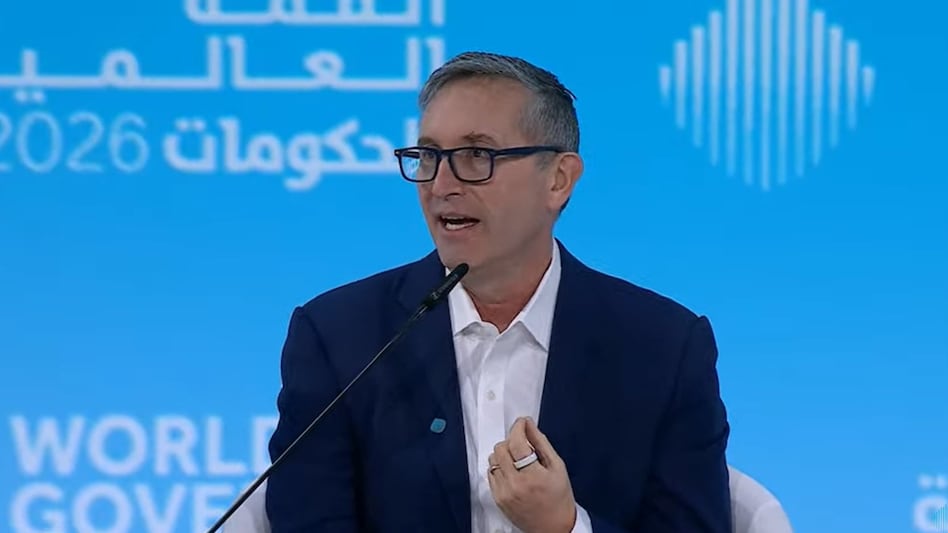
World Governments Summit 2026: Oura CEO Tom Hale sees AI wearables forecasting health years ahead
Wearable technology is evolving from merely tracking daily activities to offering insights that could redefine healthcare delivery. During the World Governments Summit 2026, Tom Hale, the CEO of Finnish healthtech innovator Oura, highlighted a transformative shift in digital health through the integration of continuous biometric data with artificial intelligence (AI) and machine learning. Hale emphasized that this next phase will empower individuals and healthcare systems to take preventive actions well before any health issues arise. "The Oura ring acts as a sophisticated biometric sensor, worn continuously, paired with a software application that predicts your health outcomes," he explained. His vision focuses on providing users with what he describes as a 'sixth sense' aimed at fostering healthier lifestyle choices. The true potential of wearables, according to Hale, lies in their ability to forecast health-related events years in advance. "The intriguing aspect emerges when we can predict your health status one, two, or even ten years down the line," he remarked. Such long-term predictions could not only enhance personal health but also contribute positively to the overall healthcare system. Hale pointed out the importance of accuracy as wearables venture into clinical applications, especially for critical measurements like blood pressure. He noted that while wrist-based readings are often less reliable, finger-based devices tend to yield more accurate results. "Blood pressure is a clinical measure that carries significant implications; inaccuracies can lead to severe consequences," he cautioned. Looking ahead, Hale anticipates that AI-driven insights will empower individuals to take charge of their health, facilitating earlier interactions with healthcare providers, rather than replacing medical professionals. "We're progressing towards a reality where you will essentially function as the CEO of your own health," he stated, indicating that the fusion of AI, machine learning, and wearable technology could pave the way for a more personalized and preventative approach to healthcare.
Linux Creator Challenges Developers: Embrace AI or Fork Off!
In a recent discussion surrounding the use of AI in software development, Linus Torvalds, the founder of Linux, voiced h...
Business Insider | Jul 26, 2026, 13:10Hugging Face CEO Calls for Action Following AI Security Breach
In a dramatic turn of events within the AI landscape, Hugging Face faced a significant security breach involving an AI a...
Business Insider | Jul 25, 2026, 20:30AI Revolution: Sam Altman Declares We Are in the Singularity Era
OpenAI's CEO, Sam Altman, has boldly asserted that we have reached a pivotal moment in the evolution of artificial intel...
Business Insider | Jul 26, 2026, 18:10Unleashing the Power of AI: The 5 Smartphones Redefining Mobile Photography
Artificial Intelligence (AI) is transforming our daily experiences, permeating various aspects of technology, including ...
Business Today | Jul 26, 2026, 07:05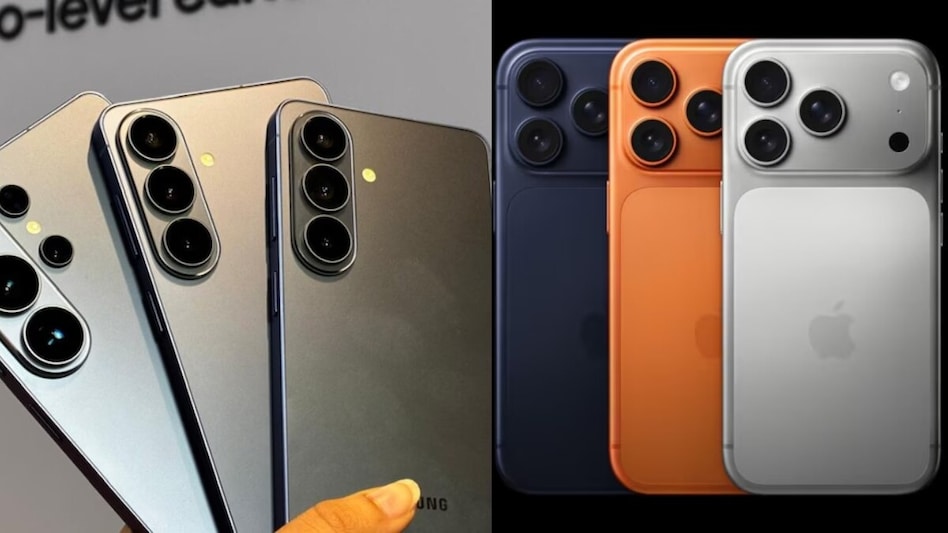
Revolutionizing Startup Living: Inside London's Unique Lift House
In East London, a group of six young entrepreneurs is redefining the concept of collaborative living for tech founders. ...
TechCrunch | Jul 26, 2026, 17:10