
Uber Freight CEO joins self-driving truck startup Waabi, says autonomous big rig era in U.S. is here
Lior Ron, the founder and CEO of Uber Freight, has taken a pivotal step by joining Waabi, a startup specializing in self-driving trucks, as its new chief operating officer. Ron's decision stems from his conviction that the age of autonomous big rigs operating on American roads is not just approaching—it's already here. He predicts that the freight industry will undergo a significant transformation through the economic advantages brought by driverless technology. Reflecting on his decade-long journey in logistics, Ron stated, "The first part of my career was about establishing Uber Freight and laying the groundwork for digitalizing logistics. Now, it’s time to concentrate on the most significant shift of the coming decade: automation. I can’t think of anything more beneficial for the future of logistics and innovation in the movement of goods. The technology is ready to be deployed." Waabi anticipates that fully autonomous trucks will begin servicing freight routes in the Southwestern United States by year-end. This region was selected as the initial deployment area due to its heavy freight traffic and favorable weather conditions, which reduce challenges for the autonomous systems. Looking forward, Ron envisions a comprehensive coverage of North America with driverless freight solutions within the next five years. Despite his new role at Waabi, Ron will retain his position as chairman of Uber Freight, with Rebecca Tinucci stepping in as CEO. Under Ron's leadership, Uber Freight has evolved into a $5 billion annual revenue business, partnering with a third of Fortune 500 companies and managing nearly $20 billion in freight for clients like Colgate and Nestle. The professional relationship between Ron and Waabi's founder, Raquel Urtasun, spans a decade. Urtasun previously worked at Uber in an advanced technology unit before launching Waabi, which has received significant investment from Uber. The two companies have collaborated on testing Waabi's autonomous trucking technology in Texas since 2023, with goals to expand this initiative across billions of miles. Currently, Waabi trucks are transporting commercial loads between Dallas and Houston. Urtasun noted, "After four years of product development and R&D, we are now entering the commercialization phase. Lior will focus on our go-to-market strategy and foundational partnerships, such as with Uber Freight, to elevate our company and facilitate rapid scaling." Waabi has integrated drivers into its testing protocol, but Ron announced that by the end of the year, trucks will operate without an onboard driver. He emphasized the urgency of expansion, stating, "It’s been four years since Waabi’s inception, and now is the time to act. We will start on specific routes and quickly expand across multiple customers, including Uber Freight." Major truck manufacturers, including Volvo, are already investing in this technology, with Ron asserting that the adoption of autonomous trucks will be swift. He explained that traditional freight trucks typically operate for seven to eight hours daily, while autonomous trucks can significantly increase that duration, resulting in improved safety and fuel efficiency. In five years, Ron predicts that driverless freight trucks will become a familiar sight across the U.S., particularly in the Sunbelt regions. While attention often centers on self-driving technology in passenger vehicles, the economics of freight trucking present a compelling case for large-scale implementation. Ron also clarified that while the transition to automation will shift the nature of trucking jobs, it will not happen overnight. With the average age of truck drivers around 55, many will still remain in their positions for years to come. He anticipates a growth in demand for driving roles related to last-mile delivery, which poses greater challenges for autonomous systems. Urtasun pointed out the long-standing driver shortage in the U.S., highlighting that long-haul trucking is not a popular career choice. She noted, "This is not a task that humans should be doing, but the transition will occur gradually, preventing any abrupt disruption." The regulatory landscape for self-driving technology is primarily state-driven, which has facilitated Waabi’s early operations in Texas. However, Urtasun mentioned a recent discussion with Department of Transportation Secretary Sean Duffy about establishing a federal framework to expedite the commercialization of this technology. Waabi positions itself as a "physical AI" company, with aspirations to extend its technology beyond trucking into areas like robotaxis and warehouse automation. Urtasun stated, "Our immediate focus is to scale our autonomous trucking business and establish a sustainable revenue stream. While we have numerous inquiries about future funding, our current capital efficiency allows us to operate without immediate plans for an IPO." In addition to Uber, Waabi has garnered support from Khosla Ventures, Nvidia, Volvo Group Venture Capital, and Porsche Automobil, among others.
X Unveils a Completely Overhauled Android App After Extensive Development
After nearly a year of intensive development, X, the social media platform owned by Elon Musk, has officially launched a...
TechCrunch | Jul 20, 2026, 20:10
Google's New Fitbit Air Set to Hit Indian Market Soon
The Google Fitbit Air, a buzzworthy health and fitness tracker, is gearing up for its launch in India following its glob...
Business Today | Jul 21, 2026, 06:50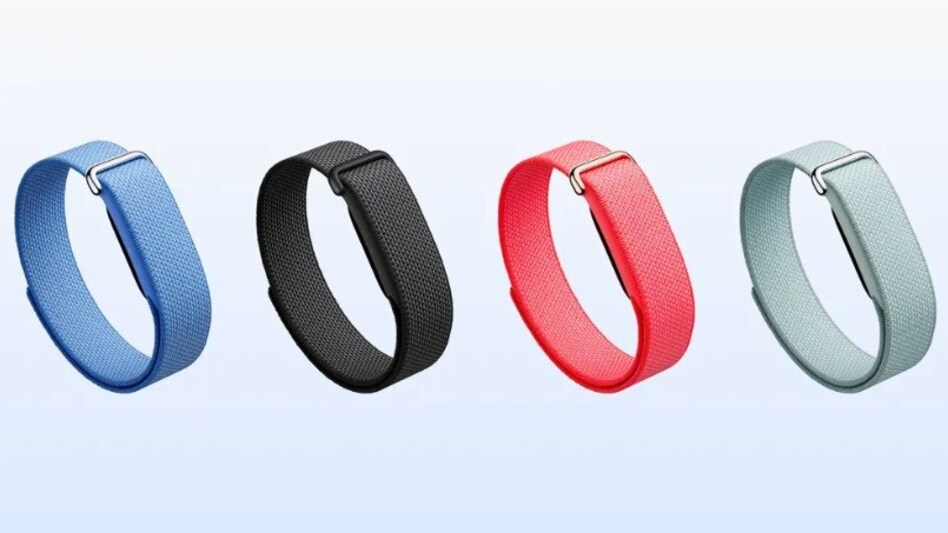
Nvidia Takes Bold Step with 9.3% Investment in Nebius, Fueling Stock Surge
Shares of Nebius experienced a significant boost on Tuesday following Nvidia's announcement of a 9.3% investment in the ...
CNBC | Jul 21, 2026, 09:55
X Launches Ground-Up Redesign of Android App for Enhanced User Experience
In a significant move for its users, X, led by Elon Musk, has unveiled a completely reimagined version of its Android ap...
Business Today | Jul 21, 2026, 05:25
Major $1.5 Billion Copyright Settlement Approved for Anthropic
Anthropic is set to disburse payments to a collective of authors and publishers following a significant $1.5 billion set...
TechCrunch | Jul 21, 2026, 24:40