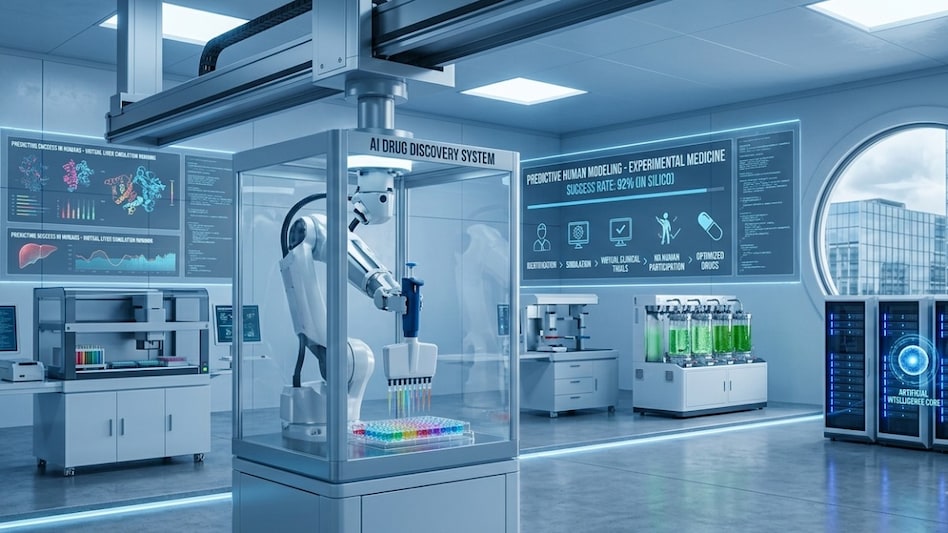
AI biotech without humans? Stanford deploys 37,000 agents to hunt new therapies
Imagine a biotechnology firm that requires no human employees or physical offices. Researchers at Stanford Medicine have made this a reality with the creation of a virtual biotech company utilizing an impressive 37,000 AI agents. These agents are deployed across the drug development spectrum, assisting in everything from identifying potential drug targets to analyzing clinical trials and designing innovative therapies. Led by Stanford's associate professor of biomedical data science, James Zou, along with graduate student Harrison Zhang, this groundbreaking system is structured to emulate a traditional biotech company. At its helm is a virtual chief science officer who coordinates specialized AI agents, each focusing on distinct aspects of drug discovery. The research findings were released in the prestigious journal Science on September 17. One of the significant hurdles in drug development is accurately predicting the success of experimental medicines in human subjects. Clinical trials can be lengthy and costly, often taking years and millions of dollars. Many candidates fail during the development phases. Stanford's virtual biotech was specifically designed to identify biological traits that might indicate successful drugs. Instead of relying on a single AI system to sift through extensive scientific literature, the researchers assigned various agents to examine specific clinical trials. These agents efficiently retrieved crucial information about safety and effectiveness while analyzing molecular data linked to the trials. In less than a week, they cataloged approximately 50,000 clinical trials, a task that could take human teams several years to complete. The analysis yielded two key characteristics of drug targets: cell-type specificity, which determines if a target is concentrated in a particular cell type, and bimodality, indicating if gene activity acts more like an on-off switch or a dimmer. The results revealed that drugs targeting genes with high cell-type specificity and switch-like activity had a substantially better track record in historical clinical data. Specifically, these drugs were found to be 40% more likely to progress from Phase 1 to Phase 2, 48% more likely to make it to market, and associated with 32% fewer adverse effects compared to those targeting broader categories. These patterns were consistent across a variety of illnesses, including cancers and other conditions related to the brain, heart, kidneys, and lungs. The next step for the researchers was to see if their AI system could not only analyze existing data but also design a new therapy. They focused on B7-H3, a protein linked to lung cancer. The AI's analysis suggested that B7-H3 was prominently expressed in fibroblasts, which are connective tissue cells near tumors. Further exploration revealed that these cells seemed to inhibit immune activity in the tumor environment. Consequently, the virtual biotech proposed an antibody-drug conjugate targeting B7-H3. This innovative therapy would utilize an antibody to locate cells expressing this specific protein and deliver a toxic drug directly to them. Notably, this proposal was based solely on data available prior to January 2025. Remarkably, by August 2025, a well-established pharmaceutical company independently developed a similar B7-H3 antibody-drug conjugate strategy, which later received breakthrough therapy designation from the US Food and Drug Administration. This development provided independent validation of the AI-generated drug target and concept. The Stanford experiment signifies a transformative shift in drug discovery. Rather than merely functioning as research assistants, AI agents are now being organized into autonomous teams capable of tackling complex scientific inquiries collectively. This shift could dramatically enhance efficiency; instead of individual researchers spending months combing through databases and compiling trial results, thousands of specialized agents can work in parallel. However, Stanford's researchers emphasize that this AI-driven approach does not replace traditional laboratories or clinical researchers. The insights derived from AI still require validation through physical experiments and, ultimately, human clinical trials. The team is planning to transition other promising targets identified by the virtual biotech into real-world laboratories to see how many of their predictions can be substantiated experimentally.
Tidal Takes Bold Step Against AI Music Flood, Set to Remove Millions of Tracks
In a decisive move to combat the overwhelming influx of AI-generated music, Tidal announced on Tuesday its plans to ban ...
TechCrunch | Nov 24, 2026, 17:10
Investing in the Future: Solar and Battery Solutions for AI Data Centers
The challenge of powering AI data centers has emerged as a pivotal issue in the current technological landscape. Over th...
TechCrunch | Nov 24, 2026, 16:25
Revolutionizing Cybersecurity: AI's Role in Modern Threat Detection and Defense
As businesses increasingly embrace digital transformation and artificial intelligence, the complexity of cybersecurity t...
Business Today | Nov 24, 2026, 08:30
Uber and Nuro Kick Off Driverless Trials for Lucid Robotaxis Ahead of 2027 Launch
Uber and Nuro have officially launched their driverless testing phase for the Lucid Gravity SUVs on the streets of the S...
TechCrunch | Nov 24, 2026, 17:15
Mathematicians React to Controversial Joke Over Lengthy Proof of Riemann Hypothesis
Tensions are rising in the mathematical community following a controversial comment made by Levent Alpöge, a researcher ...
Business Insider | Nov 24, 2026, 17:30