The Tech Download: Qualcomm CEO Cristiano Amon on the new world of AI agents
Picture this: you're strolling down the street with smart glasses that not only display information but also have a built-in camera. When you remember you need to book a restaurant, instead of pulling out your smartphone, you simply converse with your digital assistant, which seamlessly navigates multiple apps to secure your reservation and sends you a confirmation. This scenario illustrates the innovative future of AI agents in the latest consumer gadgets, as envisioned by Cristiano Amon, CEO of Qualcomm, a key player in the chip industry. Amon elaborates that these digital agents will enhance our interaction with technology, clarifying that while traditional apps are not going away, they are set to evolve. "The agents are going to be the new app," he stated during an interview on The Tech Download podcast. Over the years, Amon has discussed the transformation of smartphones, which now feature advanced capabilities like folding designs and high-performance cameras. Despite efforts by various companies—from Apple’s Siri to Samsung’s Bixby—to create effective digital assistants, none have fully realized their potential. However, with the rapid advancement of AI technologies, these assistants are becoming increasingly capable. Amon envisions a future where devices will be designed around these agents. "The phone is around the agent. The new classes of devices ... are going to be around the agent as well," he shared. Qualcomm is exploring over 40 different designs for AI-enabled gadgets, including jewelry, earbuds with integrated cameras, and smart pins. "The principle is to create wearable devices that are always with you, can perceive the environment around you, and allow you to interact with your agent," he explained. Among these innovations, Amon is particularly optimistic about smart glasses, predicting they could rival smartphones in popularity, with over 1.2 billion smartphones shipped last year alone. The potential applications of AI agents in consumer devices are extensive, but their success hinges on achieving a balance between privacy and functionality. As these agents become ubiquitous, addressing privacy concerns will be critical. This technological shift raises questions about the future landscape of devices and whether established giants like Apple and Samsung will face competition or continue leading the charge in new AI product development. In related news, tech leaders, including the CEOs of Anthropic and Google DeepMind, are advocating for a U.S.-led initiative to establish AI regulations at a recent G7 meeting. Meanwhile, Intel's stock surged following a partnership announcement with Apple for U.S. chip design, and Nvidia is reportedly seeking to raise $20 billion in its first bond sale since the AI boom began. On another front, Waymo is recalling nearly 3,900 of its robotaxis due to software glitches that led some vehicles into construction zones. Finally, Yann LeCun, founder of AMI Labs, has criticized Elon Musk's xAI as a "failure" that may struggle to compete in the AI landscape, while also highlighting the crucial role of SpaceX President Gwynne Shotwell in steering the company’s day-to-day operations.
Waymo to Launch Standalone App, Ending Exclusivity with Uber in Major Cities
For the past three years, Uber and Waymo, the autonomous vehicle division of Alphabet, have collaborated to provide driv...
CNBC | Jul 24, 2026, 21:55
SpaceX's Latest Starlink Launch Marks Milestone Amid Booster Setbacks
On Friday, SpaceX marked a significant achievement by successfully launching its first batch of third-generation Starlin...
TechCrunch | Jul 24, 2026, 23:40
Unlocking the Secrets of Quantum Gravity: Can AI Help Physics Make a Leap?
The realm of scientific research is undergoing a profound transformation, fueled by the rapid advancements in artificial...
Business Today | Jul 25, 2026, 24:30
Prentis: Ambitious New AI Lab Eyes $100 Million Funding with Innovative Automation Goals
Prentis, a cutting-edge AI research laboratory co-founded by Ritankar Das, Reid Hoffman, and Marc Pincus, is currently i...
TechCrunch | Jul 24, 2026, 22:45
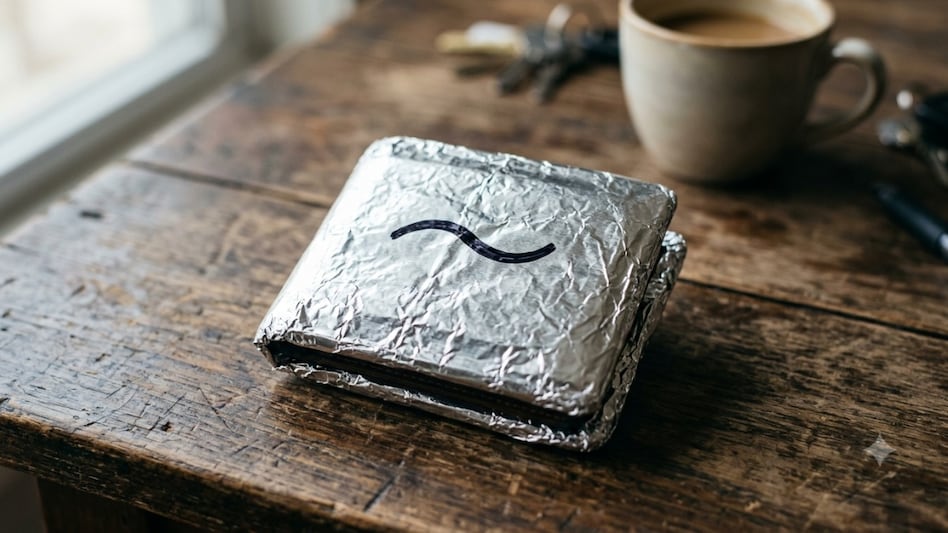
The Aluminum Foil Trend: A DIY Shield Against Wireless Identity Theft
Have you noticed an unusual trend where people are wrapping their wallets in aluminum foil? This peculiar practice has e...
Business Today | Jul 25, 2026, 02:45