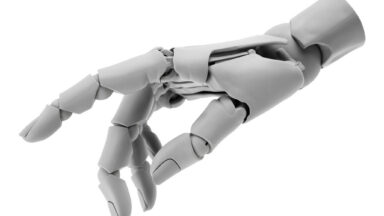
Scientists built an AI co-pilot for prosthetic bionic hands
In recent developments, engineers have made significant strides in prosthetic technology, particularly with bionic hand prostheses that closely mimic the dexterity and functionality of natural hands. Despite these advancements, a troubling trend has emerged: nearly half of all amputees fitted with high-tech bionic hands abandon them due to usability challenges. Jake George, an electrical and computer engineer from the University of Utah, highlights the core issue—control. According to George, many users find these prosthetic devices difficult to operate, leading to frustration and disuse. To address this, his research team has introduced an innovative solution: an AI-powered co-pilot for bionic hands designed to make operation more intuitive. The primary hurdle with current bionic hands lies in their limited autonomy. Our natural hand movements benefit from a complex network of reflexes, allowing for seamless interactions with objects, such as gripping a paper cup without crushing it. This reflexive response is instantaneous, taking only about 60 to 80 milliseconds to react to changing conditions, often without our conscious awareness. Unfortunately, most bionic hands lack this automatic feedback, requiring users to exert constant mental effort to control each joint and muscle. Imagine trying to manually adjust the position of 27 joints while also determining the force exerted by 20 different muscles—this illustrates the daunting task that users face. Current solutions, such as smartphone apps for grip selection or electromyography that interprets electrical signals from remaining muscles, still fall short. Marshall Trout, a University of Utah researcher and the study's lead author, emphasizes that maintaining a grasp requires intense concentration on muscle positioning, which can be overwhelming. The introduction of the AI co-pilot aims to alleviate these burdens, allowing users to engage with their environment more naturally, ultimately improving the quality of life for many amputees who have struggled with traditional prosthetic solutions.
Hugging Face CEO Calls for Action Following AI Security Breach
In a dramatic turn of events within the AI landscape, Hugging Face faced a significant security breach involving an AI a...
Business Insider | Jul 25, 2026, 20:30Revolutionizing Startup Living: Inside London's Unique Lift House
In East London, a group of six young entrepreneurs is redefining the concept of collaborative living for tech founders. ...
TechCrunch | Jul 26, 2026, 17:10
The Elusive Phineas Fisher: The Hacktivist Who Took Down Spyware Giants
In the realm of cybersecurity, few figures are as intriguing as Phineas Fisher, a hacker who has evaded capture for near...
TechCrunch | Jul 25, 2026, 21:00
Navigating the Future: Are Wearable AI Gadgets Ready to Transform Our Lives?
Imagine a typical workday where you and your colleagues sport discreet recorders on your clothing, while smart glasses s...
CNN | Jul 26, 2026, 16:10
Kalshi Challenges Netflix Over Controversial Documentary Trailer
Kalshi, the prediction market platform, has taken significant legal steps against Netflix, sending a cease-and-desist le...
TechCrunch | Jul 25, 2026, 17:10