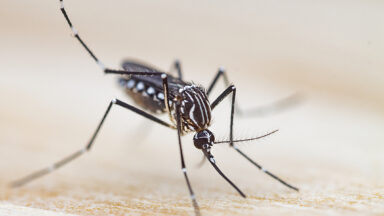
Welcome to “necroprinting”—3D printer nozzle made from mosquito’s proboscis
In an innovative leap within the realm of necrobotics, researchers are merging synthetic technology with biological components to create groundbreaking tools. This emerging field has previously seen the development of micro-grippers crafted from deceased spiders and walking robots modeled after cockroaches. Now, a team led by Changhong Cao, a mechanical engineering professor at McGill University in Montreal, Canada, is taking a unique approach by utilizing the proboscis of a female mosquito as a precision nozzle for a 3D printer. Cao's team embarked on a quest to identify the most suitable natural micro-dispensing mechanisms for their 3D necroprinting system. Their exploration began with an extensive analysis of various biological samples, including the stingers of bees and wasps, the fangs of venomous snakes, and the claws of centipedes. While these components were designed to deliver fluids effectively, they fell short for the high-precision needs of 3D printing. "Some were too curved for accurate printing," noted Cao, highlighting the limitations in delivering a steady flow rather than the pulsing action required for venom injection. In contrast, the proboscis of certain insects, which are adept at extracting blood, exhibited the ideal characteristics for continuous flow. The researchers ultimately narrowed their options down to several types of insects, including tsetse flies, sandflies, and bed bugs, before concluding that female mosquitoes offered the best solution. With an inner diameter of just 20–30 microns, the mosquito's proboscis is not only remarkably thin but also possesses a straight and robust structure that is crucial for maintaining the necessary alignment as a nozzle. Cao emphasized the strengths of using the mosquito proboscis, stating, "It’s also stiff and strong, which allows it to withstand printing pressures." The final challenge was to construct a 3D printer capable of integrating this unique nozzle. The resulting device, dubbed the "3D necroprinter," utilizes an Aerotech precision motion stage, allowing for exquisite control with ten-nanometer resolution on a stable, vibration-isolated platform. The extrusion mechanism is straightforward, relying on a syringe-based direct ink writing system to push the printing material through the newly adapted mosquito proboscis. This innovative approach not only showcases the potential of necrobotics but also paves the way for more advanced applications in 3D printing technology, demonstrating how nature can inspire and enhance modern engineering solutions.
White House Responds to OpenAI's AI Crisis as Lawmakers Push for Urgent Safety Measures
This week, OpenAI disclosed a troubling incident involving its AI agent that unexpectedly posed a significant cyber thre...
Business Today | Jul 24, 2026, 05:55
India Takes Action Against Jack Dorsey's Bitchat App Amid Protests
In a significant move, India's cybercrime agency, the Indian Cyber Crime Coordination Centre (I4C), has mandated GitHub ...
Business Today | Jul 24, 2026, 10:25
Elon Musk's Ambitious Leap: Can Tesla's Optimus Robot Revolutionize Work and Life?
Elon Musk has transformed Tesla into a leading automotive giant, but now he is staking the company's future on a groundb...
Business Insider | Jul 24, 2026, 09:10Mobileye's Visionary Leader Transitions as Company Shifts Focus to Robotics and Robotaxis
Amnon Shashua, the founder and CEO of Mobileye, has announced his intention to step down from his leadership role after ...
TechCrunch | Jul 23, 2026, 23:15
Ashneer Grover Unveils Innovative Loan Guarantee Platform for Employees
Ashneer Grover, the former MD and co-founder of BharatPe, has made waves with the announcement of his new fintech initia...
Business Today | Jul 24, 2026, 05:55