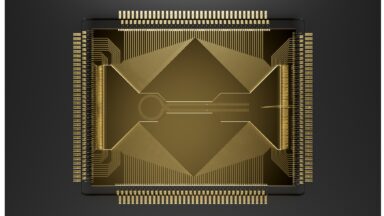
New quantum computing hardware sorts ions for computation
Recent advancements in quantum computing have spotlighted a significant breakthrough from Quantinuum, which has unveiled a new version of its trapped-ion hardware. This innovative technology is designed to dramatically increase the count of qubits, addressing a longstanding limitation in the field. Quantum computers that utilize ions or atoms offer a unique advantage: uniformity in their hardware. Each atom is identical, ensuring consistent performance across the board. This allows for versatile manipulation of qubits, as they can be arranged to entangle with one another, paving the way for more efficient algorithm execution and robust error correction methods. Traditionally, the potential of trapped-ion systems has been constrained by their relatively low qubit counts, often limited to just a few dozen. However, the newly announced hardware promises to expand this number significantly. It leverages the spin of the atomic nucleus, which is shielded from environmental disturbances by surrounding electrons, thus providing qubits with an extended coherence time. In this setup, neutral atoms are held in position by intricate laser systems, while trapped ions are controlled electromagnetically based on their charge. This enables the construction of vital hardware components using conventional electronic manufacturing techniques, although laser systems remain essential for certain operations and data retrieval. The static electronic framework, coupled with the ability to move ions freely, allows for any two ions to be brought close enough to entangle, facilitating an all-to-all connectivity model. This interconnectedness enhances the execution of algorithms directly on qubits and allows for the implementation of complex error-correction codes, which can be particularly beneficial in maintaining computational integrity. This capability was notably demonstrated by Microsoft using a Quantinuum machine to showcase an error-correction code based on a tesseract, highlighting the exciting possibilities this technology presents for the future of quantum computing.
Agility Robotics Expands Operations Near Tesla, Aiming for Humanoid Robot Leadership
Agility Robotics is set to launch a substantial 60,000-square-foot facility in Fremont, California, strategically locate...
TechCrunch | Jul 17, 2026, 20:35
Amazon Addresses AWS Billing Glitch Affecting Customers
On Friday, numerous users of Amazon's cloud services were taken aback by unexpected billing estimates indicating they ow...
TechCrunch | Jul 17, 2026, 15:50
Why This Chipmaker Still Has Strong Potential After Recent Market Decline
Despite experiencing a significant 30% drop in stock value this month, analysts continue to express confidence in this s...
CNBC | Jul 17, 2026, 16:05
Apple Reclaims Top Spot as World's Most Valuable Company, Ousting Nvidia
In a stunning turn of events, Apple has overtaken Nvidia to regain its status as the world's most valuable company. On F...
CNBC | Jul 17, 2026, 14:05
Valar Atomics Eyes $6 Billion Valuation with New Funding Talks for Modular Nuclear Reactors
Valar Atomics, an innovative startup focused on developing small modular nuclear reactors (SMRs), is currently negotiati...
TechCrunch | Jul 17, 2026, 19:45