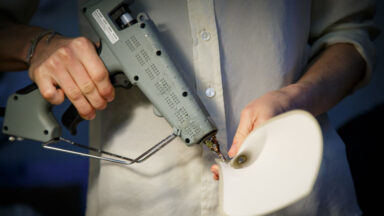
Scientists want to treat complex bone fractures with a bone-healing gun
In a groundbreaking development, a collaborative team of scientists from the United States and South Korea has engineered a unique device that could change the way complex bone fractures are treated. Unlike traditional tools that inflict harm, this innovative 'healing gun' is designed to aid in the repair of bone injuries. While it may not rival the fantastical healing devices seen in video games like Team Fortress 2 or Overwatch, this initiative marks a significant step towards the realization of practical healing technology. In cases of severe and irregular bone fractures, or in situations where bones have been removed due to cancer treatment, natural healing is often insufficient. Currently, metal implants made from titanium alloys are the most common solution to stabilize these injuries. However, the manufacturing of such implants is not only costly but also poses challenges in tailoring them to individual patients. According to Jung Seung Lee, a biomedical engineering researcher at Sungkyunkwan University in Korea, the advent of 3D printing has been seen as a potential solution, yet it requires considerable time and resources. To address these issues, Lee and his team sought to create a more efficient method of producing bone implants directly in the operating room. They devised a modified glue gun that could be used during surgery. The concept is simple: the surgeon directs the device at the fractured site, activates it, and a stabilizing scaffold material is extruded, solidifying in place to support the bone. Lee describes the device as a modified version of a commercial hot glue gun, with adjustments made to the temperature and tip module to control the precision of the scaffold's output. However, designing the gun was merely the first challenge; the real difficulty lay in creating the 'ammunition'—a material capable of healing bones effectively. The team faced multiple hurdles, including ensuring that the material could be extruded at a safe temperature that wouldn’t harm living tissue, achieving mechanical properties akin to natural bone, and developing scaffolds that would degrade over time, allowing for the regeneration of bone tissue. This pioneering approach has the potential to revolutionize the treatment of complex bone injuries, making it a promising advancement in the field of biomedical engineering.
Waymo Suspends Robotaxi Service in San Francisco Due to Power Outage
Waymo has announced a temporary halt to its robotaxi operations in San Francisco following a significant power outage im...
TechCrunch | Jul 18, 2026, 19:45
New Era of AI Regulation: White House Gains Control Over Model Access
The current administration is taking significant measures to enhance its authority over the deployment of advanced artif...
CNBC | Jul 17, 2026, 22:15
Top 5 Tech Subscriptions to Slash Your Digital Expenses in 2026
As the costs of smartphones, streaming services, and cloud storage rise, many users are feeling the pinch of technology ...
Business Today | Jul 18, 2026, 05:10
Yang Zhilin: The Rising Star of China's AI Landscape with Kimi K3
In the rapidly evolving world of artificial intelligence, one name is making headlines: Yang Zhilin. At just 34 years ol...
Business Insider | Jul 18, 2026, 16:10Earnings Season Kicks Off Amidst AI Buzz
As the earnings season begins, the spotlight has shifted dramatically towards artificial intelligence advancements, over...
CNBC | Jul 18, 2026, 16:45