
The iPhone Air’s real breakthrough is its battery
The iPhone Air is not just about its sleek design or the impressive engineering behind its compact logic board; the real innovation lies within its battery. Gene Berdichevsky, co-founder and CEO of battery materials company Sila, shared insights on this remarkable advancement, stating, "The battery in the new iPhone is pretty remarkable. The completely arbitrary, two-dimensional shape is astonishing." Berdichevsky, who has a wealth of experience in battery technology as the former engineering lead for the original Tesla Roadster's battery, emphasized the revolutionary nature of this new battery technology. He recently had the opportunity to examine these cells during a trip to Asia and expressed admiration for their design. A key innovation in the iPhone Air is its metal can battery—a patented technology by Apple. This design enhances the battery's strength and durability compared to traditional pouch cells, which are typically made from soft plastic that can swell. Apple's use of L-shaped batteries in previous models has faced limitations due to swelling at critical pinch points. Berdichevsky notes that metal can batteries eliminate these vulnerabilities, allowing for flexible designs that can utilize every inch of space within the phone. With metal can batteries, Apple can position batteries closer to the edges of the device, optimizing the available space after the circuit boards are installed. Berdichevsky believes that the benefits of this technology will lead more manufacturers to adopt metal can batteries, despite the higher production costs. This transition is particularly significant for smaller devices, such as augmented reality (AR) and virtual reality (VR) glasses, which he observed in prototype form during his visit to China. The energy density improvements offered by metal can batteries enable innovative shapes and designs. While Apple has yet to fully embrace silicon anodes in its lithium-ion batteries, the introduction of metal can construction could pave the way for this shift. Silicon anodes have the potential to store about 50% more energy than traditional graphite ones but are susceptible to swelling. Sila has developed methods to manage this issue, and Berdichevsky believes that the new battery design will facilitate the integration of silicon anodes in future devices. In summary, the advancements in battery technology showcased in the iPhone Air could represent a significant leap forward, pushing the limits of performance and design in mobile devices.
Unlocking the Secrets of Quantum Gravity: Can AI Help Physics Make a Leap?
The realm of scientific research is undergoing a profound transformation, fueled by the rapid advancements in artificial...
Business Today | Jul 25, 2026, 24:30
Finland Unveils World's Largest Sand Battery to Tackle Renewable Energy Challenges
In a groundbreaking move to address the critical issue of renewable energy intermittency, a small town in southern Finla...
CNBC | Jul 25, 2026, 05:35
SpaceX's Latest Starlink Launch Marks Milestone Amid Booster Setbacks
On Friday, SpaceX marked a significant achievement by successfully launching its first batch of third-generation Starlin...
TechCrunch | Jul 24, 2026, 23:40
The Aluminum Foil Trend: A DIY Shield Against Wireless Identity Theft
Have you noticed an unusual trend where people are wrapping their wallets in aluminum foil? This peculiar practice has e...
Business Today | Jul 25, 2026, 02:45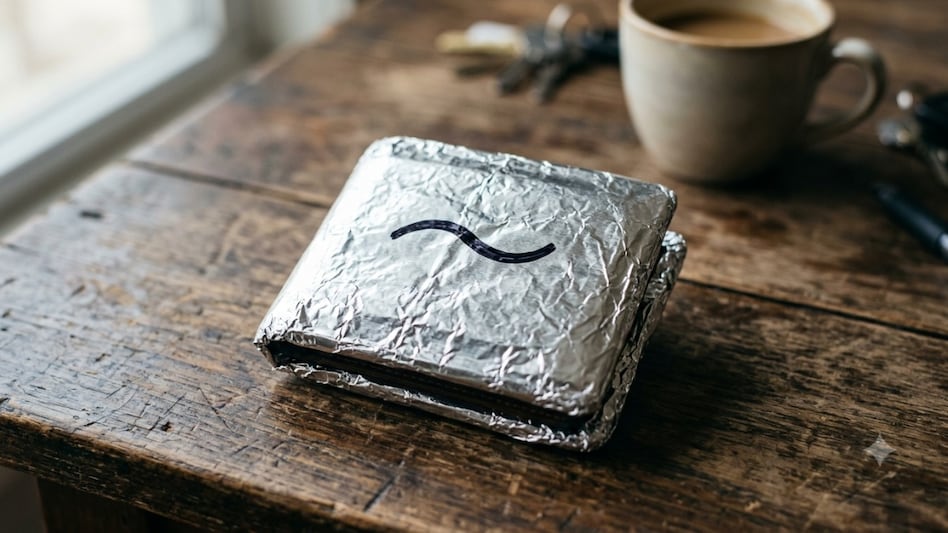
Nvidia Strikes Major Deal with SK Hynix to Secure AI Memory Supply
Nvidia has successfully forged a significant partnership with South Korea's SK Hynix to secure memory supplies essential...
CNBC | Jul 25, 2026, 05:15