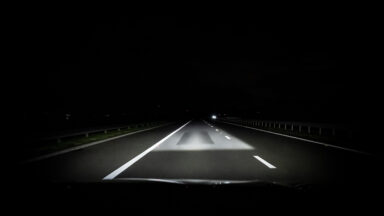
These clever active beam headlights are finally coming to America
The United States is on the brink of a significant upgrade in headlight technology. Audi is set to launch its Q9 SUV later this year, which will be equipped with cutting-edge adaptive beam headlights. These innovative lights are designed to enhance visibility while significantly reducing glare for both drivers and pedestrians. While this advanced lighting system has been commonplace in Europe for years, its arrival in the US follows extensive lobbying and rigorous testing to comply with federal regulations. During a recent trip to Europe, I experienced the benefits firsthand, and it’s clear that the US has been overdue for such advancements. Despite being a hub of innovation, the US has lagged behind Europe and Japan in automotive lighting for decades, primarily due to outdated regulations from the 1960s that only permitted low- and high-beam headlights. Major automakers like Audi, BMW, and Mercedes-Benz have long been advocating to the National Highway Traffic Safety Administration (NHTSA) for the introduction of modern headlight technologies. Initially, the focus was on laser high beams, known for their ability to project light further than traditional halogen or xenon lights. However, the adaptive driving beam technology is truly impressive. Each headlight consists of multiple pixels, allowing certain pixels to be turned off to shape the beam, thus selectively dimming light for oncoming vehicles instead of switching to low beams. Toyota led the charge in 2013 by requesting permission to bring adaptive driving beam lights to the US, coinciding with Audi's introduction of the technology in Europe with the A8. It wasn't until 2022 that the NHTSA recognized the significant safety benefits of this technology and approved its use on American roads. In Europe and Japan, where adaptive driving beams have been approved for years, the process involved thorough road tests by regulatory bodies. However, the NHTSA required more stringent testing protocols, given that US automakers self-certify compliance with safety standards. This led to the establishment of a comprehensive set of tests to ensure that the new headlights do not dazzle oncoming traffic.
Revolutionizing Cybersecurity: AI's Role in Modern Threat Detection and Defense
As businesses increasingly embrace digital transformation and artificial intelligence, the complexity of cybersecurity t...
Business Today | Nov 24, 2026, 08:30
Nvidia's Jensen Huang Set to Face Senate Committee Amid Controversy
Jensen Huang, the CEO of Nvidia, is slated to appear before the Senate Banking Committee on December 3. This announcemen...
TechCrunch | Nov 23, 2026, 18:35
Saudi Engineer Faces Legal Battle Over Alleged Espionage Using AI Tech
A Saudi engineer employed by OpenAI, Abdulrahman Alfozan, is at the center of a legal dispute as prosecutors allege he u...
Business Insider | Nov 23, 2026, 23:50Revolutionizing Code Management: Anthropic Unveils Claude Ship
Anthropic is taking a significant leap in the realm of software development by introducing Claude Ship, a powerful suite...
TechCrunch | Nov 23, 2026, 22:10
Google Unleashes Enhanced AI Mode for a Tailored User Experience
In a significant update, Google has unveiled enhancements to its Search's AI Mode, integrating it with Google Drive, Goo...
TechCrunch | Nov 23, 2026, 19:30