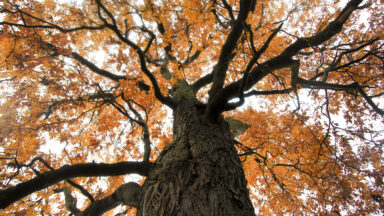
Can modern genetics help us restore the Appalachian forests of the 1800s?
The Appalachian forests, as they stood over a century ago, are a distant memory for most. Despite the preservation efforts of state and national parks, a devastating fungal pathogen from Asia has nearly eradicated the American chestnut, a key species in these woodlands, resulting in the loss of an estimated 3 billion trees. Although new saplings occasionally emerge from the remnants of their ancestors, the relentless fungus continues to claim them before they can reproduce. Fortunately, there is hope. Thanks to trees cultivated in areas where these fungi struggle to thrive, the American chestnut is not completely lost to history. Recent efforts to rejuvenate this species within its native habitat are ongoing, even in the face of the lengthy generational times required to breed trees that can withstand the pathogens. In a groundbreaking article published in the journal Science, researchers outline their innovative application of modern genomic techniques and rigorous testing aimed at determining the most effective strategy for reintroducing the American chestnut back into its native ecosystem. Although it is functionally extinct, meaning it no longer plays a role in its former ecosystems, the species is not gone. The American chestnut has fallen victim to two Asian fungi: one that induces chestnut blight and another, less common pathogen responsible for root rot. Both thrive in warmer, humid climates and can persist silently on related species like oaks. However, American chestnuts planted outside their original range, particularly in the drier regions of western North America, have shown remarkable resilience. Interestingly, another virus that targets the chestnut blight fungus has allowed some trees to survive in regions where this virus is prevalent. Moreover, a limited number of trees have reached maturity in the chestnut's original territory, referred to by researchers as LSACs (large surviving American chestnuts). These trees may indicate that some level of natural resistance existed within the previously abundant population. They play a crucial role in the restoration efforts, as interbreeding these resistant trees could lead to a new strain capable of enduring the fungal threats while thriving in the Appalachian landscape.
The Elusive Phineas Fisher: The Hacktivist Who Took Down Spyware Giants
In the realm of cybersecurity, few figures are as intriguing as Phineas Fisher, a hacker who has evaded capture for near...
TechCrunch | Jul 25, 2026, 21:00
OpenAI's Micro Keypad: A Novelty for Coders or Just a Confounding Gadget?
Last week, OpenAI made its debut in the hardware landscape with the launch of Micro, a stylish keypad designed to integr...
TechCrunch | Jul 25, 2026, 24:40
The Boring Company Eyes $4 Billion Funding Boost Amid Expanding Tunnel Ventures
Elon Musk's tunneling enterprise, The Boring Company, is reportedly negotiating a substantial funding round of $4 billio...
TechCrunch | Jul 25, 2026, 19:50
Unlocking the Secrets of Quantum Gravity: Can AI Help Physics Make a Leap?
The realm of scientific research is undergoing a profound transformation, fueled by the rapid advancements in artificial...
Business Today | Jul 25, 2026, 24:30
The Rise of AI Distillation: A Controversial Technique Sparks Debate in Tech and Government
In recent discussions, a once-obscure topic in artificial intelligence has surged to the forefront of debates among tech...
CNBC | Jul 25, 2026, 12:15