Trump admin halts 6 GW of offshore wind leases again
In a significant move, the Biden administration has once again paused leases for five major offshore wind projects, just two weeks after a judge overturned a previous executive order that restricted wind development. This latest decision is driven by concerns over potential radar interference. Interior Secretary Doug Bergum stated, "Today’s action addresses emerging national security risks, including the rapid evolution of the relevant adversary technologies, and the vulnerabilities created by large-scale offshore wind projects near our east coast population centers." The projects impacted by this suspension include Revolution Wind in Connecticut and Rhode Island, Coastal Virginia Offshore Wind, Vineyard Wind in Massachusetts, along with Empire Wind and Sunrise Wind, both located in New York. Collectively, these developments represent nearly 6 gigawatts of generating capacity crucial for the Eastern seaboard, which is a key area for data center growth. The Department of the Interior backed this pause by referencing unclassified government reports, although it did not specify which agency produced them or provide links to these documents. Additionally, the department cited "recently completed classified reports" from the Pentagon, emphasizing the need for more time to collaborate with stakeholders on mitigating national security concerns. Notably, the statement did not address the ongoing efforts by both the government and wind developers to tackle radar-related issues, which have been in discussion for years. The report likely referred to by the Interior Department was released by the Department of Energy in February 2024, outlining several projects aimed at alleviating radar interference. The challenge of radar interference from wind turbines is not a new issue. Researchers have been investigating this phenomenon for over a decade and have developed various strategies to mitigate its effects. Wind turbines create a unique challenge for radar operators due to their complex Doppler signature, which complicates the detection of nearby targets. Nicholas O’Donoughue, a senior engineer at the Rand Corporation, explained that as the blades of a wind turbine move, they alternately approach and recede from the radar station, affecting the radar signals. Despite these challenges, radar systems can be designed to filter out signals caused by wind farms. Adaptive processing algorithms, such as Space-Time Adaptive Processing, are employed to analyze and suppress the interference patterns over time, akin to how modern noise-canceling headphones function, albeit with greater complexity. While some radar reflections from wind farms can still evade detection, many wind farms are strategically designed with radar considerations in mind, often employing site modifications to limit visibility to radar systems. As the debate over offshore wind energy and national security continues, the future of these vital projects hangs in the balance, awaiting further assessments and potential solutions to the radar interference issue.
Nvidia Strikes Major Deal with SK Hynix to Secure AI Memory Supply
Nvidia has successfully forged a significant partnership with South Korea's SK Hynix to secure memory supplies essential...
CNBC | Jul 25, 2026, 05:15
Reclaiming Control: Librarians Host Workshops to Help People Navigate AI Tools
In a lively library setting in South Philadelphia, Charlie Bailey, a local librarian, humorously noted, "Everybody’s on ...
TechCrunch | Jul 25, 2026, 16:20
OpenAI's Micro Keypad: A Novelty for Coders or Just a Confounding Gadget?
Last week, OpenAI made its debut in the hardware landscape with the launch of Micro, a stylish keypad designed to integr...
TechCrunch | Jul 25, 2026, 24:40
The Rise of AI Distillation: A Controversial Technique Sparks Debate in Tech and Government
In recent discussions, a once-obscure topic in artificial intelligence has surged to the forefront of debates among tech...
CNBC | Jul 25, 2026, 12:15
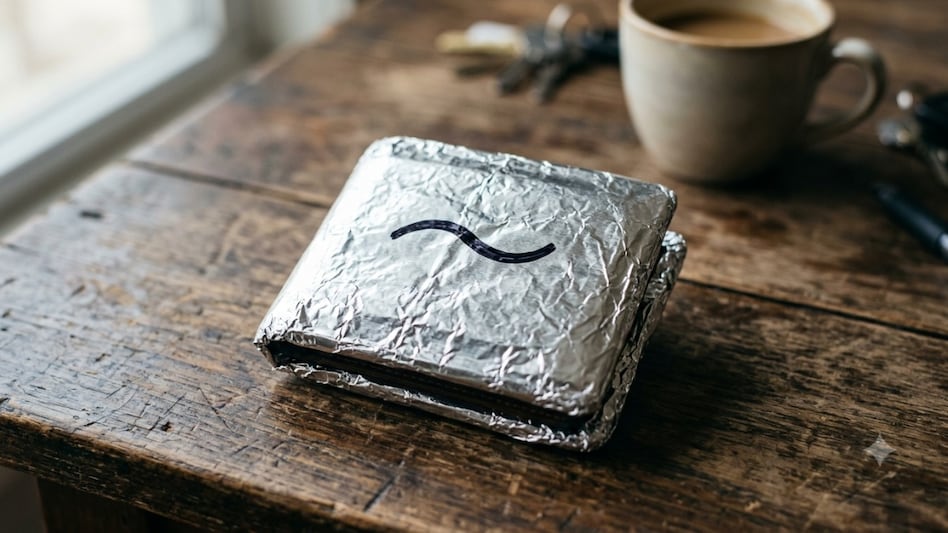
The Aluminum Foil Trend: A DIY Shield Against Wireless Identity Theft
Have you noticed an unusual trend where people are wrapping their wallets in aluminum foil? This peculiar practice has e...
Business Today | Jul 25, 2026, 02:45