
Qualcomm announces AI data center CPU, signs Meta as first major customer
On Wednesday, Qualcomm unveiled its new data center central processing unit, the Dragonfly C1000, announcing that Meta would be its first major customer upon production commencement in 2028. This innovative CPU is tailored for agentic AI, emphasizing high computing performance while minimizing power consumption. The revelation during Qualcomm's investor presentation highlights the company's strategic push into the data center market, a significant shift from its established reputation for smartphone processors and modems. Qualcomm's CEO, Cristiano Amon, expressed confidence in the company's readiness to tackle this burgeoning sector, stating, "We just been executing, collecting assets, and when we got to this point, we feel that we have a comprehensive portfolio to enter the next phase of the data center." Despite a dip in share prices during trading on the same day, Qualcomm’s CFO, Akash Palkhiwala, reassured investors about the company’s existing relationships with nearly every major hyperscaler, thanks to its smartphone chips and other products. He noted, "This is not a new relationship. It's the benefit of what we've delivered to them already on the edge, combined with the scale and the expertise and the confidence in Qualcomm, is what makes them engage with us on data center." The announcement coincides with a surge in investor interest in CPUs, as many believe that these processors will increasingly share the workload traditionally managed by graphics processing units and AI chips, particularly with the rise of autonomous AI agents. Palkhiwala highlighted the current supply shortages, stating, "There really isn't enough supply, and multiple players are needed in the CPU market." Historically, Qualcomm's primary revenue source has been smartphones, which constituted two-thirds of its product revenues in the quarter ending in March. However, the company is now diversifying its portfolio to include sectors such as automotive, robotics, and data centers, which are projected to grow faster than the smartphone market, which peaked in 2017. Qualcomm aims to leverage its expertise in developing energy-efficient chips to cater to hyperscalers who are increasingly challenged by electrical power limitations in their data centers. Additionally, the company announced it has secured two agreements to create custom silicon chips designed for hyperscalers. In a related development, Qualcomm has acquired Modular, a startup specializing in software that facilitates AI applications across various chip architectures, comparable to Nvidia's CUDA used in many AI systems. Amon reassured investors that Qualcomm is not late to the data center party, emphasizing the company's focus on scale, execution, engineering capabilities, and supply chain management.
The Future of Work: Executives Weigh In on AI's Impact on Gen Z Careers
As generative artificial intelligence continues to rise, uncertainty looms for the incoming Gen Z workforce. Leaders fro...
Business Insider | Jul 26, 2026, 10:15The Elusive Phineas Fisher: The Hacktivist Who Took Down Spyware Giants
In the realm of cybersecurity, few figures are as intriguing as Phineas Fisher, a hacker who has evaded capture for near...
TechCrunch | Jul 25, 2026, 21:00
Reclaiming Control: Librarians Host Workshops to Help People Navigate AI Tools
In a lively library setting in South Philadelphia, Charlie Bailey, a local librarian, humorously noted, "Everybody’s on ...
TechCrunch | Jul 25, 2026, 16:20
Unleashing the Power of AI: The 5 Smartphones Redefining Mobile Photography
Artificial Intelligence (AI) is transforming our daily experiences, permeating various aspects of technology, including ...
Business Today | Jul 26, 2026, 07:05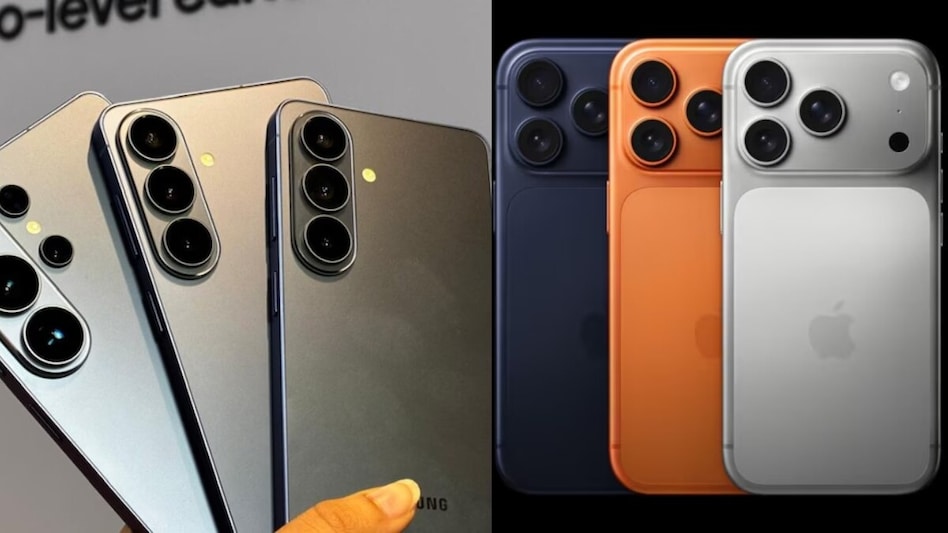
Revolutionizing Startup Living: Inside London's Unique Lift House
In East London, a group of six young entrepreneurs is redefining the concept of collaborative living for tech founders. ...
TechCrunch | Jul 26, 2026, 17:10