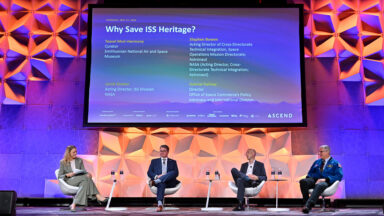
Before it comes down, what should be saved from the International Space Station?
As humanity approaches a pivotal moment in its journey into space, the end of an era looms large. The International Space Station (ISS), a symbol of continuous human presence in orbit, is set to conclude its mission by 2030. With this impending transition, experts are now grappling with the challenge of preserving this monumental achievement in space exploration. On Thursday, the Smithsonian National Air and Space Museum facilitated a thought-provoking panel discussion focused on the future of the ISS. This event, part of the American Institute of Aeronautics and Astronautics’ ASCEND conference in Washington, DC, brought together a diverse group of participants, including space program officials, museum curators, an archaeologist, and even an astronaut. Together, they sought to address the crucial questions of why and how to commemorate the ISS, despite its size and complexity rendering it impossible to preserve intact. Jacob Keaton, who serves as the acting director of the ISS within NASA’s Space Operations Directorate, reflected on the significance of the station during the discussion. He noted that achieving 25 years of continuous human residence in space was a noteworthy feat. “Congratulations, guys! You made space boring,” he recounted a friend's remark, emphasizing that this 'boring' aspect signifies a monumental achievement in technical competence and stability in space exploration. Keaton elaborated on the cultural integration of the ISS into the fabric of national identity, stating, “This is just something that we do. We have people in space.” Unlike the dramatic moments of past missions like Apollo, the ISS represents a steady and reliable human presence in orbit, a reality that is often underappreciated. The challenge now lies in capturing this 'boring' yet profound legacy and presenting it in museums for future generations to appreciate. As discussions continue, the focus will remain on finding innovative ways to share the story of the ISS, ensuring that its contributions to science and humanity are not forgotten, even as it prepares to make way for the future of space exploration.
A Heated Exchange: Musk and Altman Clash Over OpenAI and Apple Lawsuit
In a recent exchange on the social media platform X, Elon Musk and Sam Altman engaged in a sharp verbal showdown, intens...
CNBC | Jul 12, 2026, 15:45
AI Demand Surges Amid Market Volatility: Experts Weigh In
The semiconductor market has experienced a remarkable surge over the past year, fueled by optimistic investments in AI i...
CNBC | Jul 12, 2026, 05:15
The Relentless Cycle of Tech Layoffs: Navigating the New Normal
In a landscape where corporate layoffs have become a regular occurrence, Microsoft recently announced the elimination of...
Business Insider | Jul 12, 2026, 09:55Investors Eye Promising Gains in Overlooked Market Sectors
In a recent discussion, ETF Action co-founder Mike Akins urged investors to consider boosting their portfolios with stoc...
CNBC | Jul 11, 2026, 15:15
Reed Jobs Shifts Focus from Legacy to Life-Saving Innovations in Oncology
Reed Jobs is a refreshing presence in the biotechnology arena. With an engaging personality, he often uses humor and vid...
TechCrunch | Jul 12, 2026, 24:30